Details have emerged of the staggering financial commitments taxpayers are shouldering for Kenya to have a good standing on the international stage.
These include mandatory contributions to multinational bodies, membership fees for international organisations, and funds for missions and other global initiatives.
A new report tabled by President William Ruto in Parliament has revealed that Kenya paid Sh4.2 billion last fiscal year, igniting a debate on whether the nation is getting value for money in the subscriptions.
The top four payments are all to regional political and economic blocs, namely the African Union, EAC, IGAD, and Comesa.
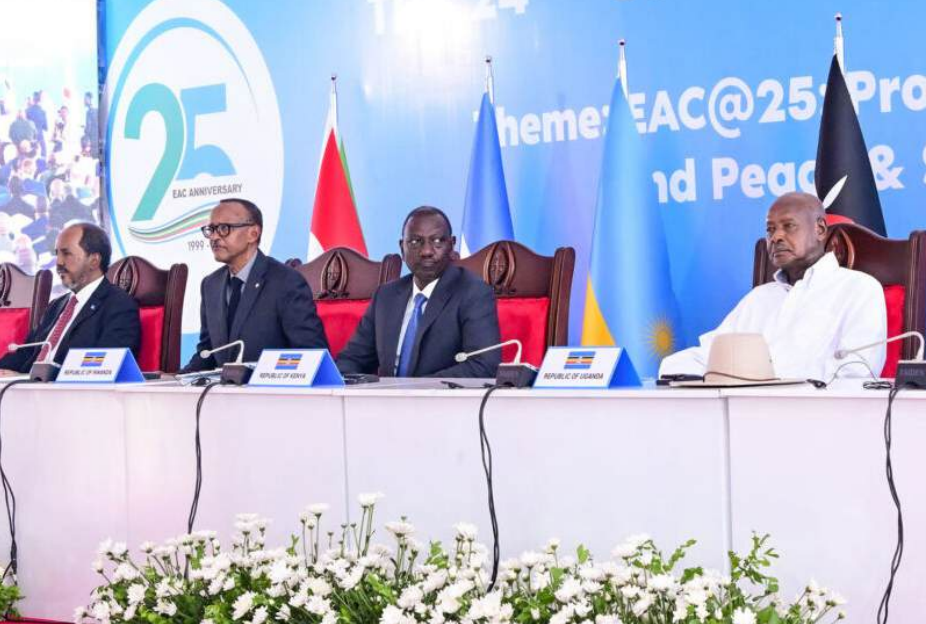
Subscriptions to the African Union accounted for the highest at Sh982 million, followed by payments to the East Africa Community at Sh917 million.
Kenya paid Sh553 million in subscriptions to the Intergovernmental Authority on Development, Sh274 million to Comesa, and Sh167 million to the United Nations.
The top five payments alone totalled nearly Sh3 billion, begging the question whether they make sense at a time Kenyans are squeezed almost to the last coin.
Recently, MPs called for a comprehensive audit to determine if the funds to the East Africa Community could be better spent in supporting critical sectors.
The lawmakers raised concerns about how the EAC is falling short of its intended goals.
The Committee on Regional Integration, chaired by nominated MP Irene Mayaka, said the bloc was not living up to its expectations as dreamt of by its founders.
They cited personal interests of some of the member states as clouding the collectivity that is desired of the regional trading bloc, pressing for a cost-benefit analysis of the subscriptions to it.
Mukurweini MP John Kaguchia said there was a need for “a proper cost-benefit analysis to come up with clear indicators that show how Kenya benefits from the EAC.”
Other huge subscriptions were to the Inter-University Council for East Africa (Sh80 million), Lake Victoria Fisheries Organisation Secretariat (Sh122 million), African Commission on Nuclear Energy (Sh59 million), and Sh68 million to the Regional Centre on Small Arms.
During the year under review, Sh50 million was subscribed to the Desert Locust Control Organisation for Eastern Africa, Sh55 million for the European Bank for Reconstruction and Development, and Sh49 million for the East, Central and Southern Africa Health Community.
Kenya also paid Sh59 million to the Africa Commission on Nuclear Energy and Sh43 million to the African Capacity Building Foundation.
The specifics of the annual obligations come when the citizenry is more sensitive to high taxes and the escalating cost of living amid tough economic times.
The Kenya Kwanza administration was forced to instigate budget cuts for health, education and critical services to balance the shortfalls which ensued after the Finance Bill 2024 collapsed.
While the government defends the expenditures as essential for maintaining the country’s global standing and influence, critics are questioning the prudence and necessity.
Edward Kakumu, Mzalendo Trust programme coordinator, said while it was good for Kenya to play on the global stage, the grand question is in the accountability for the funds.
The international relations expert told the Star in a phone interview that, much as the country cannot operate in isolation, accountability is key.
“When we speak of value for money, I would say ‘yes’ and ‘no’. Yes, in the sense that we have to be in touch with the international community,” Kakumu said.
“For no, it is because they hardly give a report to enable taxpayers to understand whether the money is applied correctly. If there were annual reports showing what the money has done, it would make sense,” the Mzalendo coordinator said.
On Thursday, a member of the National Assembly Finance Committee, speaking on condition of anonymity for fear of reprisals, asked, “Where is the return on investment?”
While the total is in the billions, the list includes many very small, symbolic memberships, such as Sh69,956 to the African Cashew Alliance.
Some international relations experts however say the subscriptions are necessary.
Cavince Adhere said, “We have a huge stake. As the only Global South host of UN offices, we need to play on the global stage.”
The disclosure has put a harsh spotlight on the Ruto administration's spending priorities.
The government has justified its aggressive revenue-raising measures as a necessary evil, citing the country's massive debt burden and domestic development needs.
Questions abound, even so. The latest audit of public funds has raised concerns about how the fund fueling the subscriptions is managed.
In the review for the 2024 period, Auditor General Nancy Gathungu said some transfers of Sh2.3 billion was doubtful.
She said that there was no documentation provided for the audit to support the approval of the payment for the surplus transfer.
“The accuracy and regularity of the surplus transfer to Exchequer of Sh2,300,000,000 could not be confirmed,” Gathungu said a review of AU and Other International Organisations Subscription Fund for June 30, 2024.
She said the expenditure was in breach of the law, which requires that any payment out of the fund shall be pursuant to the object and purpose for which the fund is established.
Gathungu cast doubt on whether the amounts went to the African Union and other international organisations to which Kenya has financial obligations.
She also queried the multiple laws guiding the operation of the fund, saying the National Treasury has been paying the subscriptions under various pieces of legislation.
Previously, the Ministries, Departments and Agencies (MDAs) had been remitting such subscriptions through their voted provisions within their budgets.
The establishment of the fund, therefore, rendered all other individual voted provisions to be consolidated and budgeted under one umbrella body.
“Management has not caused the revocation or repeal of the earlier laws to be in tandem with the current legislation and therefore avert the risk of making multiple payments to the international organisations,” Gathungu said.
As Parliament begins its scrutiny of the report, the debate could transcend mere numbers and be about transparency, accountability and what constitutes national interest.
INSTANT ANALYSIS
The government is tasked with a difficult balancing act, that is, of proving that the country’s international engagements are not a drain on the public purse, but a strategic investment that will ultimately yield returns for every taxpayer funding them. The clarity will significantly influence public acceptance of the state's economic policies.