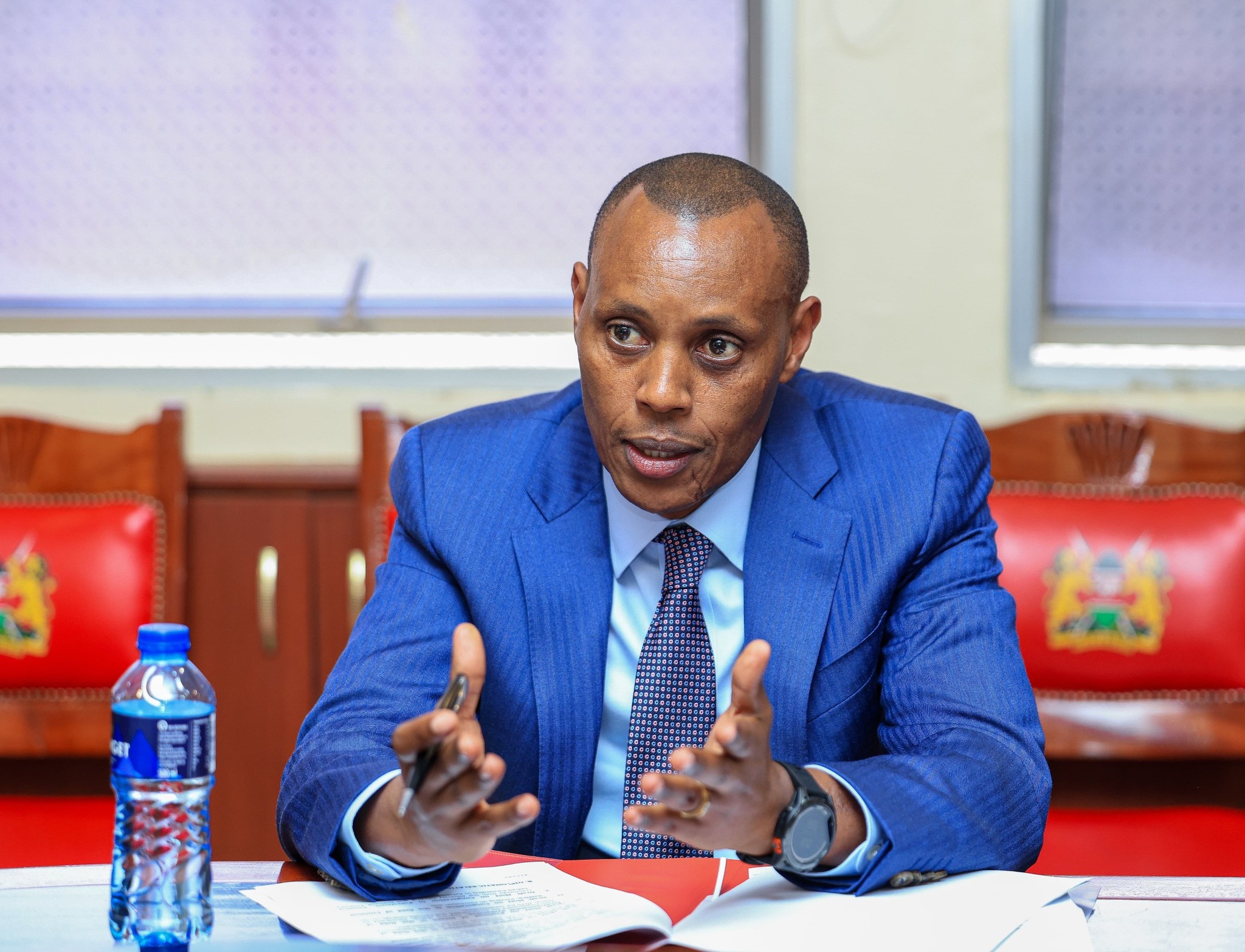
A parliamentary committee has indicted British soldiers training in Kenya for decades of alleged human rights violations, environmental destruction and for perpetuating ‘institutional impunity’.
In a bold report tabled in Parliament, the Committee on Defence, Intelligence and Foreign Relations accuses the British Army Training Unit Kenya (Batuk) of widespread abuses linked to its activities in Laikipia and Samburu counties.
The committee, chaired by Belgut MP Nelson Koech, details cases of murders, sexual violence, injuries from unexploded ordnance (UXOs) and land exploitation.
Key incidents highlighted include the 2012 murder of Agnes Wanjiru —allegedly by a British soldier—and the shooting of herder Tilam Leresh by a Batuk sergeant.
It also documents sexual assaults and rapes, including historical cases recorded by the Truth, Justice and Reconciliation Commission.
The report squarely links Batuk to the devastating Lolldaiga Hills fire in 2021, which destroyed more than 12,000 acres of land. It further cites multiple injuries and deaths of locals from UXOs left after training.
MPs heavily criticised Batuk for evading accountability and violating Kenya’s sovereignty by refusing to cooperate with the parliamentary inquiry.
The report is built on harrowing testimonies from communities. It highlights the 2007 death of Robert Seurei, a 28-year-old civilian employee who mistakenly took home a UXO, thinking it was a candle.
"The device detonated with devastating force… The blast was so powerful that fragments of his flesh were lodged in the ceiling, and his body was mutilated beyond recognition," the report states.
His grandmother sustained severe injuries and never recovered. MPs have demanded an inquest into his death.
In 2015, a child, Lisoka Lesasuyan, picked up a UXO on a training field. It detonated, causing life-altering injuries, including the rupture of his right eye.
The report says that despite a court awarding him Sh10 million, Batuk offered a settlement based on an unverified claim of only "50 per cent responsibility."
"New evidence now indicates that Lisoka, who requires prosthetic limbs for life, should have received a higher compensation amount," the report adds.
Another case involves Charles Ngare, whose leg was crushed by a Batuk truck he was helping to push from a muddy road. Soldiers later claimed they had found him injured by the roadside.
Concerning Wanjiru’s murder, the report notes an inquest found a Batuk soldier killed her, yet "no arrest or prosecution has been undertaken in either Kenya or the UK."
"It was submitted that the process of investigation has faced undue interference and obstruction, allegedly by Batuk personnel, which continues to hinder the delivery of justice," the report adds.
MPs want the Attorney General to collaborate with UK authorities to extradite the prime suspect, Robert James Purkiss, who is reportedly in custody in Britain.
The committee was told that the Office of the Director of Public Prosecutions has submitted a formal extradition request to the UK authorities.
The committee further wants the Directorate of Criminal Investigations to probe all alleged murders of Kenyans by British soldiers documented by the Kenya National Commission on Human Rights.
On sexual violence, the report recounts a horrific 1997 incident in Archer's Post where “30 women were gang-raped at knife-point, some inside their own manyattas.”
The committee heard that a 2003-04 internal Batuk inquiry into rape allegations seized evidence and “dismissed all but 230 cases as fake, and the report has never been made public.”
Beyond rape and assault, the probe uncovered the abandonment of "fatherless" children.
“In Doldol and other affected areas, dozens of children have been fathered by British soldiers who returned home, leaving behind single mothers facing stigma and financial hardship,” the report states.
It condemns the absence of legal mechanisms in either the Kenyan or British military systems to hold soldiers accountable for child support.
On the Lolldaiga fire, the committee concluded it was ‘sparked by Batuk’s live-fire drills’ and resulted in ‘toxic smoke, respiratory illnesses, livestock deaths and reported miscarriages.’
Testimonies painted a grim picture. Sammy Rubia said there were "cases of miscarriages among pregnant women due to exposure to the toxic smoke," and that his eyesight had deteriorated.
Another testimonial by Abraham linked the fire to devastating effects on reproductive health in women and livestock.
The committee further alleges Batuk has never conducted legally mandated environmental and social impact assessments for its field exercises and raises alarm over the possible use of white phosphorus, a chemical it says is “notorious for the severity of the injuries it causes.”
MPs found the existing Defence Cooperation Agreement structurally flawed, saying the legal instrument has huge gaps.
It posits "the offence of murder, despite its gravity, is not explicitly listed… as an offence deemed outside the course of official duty."
This, they argue, creates a "significant obstacle to justice," and the existing oversight mechanism is largely ineffective.
In its response to the parliamentary inquiry, the UK government firmly denied allegations of systemic misconduct within Batuk.
It rejected claims of collusion with security forces to suppress complaints or intimidate victims, stating there was no evidence to support such accusations.
The UK government also countered suggestions of widespread fraudulent procurement or financial irregularities, noting that only one alleged fraud case was under investigation in the past four years.
Regarding environmental damage, the UK government asserted that Batuk operates in full compliance with Kenyan law, subject to rigorous audits.
It highlighted that recent court rulings had been satisfied with the UK's remedial actions, emphasising its commitment to accountability and justice in specific cases.
While expressing deep regret for incidents like the deaths of Wanjiru and Tilam, it clarified that procedures under the agreement were followed, with investigations conducted by the appropriate authorities.
On the issue of paternity claims and alleged historical sexual offences, the UK government said that where allegations were raised, they were investigated, but often lacked sufficient evidence for prosecution.
The UK government argued that Batuk remains transparent and contributes significantly to Kenya's security and local economy.
In a call for action, MPs want the law amended to create a visiting forces code of conduct ‘with zero tolerance to sexual violence’.
The committee further wants a military-linked crimes task force formed to probe and prosecute offences by foreign troops.
The parliamentarians also want the Wanjiru murder suspect extradited and an inquest into Swara’s death.
The committee has further proposed a survivor liaison unit formed to provide legal aid to victims, and for the UK to be forced to compensate for the Lolldaiga fire.
The House team has also called for negotiations with the UK to establish a mechanism for British soldiers to pay child support.
The UK government in a written submission said there is absolutely no place for sexual exploitation and abuse by people in the British Army, noting that any allegations relating to unacceptable behaviours are taken incredibly seriously by the UK MOD.
It said it was aware that there are instances and allegations of children fathered by UK Service Personnel.
"In accordance with the DCA, the UK MOD would investigate or support the
investigation of any allegation of abuse of power or of a sexual offence. The UK MOD has a
zero-tolerance approach to Sexual Exploitation and Abuse, and personnel found to have breached this policy face
dismissal and, where necessary, prosecution."
On environmental issues, the UK government said BATUK only trains on gazetted Kenyan Military Training areas or on private land that is licenced by the landowner and the KDF, adding that all land used for training has been subject to a full Environmental Impact Assessment.
"The UK MOD routinely undertakes a series of measures to ensure that its training mitigates the potential impact on the environment and social sensitivity at each of its locations," it said.
It said
It further said that a National Land Commission legal challenge regarding the ownership of part of this training area was upheld against KMOD.
"KMOD then instructed BATUK to cease all training on the area identified by the National Land Commission. Training in Archers Post Training Area since has been limited to a smaller area owned by KMOD, and BATUK’s use of this area is coordinated and agreed through KMOD."