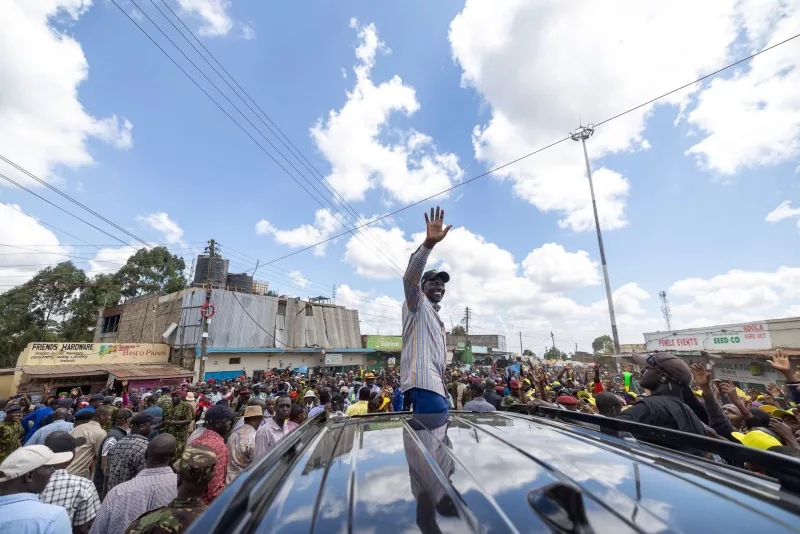
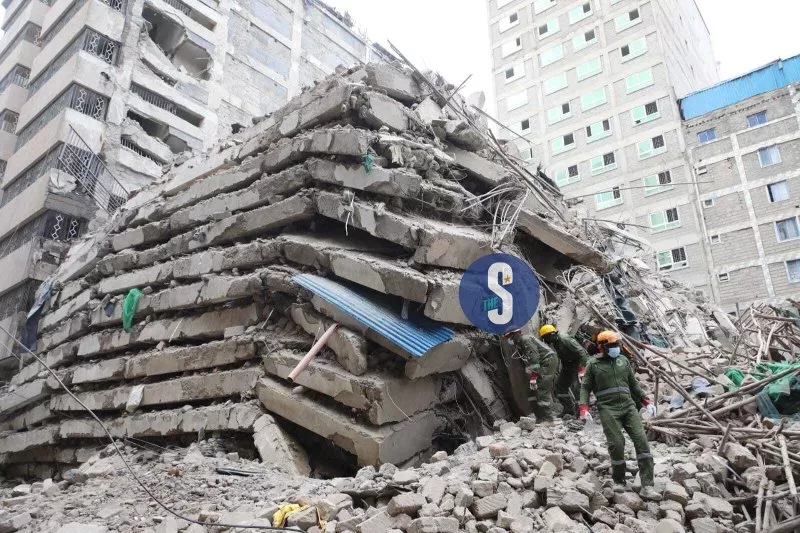
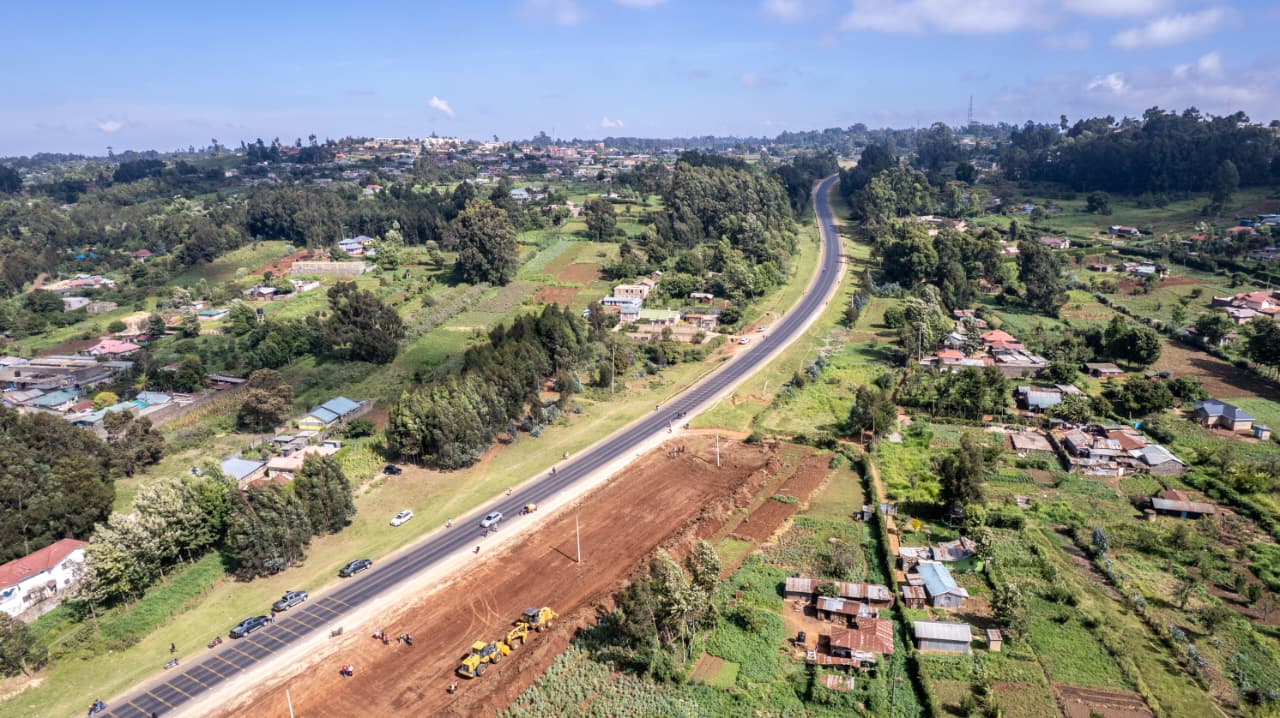
 Aerial view of the Nairobi–Nakuru–Mau Summit on Friday, November 28, 2025. /PCS
Kenya has entered a new phase in its infrastructure journey following the launch of the Nairobi–Nakuru–Mau Summit and the Nairobi–Maai Mahiu–Naivasha road projects by President William Ruto on Friday, November 28.
Valued at over Sh170 billion and structured under a Public–Private Partnership (PPP), the 233-kilometre project marks a turning point in how the country finances and delivers major transport corridors.
Beyond the fanfare of the launch, the project represents a decisive break from what the President described as an era of “quiet paralysis” in infrastructure development, one defined by underfunding, debt constraints and long delays.
Its significance lies not only in the scale of construction, but in the financing model chosen and the national economic logic behind it.
Together, the two road projects will modernise a critical artery of the Northern Corridor, which carries nearly 40 per cent of Kenya’s trade traffic, linking the country to Uganda, Rwanda, Burundi, South Sudan and the Democratic Republic of Congo.
This explainer breaks down the importance of the project, its financing and why the PPP model became the government’s preferred option.
A corridor at the heart of Kenya’s economy
The Nairobi–Nakuru–Mau Summit stretch, at 175 kilometres, and the Nairobi–Maai Mahiu–Naivasha section, at 58 kilometres, form part of the busiest transport artery in the country.
The Gilgil - Nakuru - Mau Summit is 94 kilometers.
It starts in Gilgil town, junction with A4 in Nakuru county, on the existing alignment of A8 road, through Nakuru, and terminates at Mau Summit Interchange.
The entire road project is situated in Nakuru county
Gilgil to Nakuru (Km 81+200–Km 123+116) will be upgraded to a dual 6-lane carriageway.
Nakuru town section will have a combined elevated and retaining-wall section with a four-lane dual carriageway.
The Nakuru to Mau Summit section will be upgraded to dual 6-lane carriageway and will have three toll stations.
For decades, the corridor has been overburdened by heavy commercial traffic, steep gradients, congestion and high accident rates.
President Ruto captured this reality plainly, saying that for too long, the corridor carried more than it could bear.
"Traffic consumed our time, accidents stole our loved ones, and delays cost our economy billions,” he said.
The upgrade involves turning the road into a modern dual carriageway designed to support long-term economic expansion.
New interchanges, truck laybys, pedestrian bridges, lighting, barriers and intelligent transport systems will be integrated to improve road safety and flow.
For the steep Maai Mahiu section, engineering enhancements will allow smoother passage for the growing cargo traffic that feeds the Naivasha Inland Container Depot and the emerging industrial hub around it.
The President described the project as “a gateway to prosperity, unity and transformation,” stressing that it will unlock faster, safer, and more efficient movement of people and goods not only across Kenya but throughout East and Central Africa.
Given that the Northern Corridor is the backbone of regional trade, the modernisation of its Kenyan segment has implications well beyond national borders.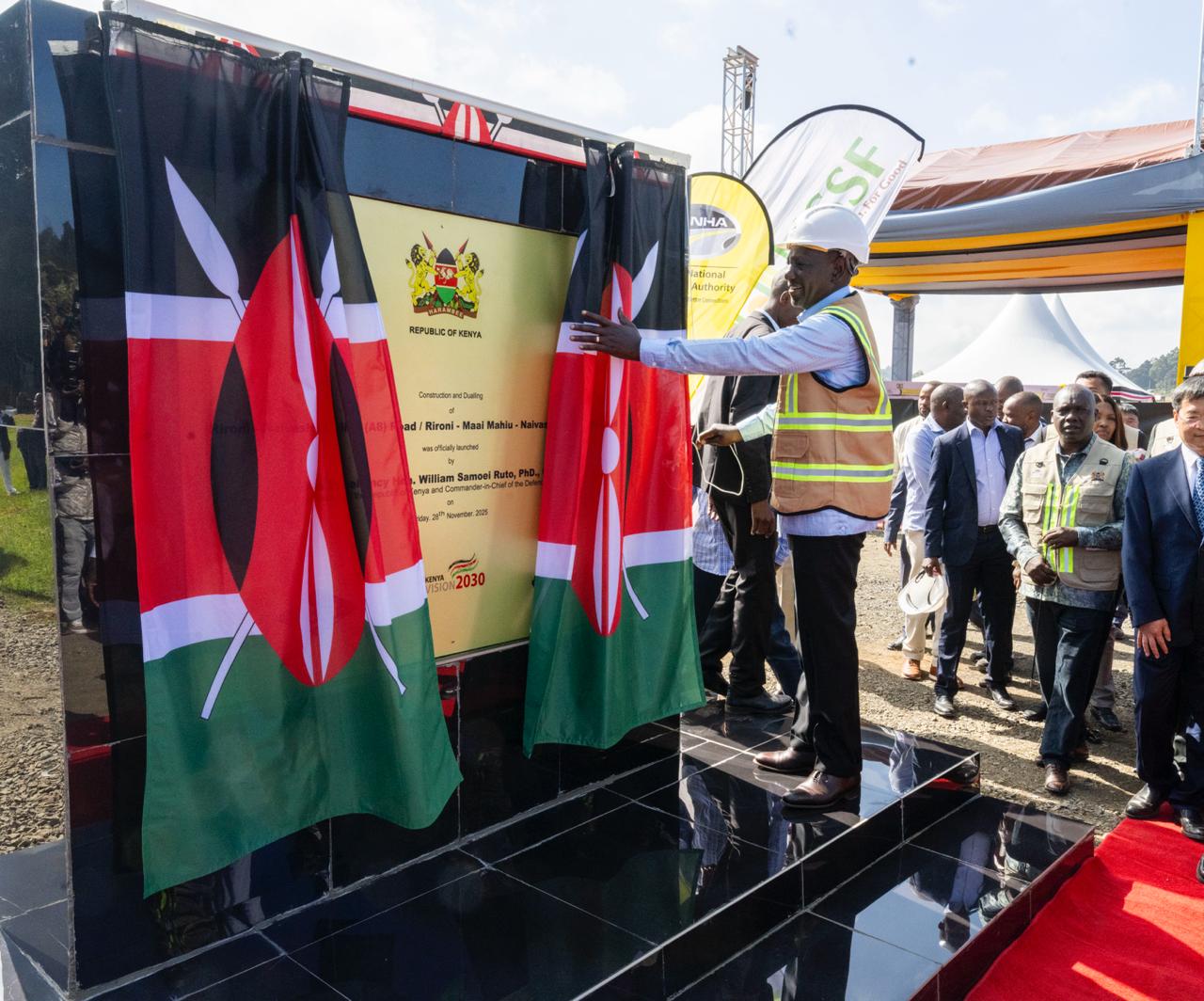 President William Ruto officially launches construction of the Nairobi–Nakuru–Mau Summit and the Nairobi–Maai Mahiu–Naivasha road projects on Friday, November 28, 2025. /PCS
Why the project matters
At its core, the highway upgrade responds to economic, social and strategic imperatives.
First, it enhances Kenya’s competitiveness.
The corridor is the lifeline for goods moving between the Port of Mombasa and inland markets in Kenya and neighbouring countries.
Reducing congestion and improving flow directly lowers logistics costs, making Kenyan exports more competitive and easing import prices for domestic consumers.
Second, it is a major safety intervention.
The Nairobi–Naivasha and Naivasha–Nakuru stretches have long been among Kenya’s most accident-prone.
Controlled access, better geometrics, improved lighting and 24-hour patrols financed through toll revenue are expected to significantly reduce fatalities.
Third, the project will generate employment.
The President announced that “15,000 young Kenyans” will gain skills and jobs as part of the construction workforce.
The PPP Directorate emphasises that local businesses will be integral to the construction and maintenance chain, ensuring Kenyan companies remain at the heart of the transformation.
Fourth, the highways form part of a broader strategy to address the country’s historical infrastructure shortfall.
President Ruto noted that since independence, Kenya had tarmacked only 22,000 kilometres of road—compared to more than a million kilometres in Japan over a similar period.
The project signals the beginning of a new infrastructure expansion push, supported by alternative financing tools and long-term planning.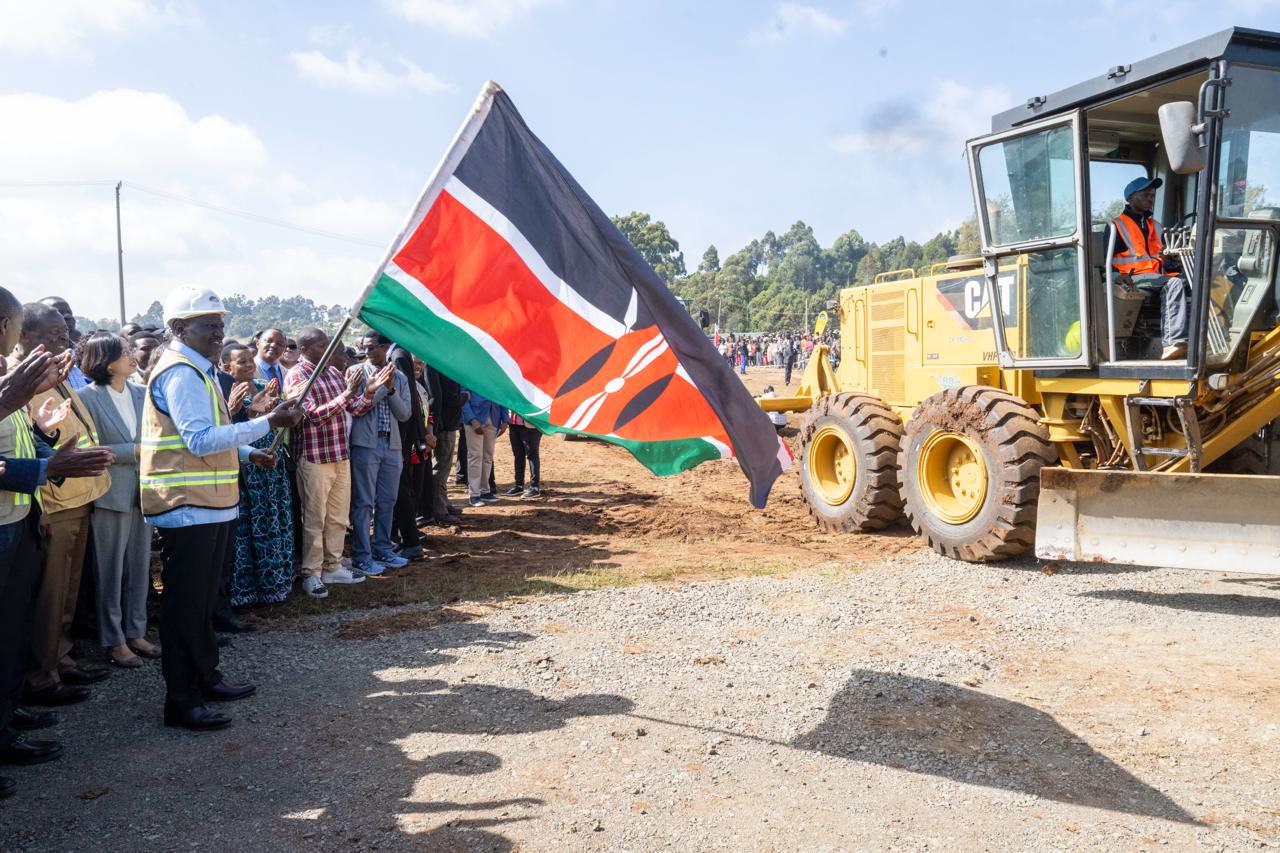 President William Ruto officially launches construction of the Nairobi–Nakuru–Mau Summit and the Nairobi–Maai Mahiu–Naivasha road projects on Friday, November 28, 2025. /PCS
Why PPP was chosen over borrowing or budget funding
While the need for the project has long been recognised, the challenge has always been funding.
In the President’s words, Kenya had been “trapped between options that held back progress.”
The national budget was not a viable route.
“A single major highway can swallow nearly half of our entire annual development budget,” Ruto said, making it impossible to channel funds toward such a mega-project without starving other essential services.
Borrowing was equally constrained. Although the national debt ratio has reduced from 78 per cent of GDP to roughly 64 per cent, fiscal space remains tight.
The National Treasury’s strategy aims to bring the ratio down to the 55 per cent anchor by 2028.
Committing billions to a new loan for the corridor would undermine this trajectory.
Doing nothing, the President argued, “was never an option," yet the country could no longer rely on conventional models without risking deeper fiscal imbalance.
This is the backdrop against which the government turned to the PPP model.
According to the Directorate of Public Private Partnerships, Kenya’s road sector faces a funding shortfall of Sh4 trillion over the next decade.
Annual maintenance needs alone stand at Sh253 billion, far exceeding the Sh100 billion collected through the Road Maintenance Levy Fund.
This means that traditional mechanisms simply cannot sustain the construction and upkeep of high-capacity roads.
Under a toll-based PPP model, the private partner designs, finances, builds, operates and maintains the road for 30 years, recouping its investment through user fees.
Crucially, the government does not take on new debt, and taxpayers avoid long-term repayment obligations.
The Directorate explains that this project “follows a financing model that protects taxpayers from long-term fiscal exposure.”
Unlike earlier proposals, which would have required the government to make fixed availability payments regardless of traffic levels, the current model transfers commercial and traffic risk to the private operator.
The investor is accountable for performance and sustainability. President Ruto framed this shift as part of Kenya’s decision to “build differently.”
He argued that if the country waited for the budget, “we would have waited a lifetime,” and borrowing “would have added to our debts and burdened our children for generations to come.”
The PPP, therefore, became the bold and necessary option that avoided the stagnation he described as “slow regression.”
Ownership, control, and public protection
The PPP Directorate underscores that the highway remains fully owned by the Government of Kenya.
The model in use—Design, Build, Finance, Operate and Transfer—is internationally practised.
The land, road infrastructure and all related assets remain vested in the Republic of Kenya throughout the 30-year concession period.
The private operator’s mandate ends at expiry, after which the road returns fully to government operations.
Oversight is exercised by the National Treasury, the State Department for Roads, and the Kenya National Highways Authority (KeNHA).
The PPP Act, 2021, provides the government with step-in rights in case of non-performance.
Kenya’s experience is informed by global examples, including the Maputo Development Corridor linking Gauteng to Maputo, cited as a stable PPP toll road with decades of successful operation.
Ruto said the construction will be undertaken within two years by a consortium comprising the China Road and Bridge Corporation and the National Social Security Fund Board of Trustees.
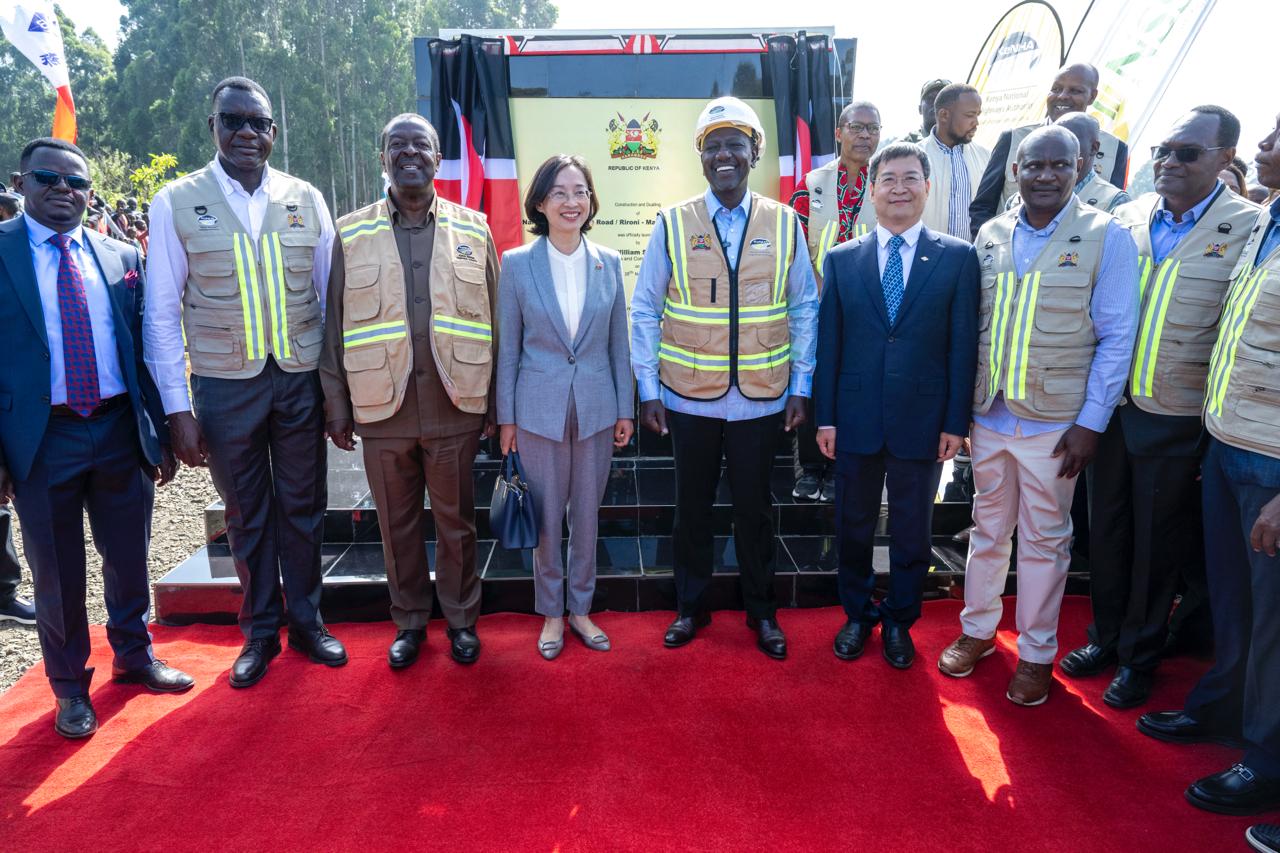 President William Ruto and Chinese experts
Tolling: How it will work and what road users can expect
Tolling will follow the draft National Tolling Policy 2025, which provides a transparent framework for levying, managing and applying toll revenue.
The policy ensures that every shilling collected is ring-fenced for the specific corridor, funding maintenance, safety patrols, lighting, emergency medical response and operations.
The policy allows exemptions or preferential rates for specific classes of vehicles, including ambulances, police and military vehicles, as well as residents along the corridor.
Importantly, the PPP Directorate notes a revenue-sharing mechanism. If toll collections exceed the agreed traffic benchmark, the surplus flows back to the government for investment in other roads.
This prevents excessive profits and protects the public interest.
For users, tolling brings benefits: more durable pavements, shorter travel times, predictable journey planning and continuous safety services.
Road users effectively pay for quality and reliability, while the taxpayer avoids the burden of repaying infrastructure loans.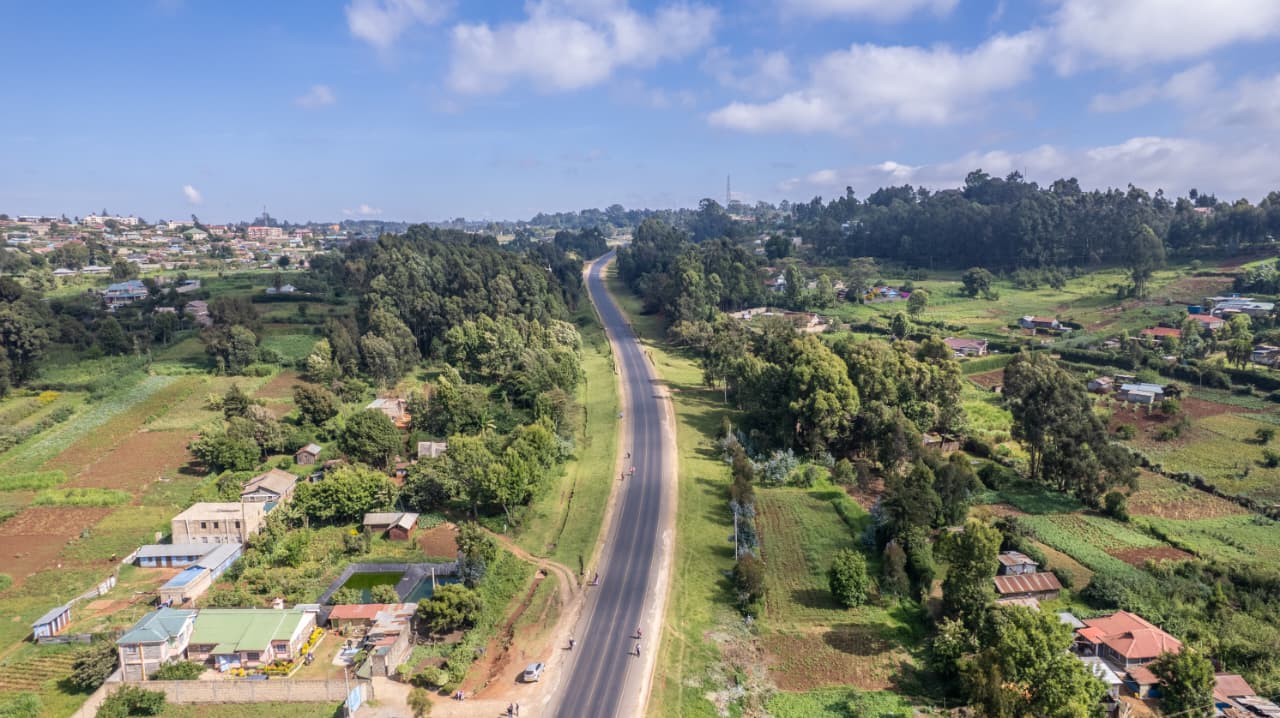 Aerial view of the Nairobi–Nakuru–Mau Summit on Friday, November 28, 2025. /PCS
Why the project has been prioritised
The government has emphasised that the project is not only a Rift Valley investment - it is part of a national PPP pipeline covering regions from the Coast to Western Kenya.
KeNHA is currently assessing the viability of the Great North Corridor, which includes Namanga–Isinya–Athi River–Nairobi–Thika–Kenol–Marua–Isiolo, Mombasa–Lunga Lunga, Kilifi–Malindi, and Mau Summit–Eldoret–Malaba.
"This demonstrates that no region has been singled out for disadvantage. Project selection follows traffic demand, economic potential and corridor connectivity, not regional or political considerations," the PPP Directorate said.
It added that the Nairobi–Nakuru–Mau Summit upgrade sits within the broader agenda of strengthening Kenya’s competitiveness, and supporting the President’s vision to elevate the economy to “first-world” status.
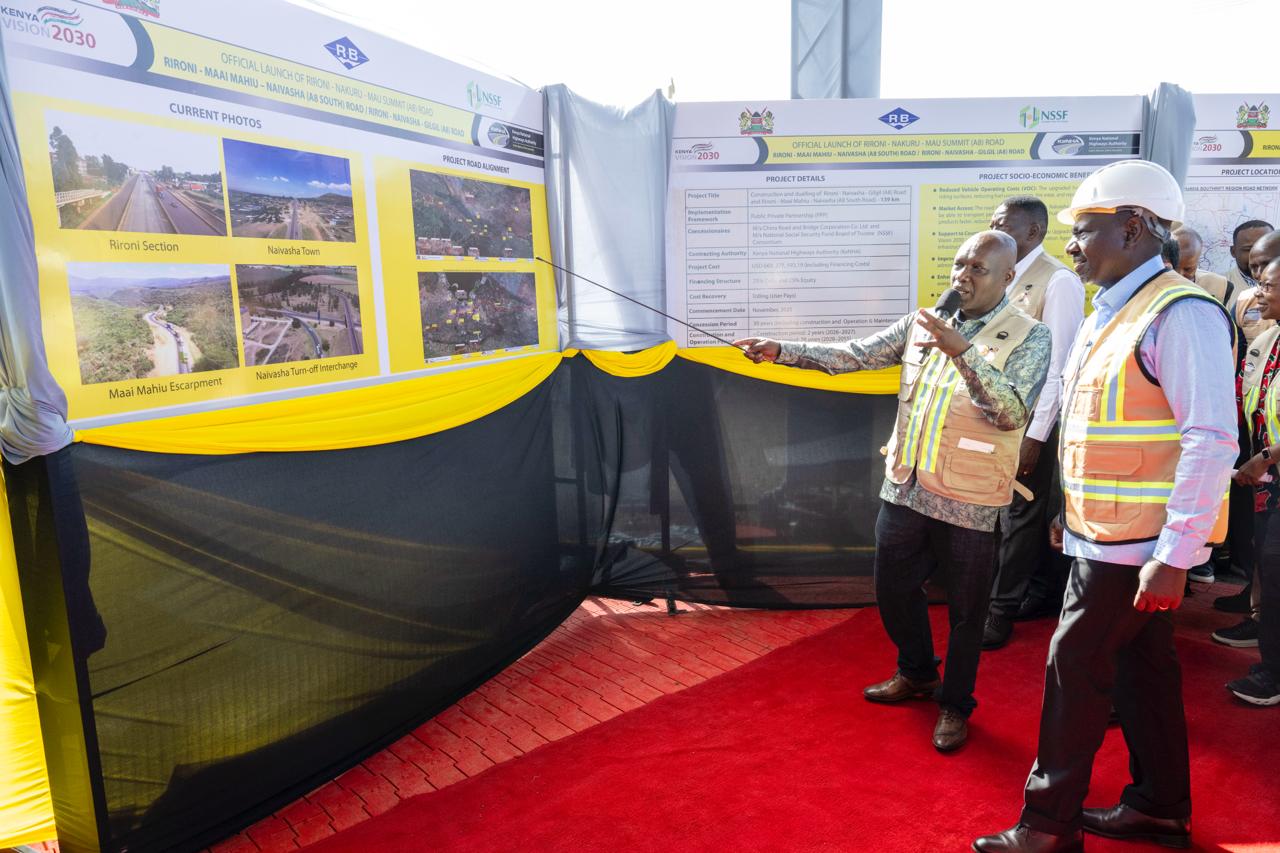 President William Ruto is shown the project scope of the Nairobi-Nakuru-Mau Summit road project, November 28, 2025. /PCS
Looking ahead
In launching the project, President Ruto placed it within a wider economic transformation agenda that includes expanding energy production by 10,000 megawatts, upgrading airports, extending the Standard Gauge Railway from Naivasha to Kisumu and onward to Malaba from 2026, and constructing new industrial and agricultural value chains.
“This is how we deliver the vision of our Bottom-Up Economic Transformation Agenda,” he said. “This is how we ensure that development is not a privilege, but a birthright.”
In many ways, the Nairobi–Nakuru–Mau Summit and Nairobi–Maai Mahiu–Naivasha projects demonstrate a shift away from debt-funded infrastructure toward sustainable, investor-supported models; a focus on safety and economic efficiency; and a commitment to building roads that support Kenya’s long-term growth.
“This is our moment to rise from the ordinary… to walk confidently and decisively into excellence,” Ruto concluded in his address, noting that the highway is not just tarmac. It is a statement of intent.