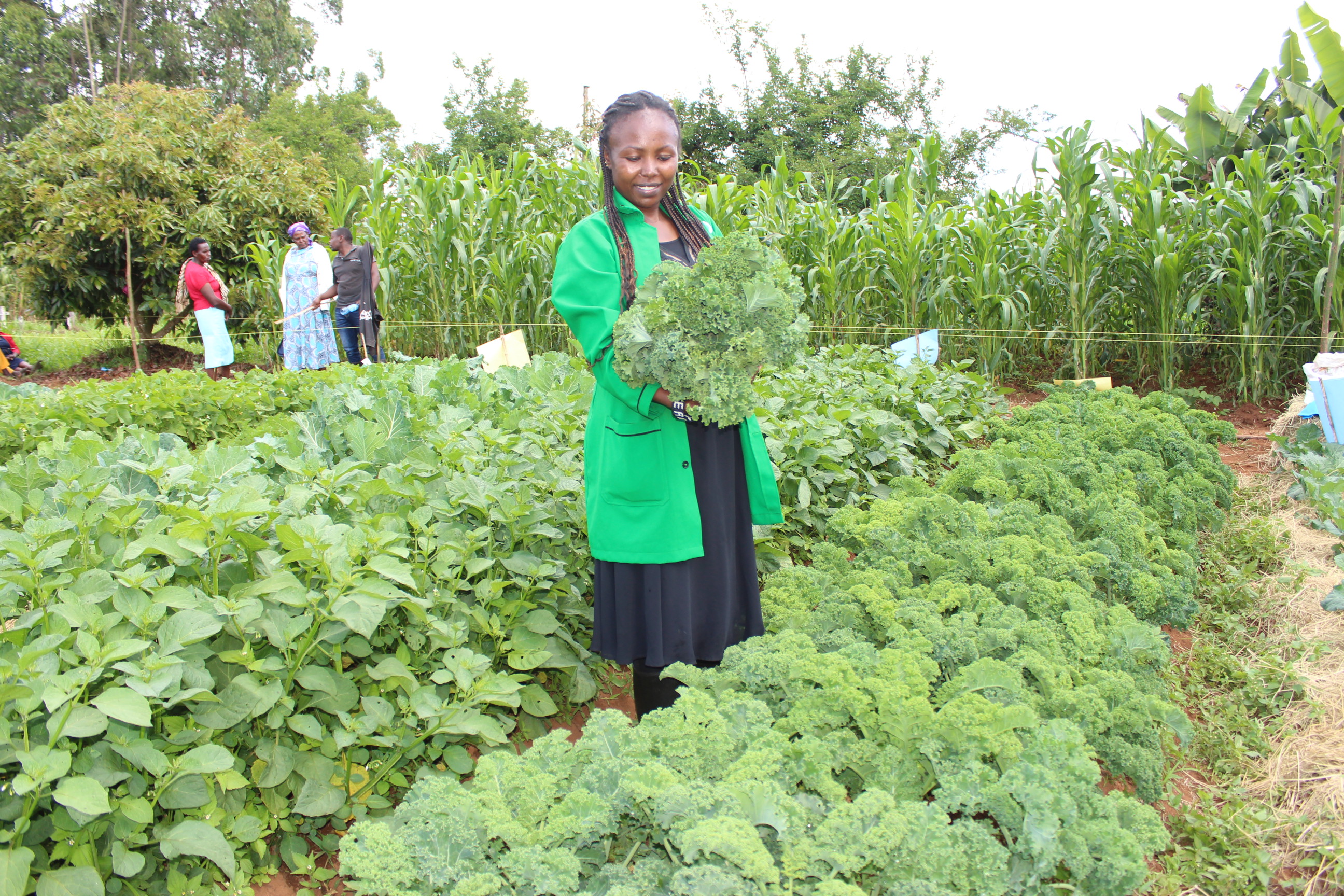
 Teresiah Gitau from Organic Kenya Ltd in a demo farm established in James Kuria's farm in Kinyona, Kigumo./ALICE WAITHERA
WhenJames Kuria was diagnosed with diabetes four years ago, it took him by surprise. He had always taken care to eat right and, with his children all grown up, had nothing stressing him.
The farmer from the Kinyona area in Kigumo subcounty said that though he’d always eat vegetables, his staple meals, like many other families in the Central region, consisted of ugali and rice.
As he embarked on a journey to manage his condition, Kuria realised that his farming activities also played a big role in compromising his immunity and decided to embark on agroecology.
“I started agroecological farming last year, and since then, I have seen such a difference in my health. I feel much stronger,” he said.
In his four-acre farm, Kuria has tea crops on almost two acres while the rest are used for food crops such as maize, cereals, vegetables, arrowroots and fodder for his two dairy cows.
With intercropping, the farmer has been able to grow all the food crops needed for his family’s nutrition and earn an income from vegetable sales.
“The only thing I buy from the shops are brown rice and salt. I grow everything else. This has reduced the money I spend on food and provided my family with healthy meals”.
Among the vegetables Kuria grows in his farm are nightshade, curly kales, kales, cabbages, spinach and pumpkins.
Every day, neighbours flock into his farm to buy the vegetables due to the surety that they have been grown organically, providing him with a stable income.
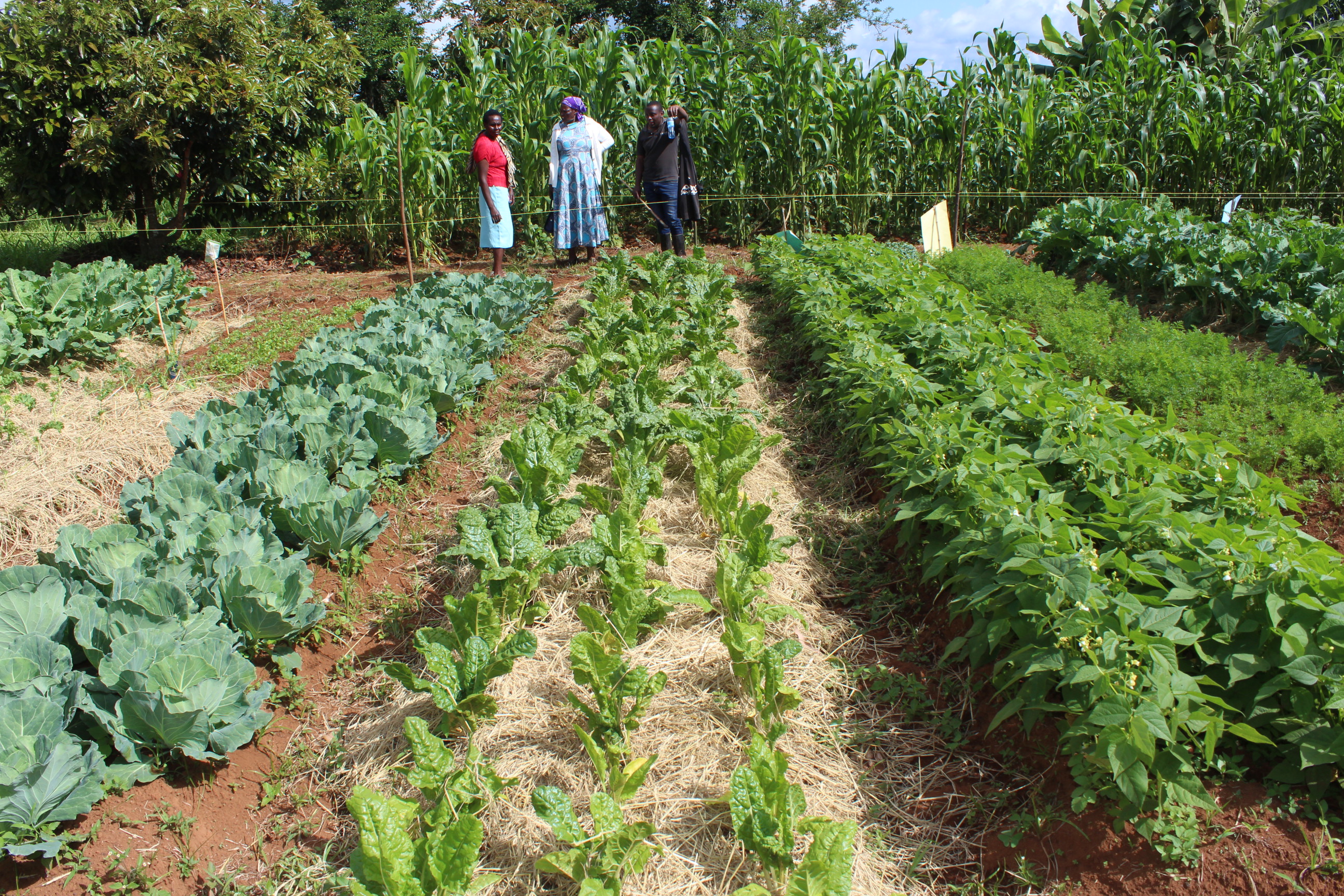 Residents of Kinyona area in Kigumo during a farmers field day on November 26, 2025./ALICE WAITHERA
On Wednesday, Kuria hosted hundreds of farmers during a farmers’ field day organised by Ikumbi tea factory and Organic Agriculture Centre of Kenya. The participants were trained to use bio-inputs to rejuvenate and alkalise their farms’ soils for better harvests and safe foods.
Among the attendants was Julius Karanja, a youthful farmer, who propagates vegetable seedlings for sale.
Karanja said he left formal employment in March to focus on farming after watching his mother commercially engage in organic farming since 2012.
“After college, I decided to get serious with farming as a side hustle but realised that I couldn’t get good quality seeds when I needed them. That’s when the idea of starting a nursery struck me”.
With 25,000 seedlings in his nursery currently, Karanja said he’s unable to satisfy the local market, and has plans to expand it to raise his sales.
The nursery occupies about half-acre of land in his mother’s farm in Kangari, a highly agricultural area located on the foot on the Aberdare forest.
Apart from the nursery, Karanja plants organic cabbage that he sells in the local Kangari market and helps supply eggs from his mother’s poultry farm.
“Farming has been able to comfortably support me. I don’t regret leaving my formal job,” he said, adding that it requires proper marketing and strategy to be successful.
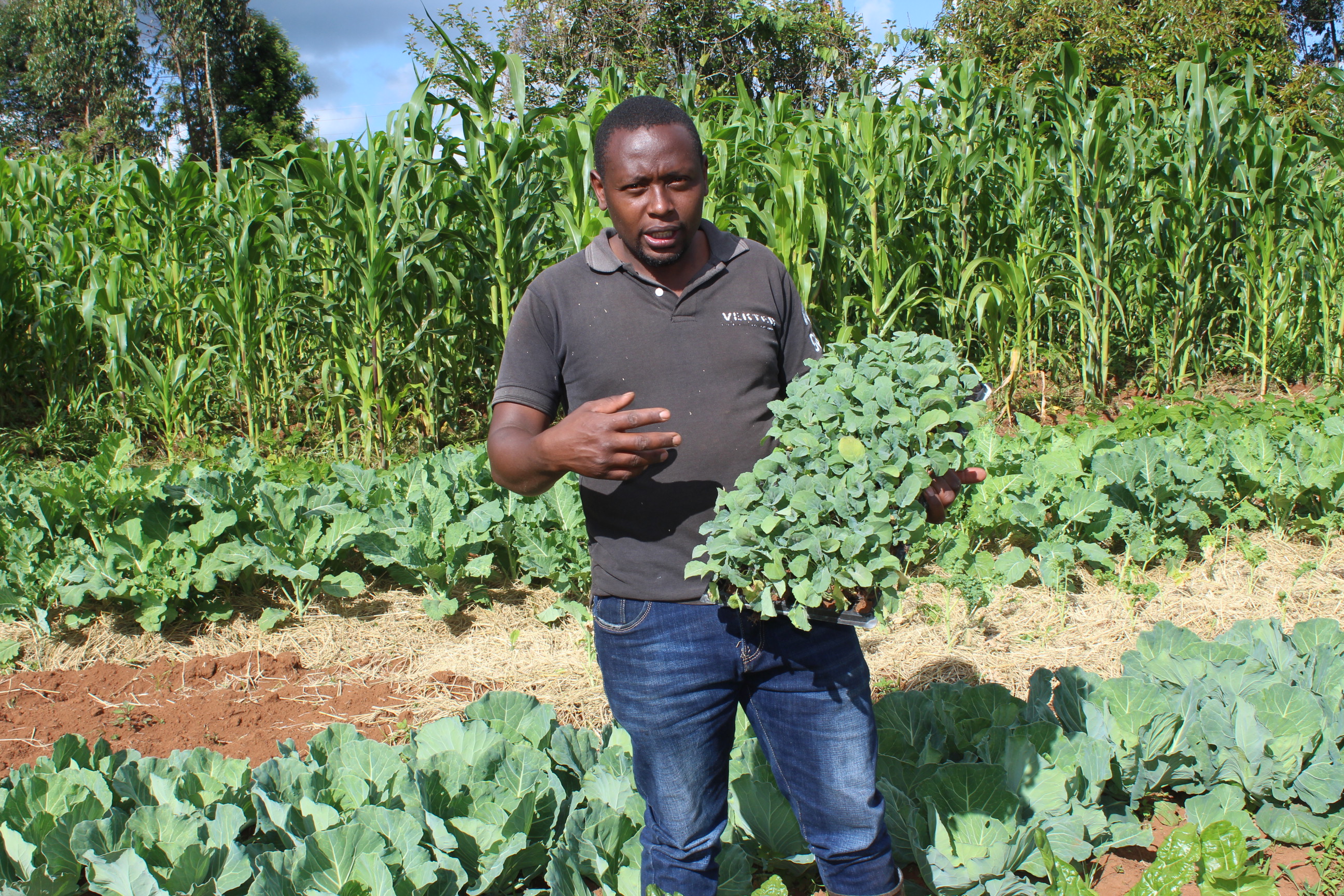 Julius Karanja with some of the seedlings he propagates during a farmers' field day in Kinyona, Kigumo./ALICE WAITHERA
Lawrence Gitonga, the community facilitator under OACK, told farmers that it takes about three seasons for a formerly conventional farm to heal once a farmer starts practising agro-ecology.
“Soils that have been too destroyed by conventional inputs may however, take up to two years but once they are alkalised, the farmer will reap the benefits for many years”.
Farmers whose farms neighbour conventional ones were encouraged to create two-metre buffer zones on which they should plant grass to prevent their crops from absorbing harmful chemicals and dig trenches to collect runoff water from neighbouring farms.
Since the organisation started conducting two farmers’ field days annually, many farmers in Kigumo and nearby subcounties have progressively abandoned harmful chemicals and embraced organic farming.
Gitonga expressed concerns that some commercial conventional farmers sell their produce in the market but buy organic foods from their neighbours to feed their families.
“Those are the ones we are targeting now. If more people practiced organic farming, we’d have healthier food in our markets and less diseases.
“They think they are saving money by using agro-chemicals but after years, the health burden in their families as members develop chronic illnesses is too costly”.
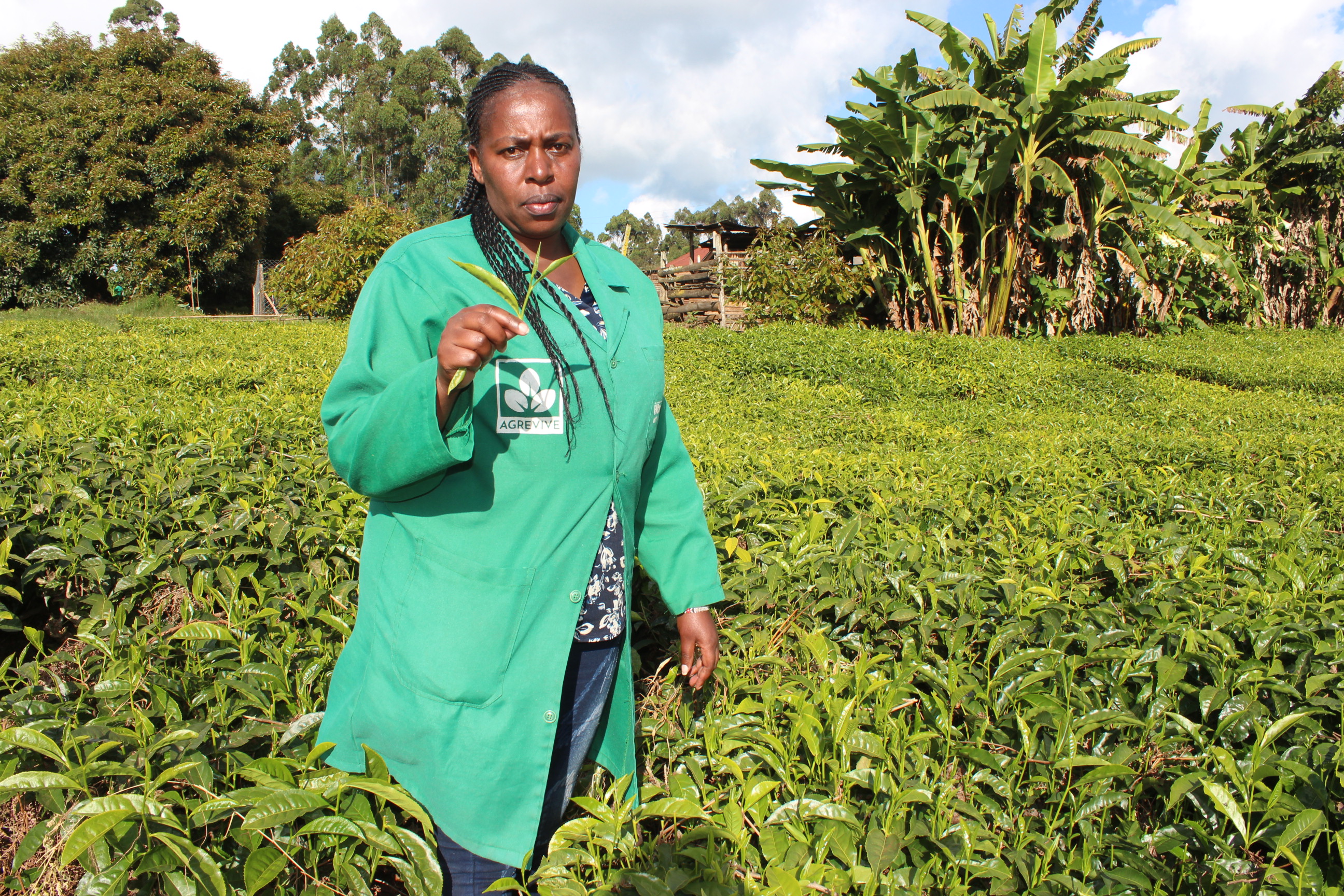 Peninah Kimani, an extension officer at Ikumbi tea factory, displays the two leaves and a bud that farmers should pick for good quality tea./ALICE WAITHERA
Last year, the factory produced 18 million kilogrammes due to climate change and targets 20 million this year, with farmers urged to ensure they prune their tea bushes during the cold season between June and August, when production is dormant.
Ensuring they harvest every seven days reduces wastage and using the right harvesting baskets maintains their quality after harvesting while the right manure application increases production.
“We also want them to start kitchen gardens for sustainable food supply and practice minimum tillage. We want to work with healthy farmers”.
Tabitha Waithera, the operations officer in Chai Sacco’s Kangari office, said the firm supported the activity as tea farmers are some of its main customer base, and urged more tea factories to embark on similar activities.
Unaitas Kangari branch manager Jackson Njogu on his part said when farmers earn more and are economically productive, it impacts the sacco positively.
“We know training impacts farmers’ lives long term and helps them get extra savings, educate their children and provide us with skilled workers and grow the area”.