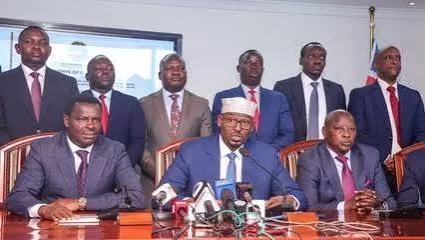
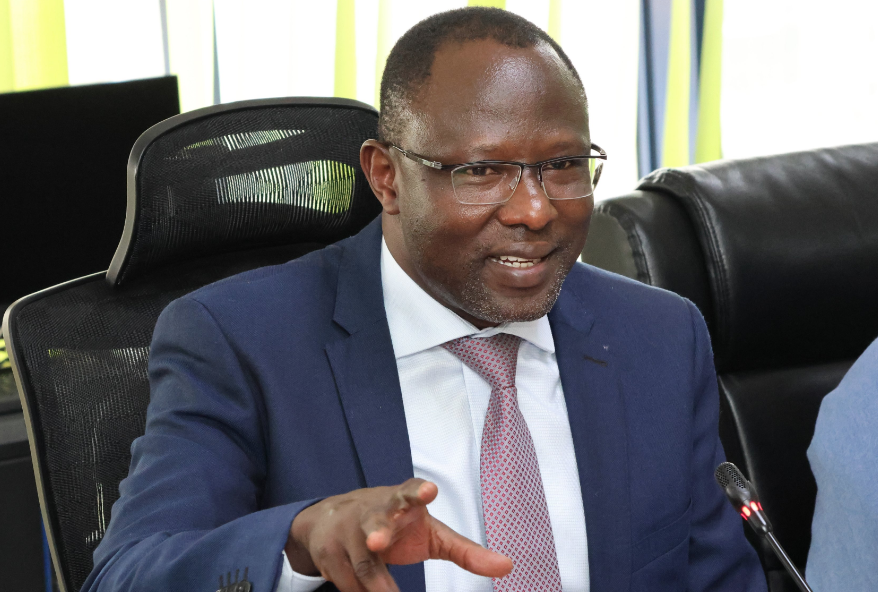
 IEBC chairperson Erastus Ethekon
The Independent Electoral and Boundaries Commission (IEBC) is once again in the spotlight ahead of Thursday’s by-elections and the 2027 General Election. Concerns over the commission’s impartiality have resurfaced, with critics warning its credibility is at stake. IEBC chairperson Erastus Ethekon spoke exclusively to the Star on the commission’s preparedness, the ongoing political accusations and the road to 2027.
How prepared is the commission for Thursday’s by-elections?
We are fully prepared. We have met all legal requirements and the public can be assured the elections will be credible, free and fair. We have recruited and trained election officials across all 24 electoral areas, and every officer has taken an oath committing to integrity, impartiality and professionalism. The officials have already been deployed and commissioners will also be on the ground to supervise the exercise. We have received and distributed all election materials. So yes, we are ready.
Some politicians, especially from the opposition, have claimed a plot to rig both the by-elections and the 2027 General Election.
Those claims are far-fetched. Politicians say many things in public, but very few file formal complaints with us. When they do, we investigate and take appropriate action. There is no monkey business here. Since I joined the commission, I have not seen or heard of any wrongdoing. We urge anyone with concerns to officially report them so that we can investigate and decide. Everything we do is guided strictly by the law. Politicians will speak, but we remain anchored in due process. That is why we investigated the violence that happened in Kasipul and took action. We fined the candidates who were responsible so that no one would say that we saw violence and kept quiet.
Kalonzo Musyoka recently said CEO Marjan Hussein should not oversee the 2027 election.
I have not heard of any formal complaint from him. Perhaps he made those remarks to the media, but he has not raised any issue with the commission regarding the conduct of our CEO or any other officer.
Beyond political accusations, IEBC is also facing several court cases. Are you worried this could derail preparations for 2027?
Not at all. Politicians will always comment about the commission, especially as elections approach. They have the constitutional right to express themselves, even if what they say is not always accurate. That is why we encourage dialogue and official reporting of concerns.
As for court cases, that is also a constitutional right. Most of these petitions are not about wrongdoing by the commission but about seeking legal clarity or amendments. The good thing is that they have been filed early enough and we expect them to be determined in time. We do not foresee any disruption.
IEBC had proposed several legal reforms in its 2022 post-election evaluation report, yet most have not been processed by Parliament. Is this a concern?
We have formed a technical committee composed of various stakeholders to audit all election-related laws. The committee is still working and has not submitted its final report. Once we receive it, we will review the recommendations and draft the necessary bills to forward to Parliament. So, it is not accurate to say Parliament has delayed — we are yet to submit our proposals. The process is ongoing.
Is the commission planning to replace the election technology used in previous polls?
Just as we are auditing the election laws, we are also reviewing our technology — both software and hardware. There were reports that the commission estimated it would need about Sh7 billion to replace the old technology, but I want to clarify that these were just projections by the secretariat. We have not yet convened as the commission to review and audit the status of the election devices and technology. Once we do, we will decide which ones need full replacement and which can be improved or updated. Of course, if we procured some devices in 2013, those are now likely outdated. We will need to explore new technology options and see which ones we can enhance. Therefore, we are currently unsure of the overall costs.
Has the commission received full financial support from the National Treasury? What about funding for the 2027 General Election?
Yes, we received the necessary funds for the upcoming by-elections, which is why they are proceeding as scheduled. Our team is participating in the Medium-Term Expenditure Framework discussions, and we hope Treasury and Parliament will consider our submissions. The final decision, however, rests with them. We hope everything will be done in good time so that we can prepare adequately for the general election.
Why are Kenyan elections so costly?
That is something I often mention when I am outside the country. But after engaging with our counterparts in the region and other jurisdictions, I can confirm that we are within the standard budget. We have connected with many countries, such as Ghana, Singapore, Canada, the UK, and others, and found that our budget range is comparable. Keep in mind, in Kenya, we conduct elections for six elective seats. In contrast, most other countries only hold elections for three seats: President, Member of Parliament, and a local representative. If we split the elections into national and county levels, the costs would increase even further. We are also leveraging economies of scale, particularly in transport and hiring election officials. Personnel costs make up more than 55 per cent of the election budget, as we need to recruit, train, feed, and pay officials. While costly, it’s necessary — elections cannot be conducted without properly trained and well-paid staff.
What final message do you have for Kenyans ahead of the by-elections and the 2027 General Election?
I want to reassure Kenyans that the commission will deliver free, fair and credible elections, both during the by-elections and the general election. As a commission, we have no room for misconduct. We took an oath to uphold the law and fulfil our duties. We will continue engaging with our partners and updating Kenyans on our progress. Together, we will deliver credible elections.