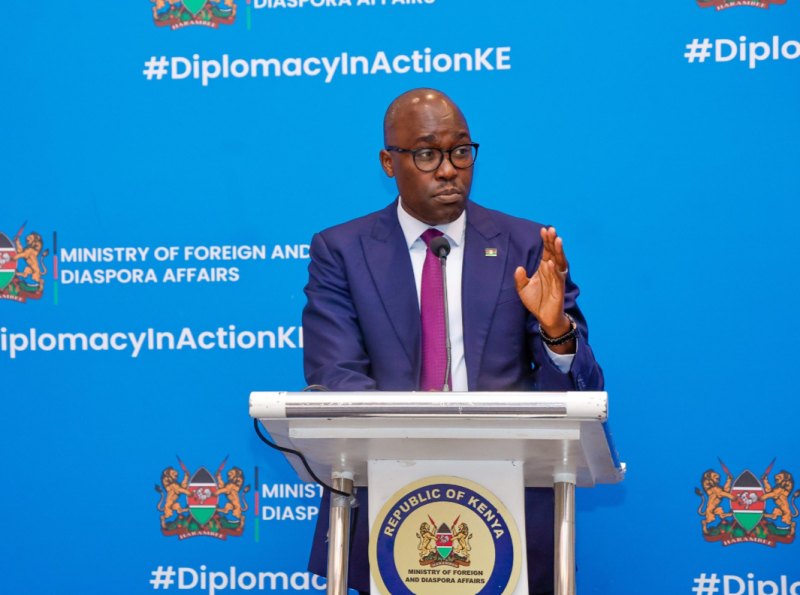
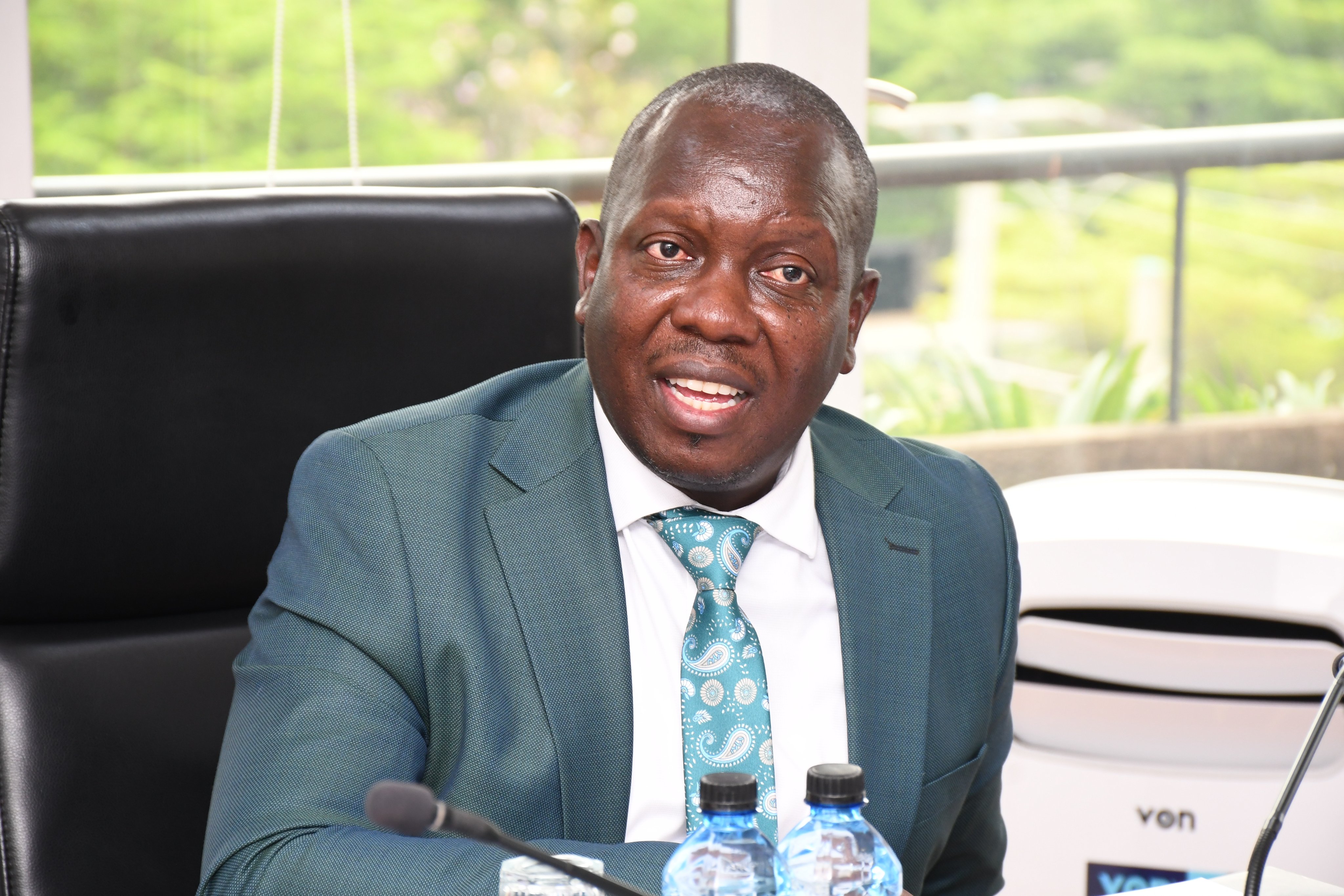
 Director of Public Prosecutions, Renson Ingonga/FILE
The Director of Public Prosecutions, Renson Ingonga, has opposed proposals to amend the constitution to give prosecutorial powers to the Ethics and Anti-Corruption Commission and the National Cohesion and Integration Commission.
He argued that granting such powers to the two agencies would trigger targeted prosecutions and risk abuse of authority.
His remarks came as senators questioned why his office has been slow in prosecuting high-profile cases involving politicians accused of hate speech, incitement and inflammatory remarks.
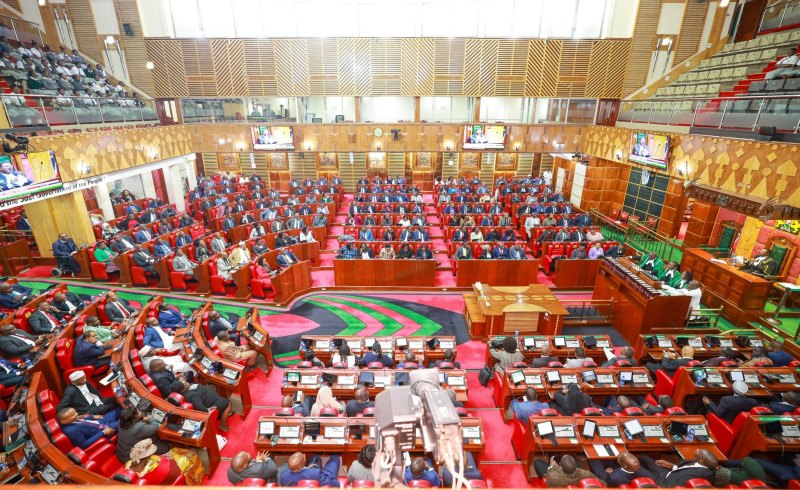
Appearing before the Senate National Cohesion Committee, chaired by Marsabit Senator Mohammed Chute, Ingonga was put to task to explain why the ODPP has not firmly dealt with hate speech offenders, particularly prominent political figures.
Ingonga told the committee that his office has charged Naivasha MP Jayne Kihara, former Kiambu Governor Ferdinand Waititu and Mumias East MP Peter Salasya with various counts of hate speech.
“The ODPP has established and operationalised the Hate Speech and Electoral Justice Division,” he said.
The Division, he said, is aimed at enhancing and strengthening the responsiveness of the office in the prosecution and investigation of election-related offences and crimes that undermine national cohesion,” he said.
He added that the High Court has stayed the prosecution and plea-taking of Kihara, with the case scheduled for mention on November 27, 2025.
Waititu’s hearing is set for January 15, 2026, while Salasya’s case is slated for January 17, 2026.
However, Senator Chute questioned why no major political figure has been successfully prosecuted despite rising levels of inflammatory rhetoric ahead of the 2027 elections.
“We have seen the growing number of inflammatory remarks by politicians. Why are they not being prosecuted?” he asked.
Ingonga responded that the ODPP, in partnership with other institutions, has put in place mechanisms to curb incitement and hate speech by influential public and political figures.
“The ODPP has strenuously opposed the release of high-profile public or state officials on bond pending investigations or trials."
"We have held strategic meetings with the NCIC, Kenya National Commission on Human Rights and the Directorate of Criminal Investigations to strengthen cooperation in investigating and prosecuting election offences and related crimes,” he said.
Despite these efforts, Ingonga said several challenges continue to hinder effective enforcement. Among them are inadequate funding, resource constraints, gaps in the legal framework and limitations within the public service.
He noted that the ODPP struggles to conduct adequate public sensitisation campaigns, build digital monitoring infrastructure, strengthen inter-agency coordination, train specialised prosecutors and prepare comprehensive election-related prosecution teams.
“The National Cohesion and Integration Act does not define key terms such as hate speech, incitement and ethnic contempt, creating ambiguity in interpretation,” he added.
Ingonga urged Parliament to increase ODPP funding to allow for the recruitment of more prosecutors, amend the NCIC Act to broaden the definitions of hate speech and incitement, and strengthen the enforcement of Chapter Six of the Constitution on leadership and integrity.
His appearance came a week after the Kenya National Commission on Human Rights (KNCHR) criticised the ODPP for withdrawing several high-profile hate speech and incitement cases.
The commission also cited gaps within the NCIC that undermine efforts to address inflammatory speech and incitement to violence.
KNCHR argued that current definitions of prohibited speech focus too narrowly on ethnicity and race, ignoring other forms of discrimination—such as gender, health status, disability, religion, age, or economic status—that also fuel electoral tensions.
Human Rights Watch added that prosecuting modern digital hate speech faces major obstacles under Kenya’s Evidence Act. The NGO said the Act contains conflicting provisions on the admissibility of electronic evidence.
Section 106B imposes strict requirements, mandating that electronic records be accompanied by a technical certificate detailing how the material was produced and signed by the person responsible for the device.
In contrast, Section 78A—introduced later—simply states that “electronic messages and digital material shall be admissible as evidence” and cannot be rejected merely because they are not in their original form.
INSTANT ANALYSIS
Kenya has addressed hate speech through its National Cohesion and Integration Act, which penalizes it with fines or imprisonment, but has faced challenges with successful convictions due to case backlogs. High-profile cases have occurred, particularly around elections, involving incidents on platforms like radio and social media, and in one notable instance, the High Court ruled a petition against Meta could proceed to address the spread of harmful content on Facebook.