Kenya First: A generation voices its rage
In Kenya, 2025 became a watershed year for youth-led activism. What began as protests over a contentious Finance Bill in 2024 evolved into a deeper political reckoning.
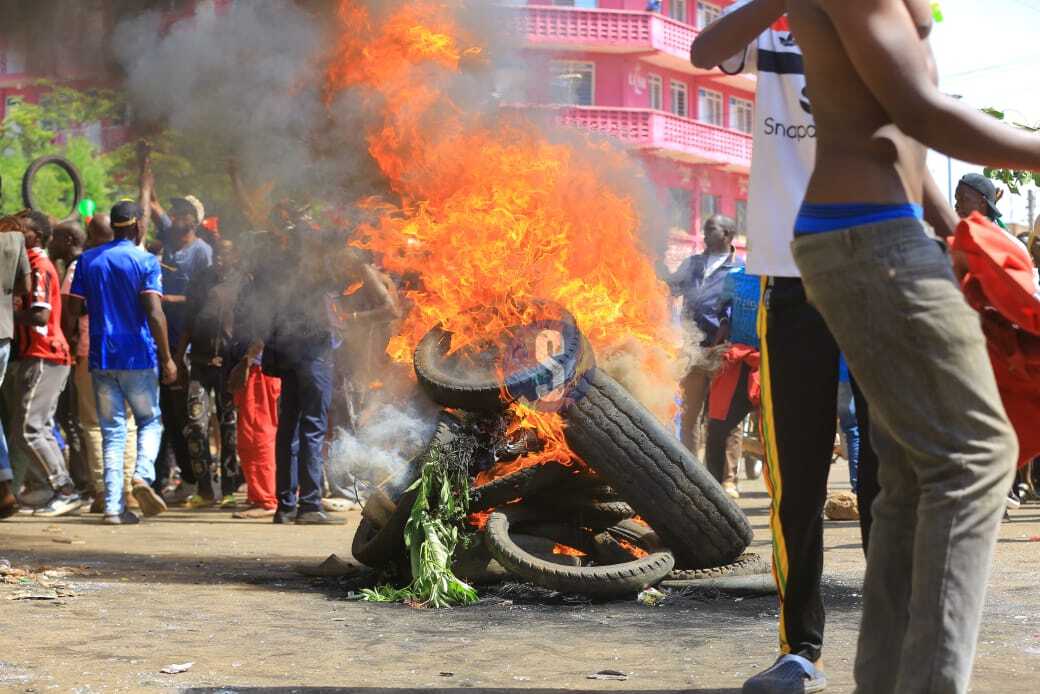
Since June 2024, spilling into the new year, young Kenyans, many of them part of Generation Z, poured into the streets of Nairobi and other towns, demanding not just economic relief, but accountability, justice and systemic change.
At the centre of the demonstrations was a growing sense of frustration over the high cost of living, alleged corruption and reported incidents of police brutality.
Surveys suggest that, over time, political dissatisfaction overtook economic grievances. According to a GeoPoll report on the June 25, 2025, Gen Z protests in Kenya, 31 per cent of respondents said political dissatisfaction was their main reason for protesting, rather than economic issues or taxes alone.
The shift from economic grievances, such as tax increases, to political dissatisfaction indicated that Gen Z protesters were not only concerned about immediate financial pressures but also broader governance issues.
Their demands appeared to extend beyond short-term remedies, reflecting calls for structural change and a stronger political voice.
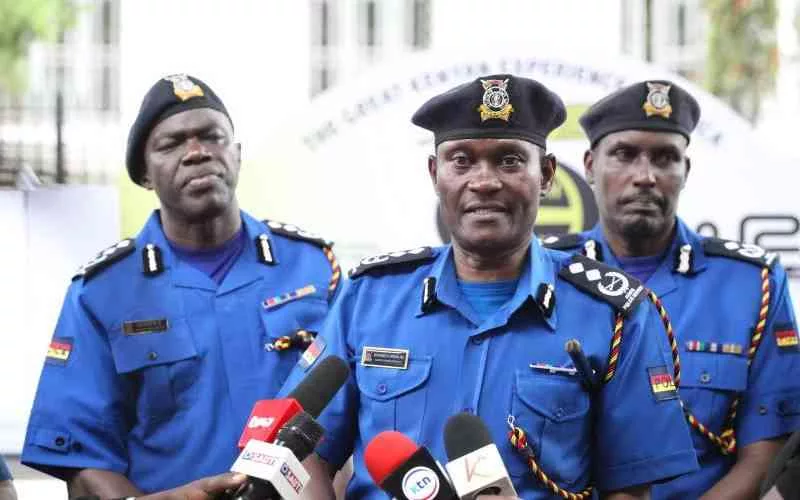
The protests were not without consequence. Reports documented hundreds of injuries, more than 1,000 arrests and several deaths.
According to Human Rights Watch, “at least 16 people were shot dead” by police during the protests.
At the time, the organisation said: “Kenyan authorities should not treat protesters as criminals … Both Kenyan law and international human rights law require Kenya to recognize protests as a legitimate form of expression … rather than ruthlessly silence.”
The Kenya National Commission on Human Rights (KNCHR) reported that more than 400 people were injured, including demonstrators, police officers and journalists.
Amnesty International said that “at least 128 deaths, 3,000 arrests and over 83 enforced disappearances” were recorded across the 2024 and 2025 protests.
For many young people, the demonstrations were not only about immediate outcomes. They were framed as moral and legal demands for a government that listens, systems that protect citizens and institutions that respect public participation.
What is youth activism and why it matters now
Before examining developments in other countries, it is important to understand what drives these Gen Z mobilisations.
Youth activism refers to organised efforts by young people, particularly those in their late teens and twenties, to influence social, political or economic change.
These are not isolated protests, but sustained movements, often rooted in digital spaces, with decentralised structures and strategies that combine street mobilisation with online organising.
For today’s young activists, inequality, corruption and failing social services are not abstract ideas, but everyday realities.
Unlike earlier generations, Gen Z is making extensive use of social media, encrypted messaging apps, gaming platforms and other digital tools to coordinate action.
For many, platforms such as TikTok, Discord and Instagram are not only communication channels, but critical organising spaces.
These movements are reshaping how democracy is understood. They are calling not only for economic relief, but also institutional reform, including the rule of law, transparency, accountability and improved governance.
Youth activism in 2025 compelled governments to respond, sometimes through concessions, sometimes through restrictive measures, but consistently drawing attention to questions of generational equity.
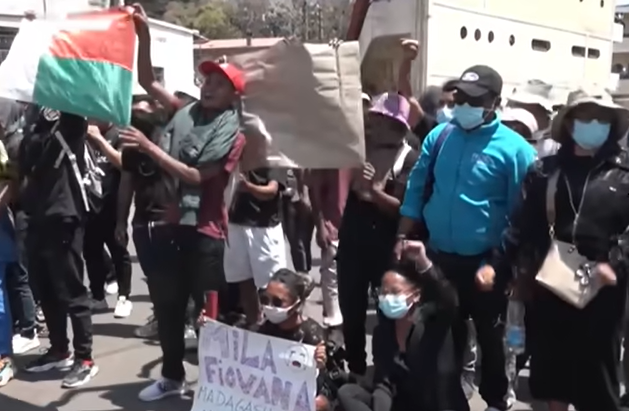 Malagasy citizens protest on the streets of Antananarivo
Madagascar: Protest over basic rights becomes political earthquake
On September 25, 2025, youth-led protests erupted across Madagascar, triggered by prolonged power outages and water shortages in the capital, Antananarivo.
A 22-year-old business student, Henintsoa Andriniaina, told Al Jazeera: “We fetch water in the dark, we sleep through power cuts, and they tell us to be patient? For how long?”
According to Al Jazeera, demonstrations over failing infrastructure quickly developed into broader opposition to President Andry Rajoelina’s administration.
Young protesters, many identifying with the “Gen Z Madagascar” movement or “Leo Délestage,” marched carrying jerrycans and tin lamps, known locally as “jiro-kapoaka,” symbols of daily hardship.
Roads were blocked with burning tyres, and clashes were reported between protesters and security forces, who used tear gas and rubber bullets.
Authorities responded by imposing a dusk-to-dawn curfew in the capital.
By September 29, 2025, President Rajoelina announced the dissolution of his government, citing the need for reform and acknowledging governance failures.
The United Nations reported that at least 22 people died during the unrest, with hundreds injured.
The UN Secretary-General and the UN High Commissioner for Human Rights expressed concern, calling for dialogue and respect for human rights.
Observers noted that the protests carried a legal and systemic dimension, with calls for structural reform rather than changes in leadership alone.
One banner read, “Mila rafitra vaovao,” meaning “we need a new system.”
Reports indicated that President Rajoelina later left the country amid mounting pressure, and subsequent political processes led to his removal from office.
A transitional administration, known as the Zafisambo government, was later formed.
On October 11, reports indicated that members of the elite CAPSAT unit aligned themselves with protesters, a development that shifted the balance of power.
While the protests led to major political changes, analysts noted that they did not fully resolve broader questions around democratic governance.
Morocco: GenZ 212 confronts systematic neglect
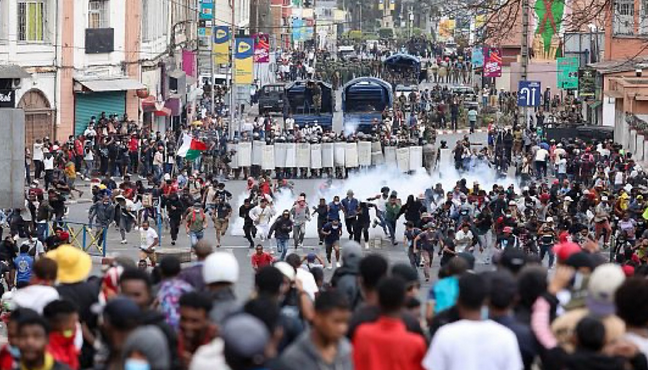
In Morocco, a decentralised youth movement known as GenZ 212, referencing the country’s international dialling code, gained momentum in late September 2025.
Demonstrations were reported in Rabat, Casablanca, Marrakech and other cities, with protesters calling for improved education, healthcare and employment opportunities.
Participants criticised what they described as government prioritisation of sports infrastructure over essential public services.
The movement used a combination of street protests, student activism, online organising, civil disobedience and, at times, unrest.
At least three deaths, 28 injuries, including one critical case in Oujda, and more than 400 arrests were reported.
According to AP News, by mid-October more than 2,400 people had been charged, with rights groups raising concerns about the scope of the response.
Authorities said those charged faced a range of offences, while critics described the measures as a broad crackdown on dissent.
Rights organisations reported that many of those detained had participated in peaceful demonstrations.
King Mohammed VI later addressed parliament, urging faster reforms on job creation and public services, while avoiding deeper political reforms sought by protesters.
Online platforms played a central role in organising. Discord was widely used, with a GenZ 212 channel reported to have more than 200,000 members.
The movement remained largely leaderless but highly coordinated, reflecting evolving models of political mobilisation.
Nepal: The social media ban that sparked a revolution
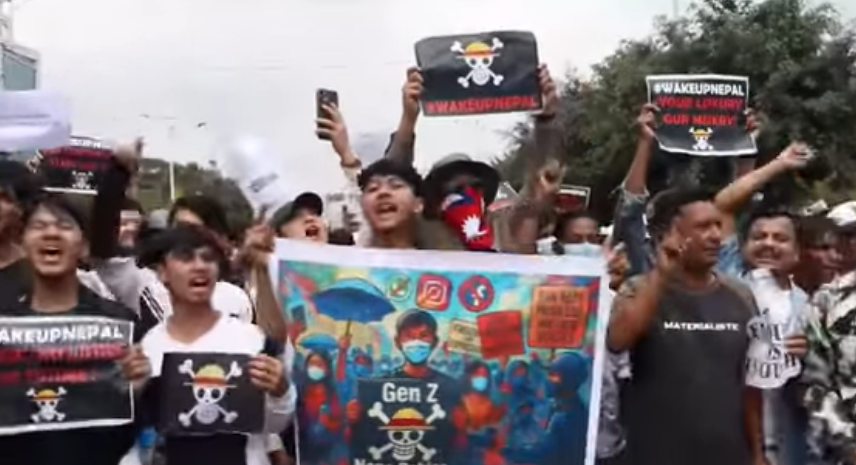
One of the most dramatic youth-led mobilisations of 2025 occurred in Nepal, following the government’s decision to ban 26 social media platforms.
The platforms affected included Facebook, X, WhatsApp, YouTube and Instagram.
The ban took effect on September 4, with officials stating that the platforms had failed to comply with new registration rules, which critics described as restrictive.
On September 8, tens of thousands of people, many of them students, gathered in Kathmandu.
Clashes followed. Security forces used tear gas, water cannons, batons, rubber bullets and live ammunition. Protesters set fire to parliament, the presidential residence and the Supreme Court, and reports indicated that 66 government buildings were damaged.
At least 19 people were reported dead, with hundreds injured.
Human Rights Watch condemned the violence and called for accountability.
“The recent violence in Nepal included serious human rights violations, and those responsible should be held accountable, whether they are security forces or political actors,” said HRW Deputy Asia Director Meenakshi Ganguly.
She called for investigations that were “independent, time-bound, and transparent.”
Prime Minister KP Sharma Oli later resigned, and the social media ban was lifted.
Protesters also raised broader concerns about corruption, political privilege and elite networks.
Despite restrictions, young people used VPNs and Discord servers, including “Hami Nepal,” to coordinate.
Following consultations, Sushila Karki, Nepal’s first female Chief Justice, was appointed interim prime minister.
Indonesia: Quiet roars, digital firestorms
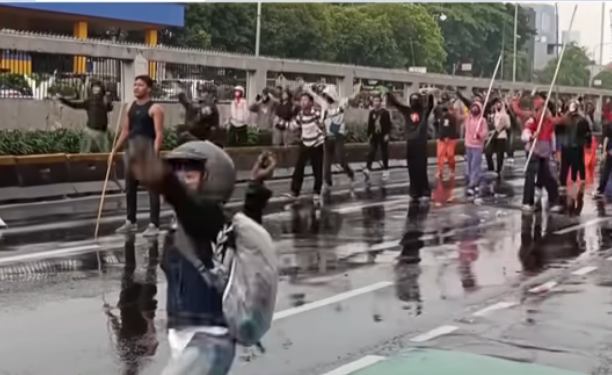
Indonesia also experienced a surge in youth activism between August and September 2025.
Protests focused on economic pressures, governance and education.
A student, Affan Kurniawan, who died after being struck by a police armoured vehicle, became a symbol for protesters.
Demonstrators adopted the “Straw Hat Pirates” flag from the One Piece manga, a symbol increasingly visible in global protests.
Gen Z activists used TikTok, Discord and other platforms to mobilise, combining online coordination with street action.
While arrests were reported, calls for structural reform remained central.
Why this generation is different and why it could last
Gen Z has grown up building careers, relationships and political identities online, translating digital fluency into collective action.
For many, the struggle is about dignity, rights and accountability, not only economic relief.
Youth activism in 2025 was global in outlook, with shared symbols and language across borders.
These movements questioned not only policy but political legitimacy, pushing for deeper transformation.
The year that youth reshaped the map
Looking back, 2025 may be remembered as a turning point when Gen Z moved from the margins to the centre of political discourse.
From Nairobi to Antananarivo, Kathmandu to Rabat and Jakarta, young people disrupted established systems.
Whether these movements will lead to lasting institutional change remains uncertain.
What is clear is that Gen Z can no longer be dismissed as disengaged.
In 2025, their voices were not only heard. They resonated.