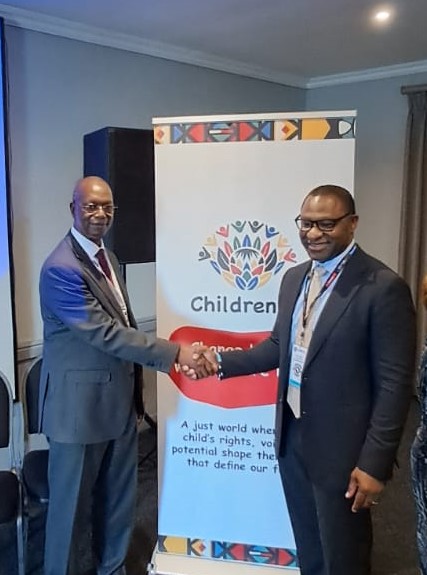
A new early-learning initiative announced at the G20 Social Summit in Johannesburg could reshape how millions of African children acquire basic literacy and numeracy.
The XPRIZE Accelerate Learning Prize—developed in partnership with Equity Group Foundation (EGF)—aims to inspire low-cost, scalable tools that help children master foundational skills within just one year.
For families, teachers, and early learners, the initiative offers hope at a time when sub-Saharan Africa faces one of the world’s deepest learning gaps.
Today, more than 85 per cent of ten-year-olds cannot read and understand a simple text, a crisis that threatens long-term economic prospects for a region projected to be home to 40 per cent of the world’s children by 2050.
If successful, the prize could reach up to 100 million children over the next decade, making it one of the most ambitious learning transformation efforts ever pursued on the continent.
The model rewards solutions that demonstrate the best outcomes for the most students at the lowest cost, a design that directly targets overcrowded classrooms, under-resourced schools, and constrained education budgets.
Equity Group Foundation says the initiative places early learning at the heart of Africa’s economic future. Dr James Mwangi, Executive Chairman of EGF and Group MD and CEO of Equity Group Holdings, said the partnership represents a critical pivot for the continent.
“Africa’s demographic promise will only become a dividend if we prepare our children for a future driven by science, technology, entrepreneurship, and governance. Our partnership with XPRIZE gives us the platform to build this foundation at scale,” he said.
Teachers working in low-resource settings say the prize’s focus on affordability is especially significant. Many classrooms operate without adequate textbooks, digital devices, or teaching aids.
Innovations that function offline, use minimal data, or rely on community-based learning methods could dramatically reduce disparities between rural and urban learners.
Education leaders also emphasise the broader workforce implications. With economies shifting toward AI-driven industries, advanced manufacturing, and digital services, early mastery of literacy and numeracy becomes the gateway to all modern skills.
The prize complements EGF’s wider youth pathways—connecting early learning to coding, STEM, data science, and innovation programs run through partnerships with WorldQuant University, IamtheCODE, and UNDP’s Timbuktoo initiative. Professor Isaac Macharia, Group Board Chairman of Equity Group Holdings, underscored the long-term stakes.
“Africa is poised to become the world’s most important talent hub. That future depends on strong learning foundations. The Accelerate Learning Prize ensures that every child has a chance to step into the global economy with confidence,” he said.
XPRIZE leaders believe the competition will attract innovators capable of designing solutions that serve children in remote villages as effectively as those in urban centres. Alexander Nicholas, Executive Vice President of Learning + Society at XPRIZE, said the initiative is ultimately about unlocking human potential.
“Education fuels human potential. If we want Africa’s children to lead in the jobs of the future, we must begin with early learning. This prize calls on the world’s brightest minds to design solutions that can uplift millions, accelerating Africa’s future,” he said.
Across the continent, parents, educators, and community leaders are watching closely. For them, this is not just a global contest; it is a chance to reshape the life trajectories of millions of children who risk being left behind.
If the initiative delivers on its promise, the XPRIZE Accelerate Learning Prize could become one of Africa’s most consequential investments in human capital, not because of the partnership that launched it, but because of the children whose futures depend on stronger foundations.