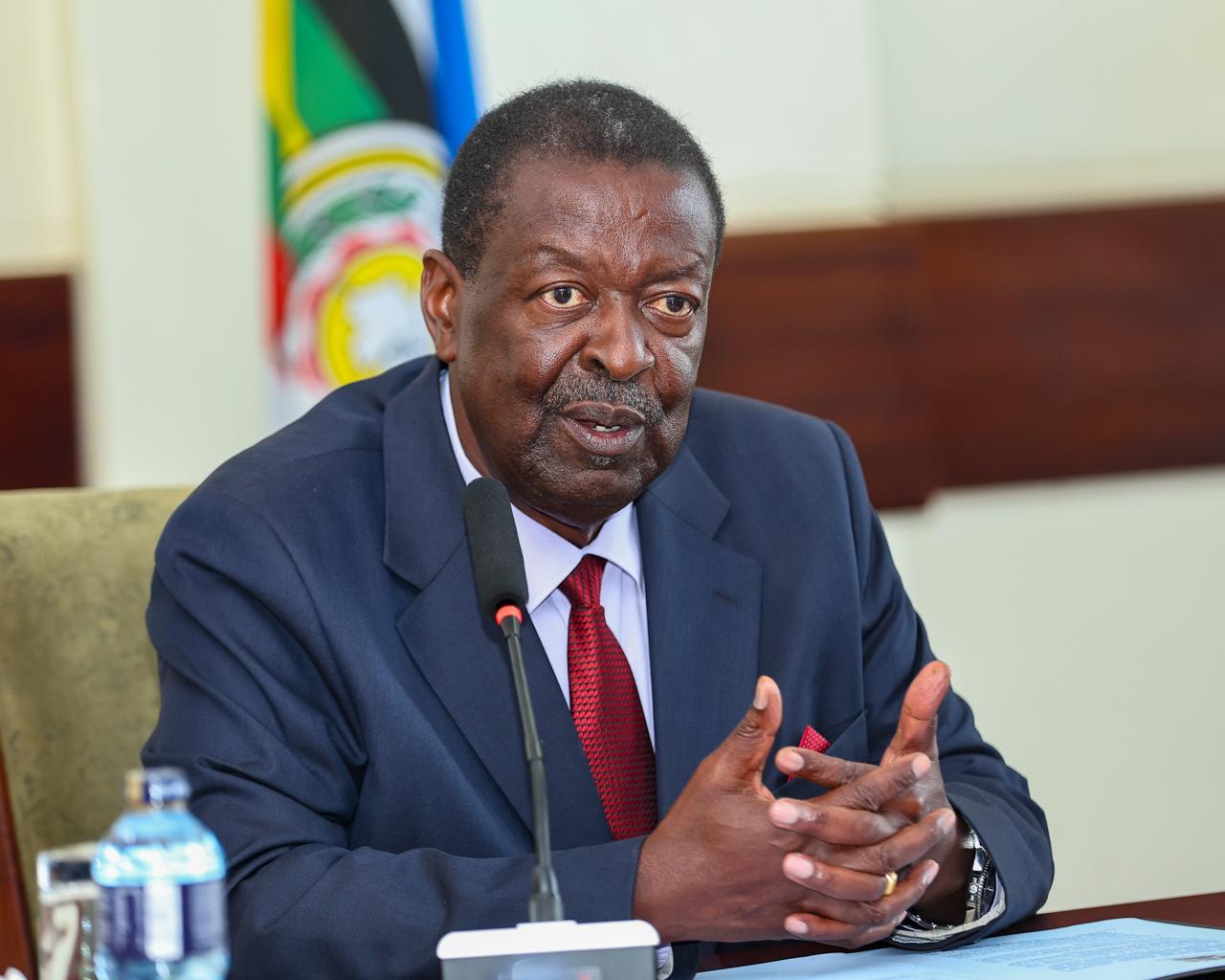
Prime Cabinet Secretary Musalia Mudavadi, has issued a detailed clarification on the government’s proposed amendments to the Privileges and Immunities Act amid heightened public interest in how the changes could affect foreign missions, international organisations, and global non-profits operating in Kenya.
In a press release dated November 18, 2025, Mudavadi underscored that the reforms are part of an ongoing effort to modernise and streamline Kenya’s diplomatic and international cooperation framework, especially as Nairobi continues to expand its stature as a global diplomatic hub.
“Nairobi has evolved into a major diplomatic hub, and with that comes the responsibility to manage privileges and immunities in a structured, transparent, and predictable manner,” he said.
Kenya’s capital now hosts a dense network of foreign embassies, multilateral organisations, and specialised external agencies, ranging from INGOs to international foundations.
Against this backdrop, Mudavadi said the government is committed to maintaining transparent, consistent, and constitutionally guided processes for conferring privileges and immunities.
"These amendments are designed to strengthen compliance and improve administrative efficiency, not to undermine any of our treaty obligations," he stated.
At the core of the clarification is the distinction between inter-governmental organisations (IGOs) and international non-governmental organisations (INGOs).
Mudavadi firmly stated that the proposed amendments do not affect the privileges of IGOs such as the United Nations, African Union, World Bank, IMF, COMESA, EAC, or African Development Bank.
"Let me be unequivocal, these amendments do not dilute or alter the rights and privileges of inter-governmental organisations,” he noted.
“Kenya cannot and will not apply domestic legislation in a manner that contradicts its international commitments.”
These entities, he said, enjoy protections anchored in multilateral treaties to which Kenya is a State Party, and domestic law cannot override such obligations.
Instead, the adjustments primarily target international NGOs and other internationally recognised bodies governed under Section 11 of the Act.
These organisations operate in Kenya through Host Country Agreements, which outline the extent of their cooperation with the government and the privileges extended to them.
Following the adoption of a revised Foreign Policy in December 2024 and the passage of a related Sessional Paper in early 2025, the Ministry embarked on streamlining the negotiation and administration of these agreements.
According to Mudavadi, the aim is to enhance predictability, strengthen compliance, and improve administrative efficiency, particularly in managing the special privileges afforded to these groups.
A key proposed change introduces a cap ensuring that expatriates hired by internationally recognised bodies shall not exceed one-third of the organisation’s total workforce.
This, Mudavadi noted, is intended to safeguard job opportunities for Kenyans and reinforce the principle of local capacity building.
This provision is not punitive,” Mudavadi explained.
"It is meant to protect employment opportunities for Kenyans and promote the transfer of skills within these organisations."
Further, the amendment proposes the establishment of a powerful Host Country Agreement Committee comprising senior officials including Principal Secretaries, the Attorney General, heads of Immigration, KRA, National Intelligence Service, and others.
This committee will review applications, monitor compliance, scrutinise filings, and advise on policy or regulatory updates.
The Ministry has also spelled out the documents required when applying for Host Country Agreements, and has clarified the limits of immunity.
No immunity will be granted in cases involving contractual disputes, commercial matters, labour issues, criminal offences, or situations where immunity has been expressly waived, measures designed to prevent misuse of privileged status.
Mudavadi reiterated that the process is still in its early stages, with full compliance to constitutional requirements on public participation and transparency.
The State Department for Foreign Affairs has opened public engagement on the Privileges and Immunities (Amendment) Bill, 2025.
A virtual participation forum has been scheduled for November 18, 2025, and members of the public have until November 21 to submit written feedback.
The PCS affirmed that the proposed reforms will strengthen Kenya’s standing as a responsible host to global organisations while ensuring accountability, legal clarity, and national interest remain paramount.