Big ethnic groups still dominate up to 90 per cent of top jobs in parastatals and public universities, leaving minority groups, mainly from Northeastern, out in the cold, an audit by the NCIC has shown.
The 2025 ethnic and diversity audit and the universities ethnic audit by the National Cohesion and Integration Commission show it still takes who you know to get a top job in state bodies.
If you are a Kikuyu, Kalenjin, Luo, Luhya, or Kamba, you stand a better chance.
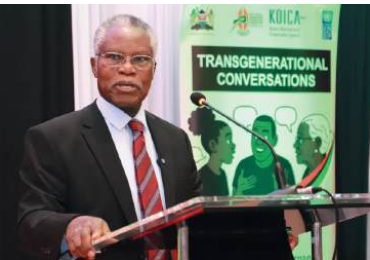
Commission chairman Simon Kobia said the findings reveal that ethnic patronage and political influence continue to shape public employment across parastatals and universities.
“This data demonstrates that ethnic leaders use their influence to reward trusted members, friends and affiliates who in turn share resources with co-ethnics further down the chain, totally destroying the opportunities for ethnic balance,” he said.
“Being at the helm of the commission for the past five years, I confirm a lack of political will to use the existing laws and policies to address these challenges.”
Kobia said a diverse and inclusive Kenya would benefit from “a wider range of perspectives, experiences and skills, which can catalyse sustainable economic growth and social cohesion”.
Eight major ethnic groups—Kikuyu, Kalenjin, Luo, Luhya, Kamba, Kisii, Meru and Mijikenda—occupy 87.99 per cent of all parastatal jobs, leaving only 12.01 per cent to be shared among 37 other communities. The Kikuyu lead with 20.06 per cent, followed by Kalenjin (17.58), Luo (14.12), Luhya (12.37), Kamba (8.46), Kisii (7.26), Meru (4.39) and Mijikenda (3.75).
Smaller groups such as the Rendille, Orma, Burji, Ndorobo, Gosha, Konso, Kuria, Suba, Ilchamus, Sakuye, Dasanech and Malakote, mostly domiciled in the northern part of the country, together account for less than one per cent of parastatal jobs.
The report also shows that only eight communities hold 86.25 per cent of all chief executive officer positions in state corporations.
The Kikuyu, Kalenjin, Luo and Luhya occupy 64.60 per cent, while Kamba, Meru, Somali and Kisii share the rest.
Overall, 200 parastatals, equivalent to 66.89 per cent, complied with the NCIC Act, while 99, or 33.11 per cent, failed to meet the required diversity standards. This marks a slight improvement from the 2016 audit, when 64 per cent were compliant.
Among large state corporations, seven met ethnic balance requirements. Moi Teaching and Referral Hospital and Kenya Ports Authority did not, posting compliance levels of 67.66 and 34.46 per cent respectively.
In the medium category, 14 parastatals were compliant, while South Nyanza Sugar Company, Moi University and JKUAT were among those dominated by single communities.
The audit also covered universities, where six ethnic groups—Kikuyu, Kalenjin, Luo, Luhya, Kamba and Kisii—account for 85.71 per cent of all staff. The Kikuyu lead with 22.92 per cent, followed by Kalenjin (15.67), Luo (15.65) and Luhya (15.40).
Some universities remain heavily skewed. Koitalel Arap Samoei University College has 77.14 per cent Kalenjin representation, Kibabii University has 76.40 per cent Luhya and Jaramogi Oginga Odinga University of Science and Technology records 73.59 per cent Luo.
Only 11 universities, or 27.5 per cent, comply with the law requiring that no ethnic group exceed one-third of total staff.
In smaller parastatals, 179 complied, while 90 did not. The Kikuyu dominate 32 institutions, Kalenjin 18, Luo 10 and Luhya 10.
Gender representation remains uneven. Out of all employees, 62.24 per cent are male and 37.76 per cent female.
Women hold only 21.99 per cent of CEO positions. Persons with disabilities make up less than two per cent of the total workforce, well below the five per cent threshold set by law.
While universities have achieved near balance in overall gender representation, at 57.91 per cent male and 42.09 per cent female, senior leadership remains male-dominated, with women holding only 22.5 per cent of top roles.
Staff with disabilities make up 2.10 per cent of the total workforce.
Kobia said the commission will continue to engage public institutions to promote inclusion and ensure compliance with diversity requirements.
The study used both quantitative and qualitative methods to evaluate how parastatals adhere to public service values.
Data was drawn from the Integrated Payroll and Personnel Database and compared against the 2019 Population and Housing Census. Out of 347 parastatals targeted, 299 participated, representing an 86.17 per cent response rate.