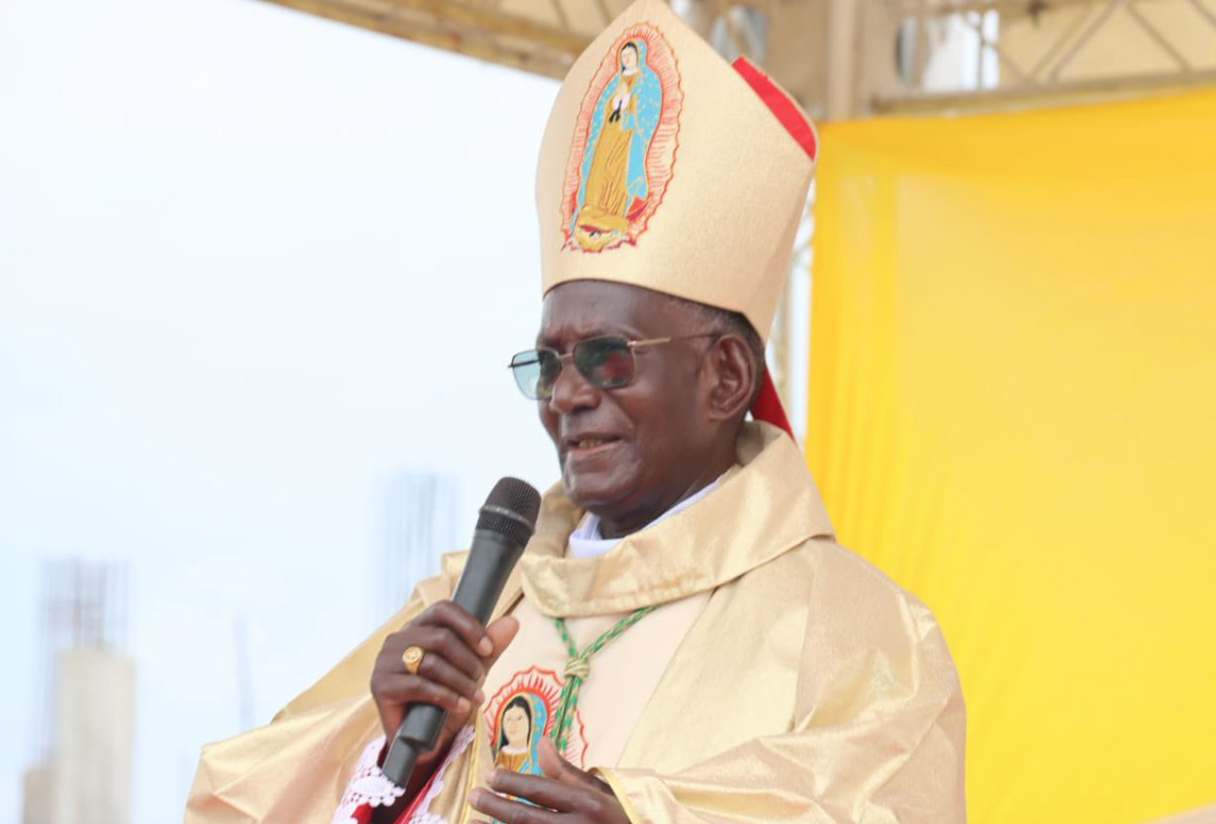
Bishop Philip Sulumeti’s ability to handle a delicate situation with kid' gloves despite raging suspicion and flaring tempers was put to the test when he chaired the consensus-building group at the Bomas of Kenya in 2004.
He was selected to chair the special committee that had Grace Ogot, Ruth Kibiti, Sophia Noor, Wangari Maathai, Mau Mau veteran Gitu Wa Kahengeri , Marsden Madoka, Kimaiyo Arap Sego and Sheikh Ali Shee.
He was to midwife the power-sharing arrangement in the Executive, including creation of the of the office of the Prime Minister, the chapter on devolution, the chapter on representation as well as that on the Judiciary.
These were the topics isolated as contentious during the deliberations on a new constitution.
Sulumeti, then the Catholic bishop of Kakamega diocese, while accepting his selection to lead the team urged to be spared the sharp knives and daggers that were already drawn over the topics.
“… we would like to ask you to cooperate with us because you have put on our shoulders a very grave and heavy duty, a bag of maize on one’s back is heavy to carry. This is more than a bag of maize, 200kg,” he said, lighting up the packed hall with laughter.
At the time, the schism in the President Kibaki-led Narc government was sharpening and any clandestine meetings, especially during the constitution-making process, were frowned upon.
The bishop requested that, given the limited time he was working under, he be allowed to convene night meetings to deliver on the assignment.
“Sometimes we might be forced to meet at night, please do not impute ill motives on those night meetings. It is only because God gave us a day of 24 hours and not 36 hours,” he said.
“So, we might have to meet after we have finished with this place to find consensus on contentious issues then we bring them in the morning. So, all we ask, please, let us all be patient and understanding.
“In my language we say the person who is sent is never beaten. So, you have sent us, so please do not beat us now when we come back to you.”
After days of deliberation, the bishop’s team proposed a system in which the Prime Minister had some authority, but the presidency retained most of its powers.
However, the majority of delegates rejected the report, siding with the proposal that had the Prime Minister’s office be strengthened to nominate Cabinet ministers, assistant and deputy prime ministers. These officials will then be appointed by the President.
But the government side, led by Vice President Moody Awori, protested the vote and walked out, demanding that the Sulumeti report carry the day.
Then, public works minister Raila Odinga and tourism’s Najib Balala remained in the hall, cementing the speculation about the split in the Kibaki government.
Sulumeti died at 11 pm on Sunday, aged 88. His successor, Bishop Joseph Obanyi, urged the faithful to keep the late bishop in their prayers as arrangements for his burial began.
Born on August 15, 1937, he was ordained a priest for the Diocese of Kisumu on January 6, 1966.
He was Kakamega's bishop until December 5, 2014, when his third application for retirement was approved by Pope Francis, based on age.