

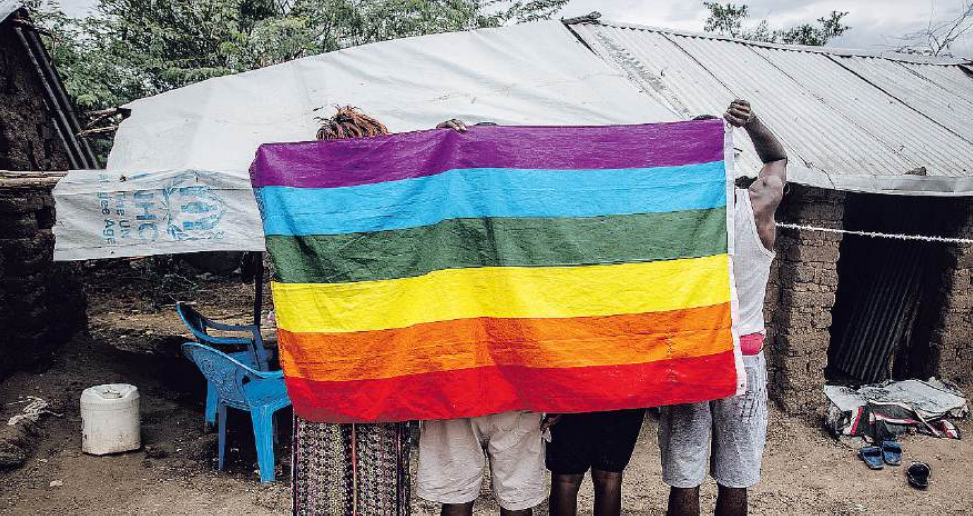
Every day is a struggle for those who don’t pretend to be what they are not.
Many admittedly queer Kenyans often must literally fight to stay alive, one day at a time, reads a report by the Kenya Human Rights Commission (KHRC) and the Kenya Legal & Ethical Issues Network on HIV and Aids (Kelin).
It cites physical assault, harassment, emotional violence as well as systemic barriers rooted in stigma, discrimination and biased media narratives.
The word “queer” was historically a slur but was reclaimed by the LGBTQ+ community in the 1980s and is now used by many as a symbol of pride, though its use is not universal.
Issued on the sidelines of the just-concluded session of the African Commission on Human and Peoples’ Rights (ACHPR) in Banjul, The Gambia, the report paints a grim picture of daily survival. It documents how sexual and gender minorities must adopt extra safety measures just to navigate public spaces in an often-hostile society.
The report, “Lives on the Line”, jointly launched with Kelin on October 22, is the first comprehensive documentation of human rights violations against sexual and gender minorities (SGMs) in Kenya.
Covering the period between October 2023 and September 2024, it records 2,141 violations — including beatings, verbal attacks, evictions and online harassment — against LGBTIQ+ Kenyans.
KHRC, a flagship rights NGO, says the documentation “exposes systemic barriers rooted in stigma, discrimination, and biased media narratives”.
It also challenges a 2019 court ruling that dismissed claims of violence against LGBTIQ+ persons for lack of evidence.
“This report presents lived experiences that prove the contrary,” KHRC said in its presentation, emphasising the findings dismantle the perception that such violence is rare or exaggerated.
At the Banjul side event, KHRC programme lead for transgender rights Adrian Kibe described the report as a call to conscience: “This report compels society and duty-bearers to confront the structural and social factors that perpetuate harm.”
He said testimonies presented were a reflection of courage amidst fear and proof of a reality that could no longer be ignored.
Kelin programme officer for Sexual and Reproductive Health and Rights (SRHR) Elsie Milimu welcomed the report’s innovative approach to data collection, citing its potential to shape evidence-based advocacy.
“These documentation methods are vital for strengthening future evidence of discrimination faced by sexual and gender minorities in accessing SRHR services,” she said.
Kelin reaffirmed its commitment to advancing equality, dignity and non-discrimination for all persons, grounding its work in Article 2 of the African Charter on Human and People’s Rights and Kenya’s Constitution.
In another side event, Kelin and KHRC turned the spotlight to another critical front: reparations and accountability for survivors of conflict-related sexual violence (CRSV).
Partnering with the Women’s Association for Victims’ Empowerment (Wave-Gambia), they cohosted a dialogue titled, The Case for Reparations: States’ Due Diligence Obligation to Prevent, Protect and Ensure Accountability for Conflict-Related Sexual Violence.
The hybrid meeting drew advocates, legal practitioners and experts who explored how African human rights systems could more effectively address sexual violence committed by state and non-state actors.
KHRC’s senior programme adviser, Martin Mavenjina, highlighted Kenya’s long legal journey through Constitutional Petition No 122 of 2013 and Civil Appeal No E645 of 2021, which sought justice for survivors of post-election sexual violence.
“In July 2025, the government made a historic Sh16 million compensation payment to four survivors — nearly two decades after the violations,” he said, calling it a small but symbolic victory for accountability.
From The Gambia, Priscilla Ciesay, senior technical adviser at Wave, reminded participants that “conflict-related sexual violence is life-long in impact, compounded by stigma, trauma and displacement.”
She urged states and civil society organisations to adopt survivor-centred approaches that integrate justice, care, and accountability.
Kelin’s Milimu emphasised that state obligations to investigate, prosecute and compensate survivors are clearly outlined in the Maputo Protocol and the Niamey Guidelines.
She referenced decisions of the African Commission affirming that “States must investigate violations even when committed by private actors and ensure such investigations are prompt, thorough and effective.”
Across both events, Kelin and its partners underscored that justice and reparations must extend to all survivors — whether victims of gender-based violence, conflict-related sexual violence or discrimination based on sexual orientation or gender identity.
As several African states approach elections, participants urged the African Commission on Human and People’s Rights to press governments to adopt multisectoral frameworks for preventing and responding to conflict-related sexual violence.
Kelin and KHRC pledged to share key outcomes from both discussions with the ACHPR Special Rapporteur on the Rights of Women in Africa.
Instant analysis
For the survivors behind “Lives on the Line,” the report is more than data — it is recognition. It says to the world that their pain was real, their stories matter, and their lives too are on the line.







