Wiper Patriotic Front leader Kalonzo Musyoka faces what is seen to be his last realistic chance to ascend to the presidency as political realignments begin to take shape.
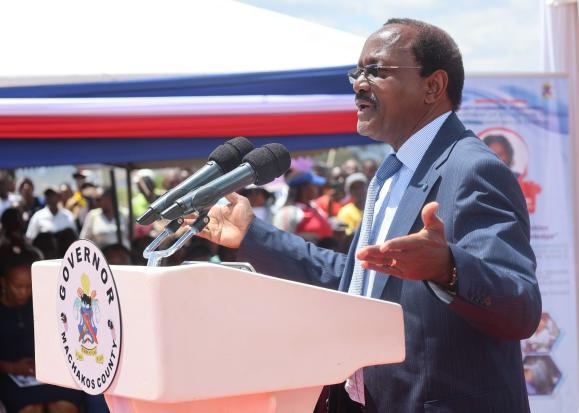
At 71, the seasoned politician and former vice president has been formally endorsed by his Wiper party as its presidential flagbearer during the national delegates conference held on October 10 in Nairobi.
In his acceptance speech, Kalonzo thanked delegates for their confidence, promising to offer “a leadership of integrity, unity and service to all Kenyans.”
Party officials hailed the endorsement as a “defining moment”, insisting that time had come for him to step forward and lead the nation.
Interestingly, Kalonzo is part of the United Opposition, a coalition of leaders who have all expressed interest in the top seat — among them Democracy for Citizens Party’s Rigathi Gachagua, Democratic Action Party (Kenya) leader Eugene Wamalwa, People’s Liberation Party’s Martha Karua and Jubilee’s Fred Matiang’i.
The faction has pledged to rally behind one candidate deemed most capable of defeating President William Ruto in 2027.
For Kalonzo, the question is whether he will emerge as the king or once again play the kingmaker.
By 2027, Kalonzo will be 73, and should he skip that race, he will be 78 in 2032 — a reality that many within his party say leaves him little room to wait any longer.
Political analyst Daniel Orogo believes the next two years will be decisive for for the former VP’s political legacy.
“It’s still early to tell if Kalonzo will be the king or the kingmaker,” Orogo said. “If he remains steadfast within the United Opposition, he stands a good chance of being their flagbearer. But if he crosses to Kenya Kwanza, then his role shifts to that of a kingmaker.”
Orogo said that both the government and the opposition are courting Kalonzo’s political influence.
The Wiper leader’s political dilemma draws comparisons to ODM leader Raila Odinga, who for decades shaped the country’s political landscape as a formidable contender and kingmaker.
Raila’s most defining moment came in December 2002, when he stood before a jubilant crowd at Uhuru Park and declared ‘Kibaki Tosha’ — an endorsement that would change Kenya’s political course.
At the time, the opposition was fragmented, with several contenders vying to unseat the ruling Kanu party after nearly 40 years in power.
Raila’s backing of Mwai Kibaki as the National Rainbow Coalition flagbearer unified the opposition and catapulted Kibaki to a historic victory.
Whether Kalonzo can replicate such unifying influence remains to be seen.
Apart from experience and national appeal, another reason why he is seen as a possible flagbearer for United Opposition is the support he commands in his backyard.
During the 2022 election Kalonzo's three counties of Ukambani delivered a total of 769,422 votes to Raila.
The data, which represents 75 per cent of the total votes cast in the region, represents all the 22 constituencies in the three Ukambani counties: Makueni, Kitui and Machakos.
Raila defeated his main competitor, Ruto, with a wide margin. The latter garnered a total of 242,187 votes in the three counties.
Local leaders such as Governor Mutula Kilonzo Jnr and Mbooni MP Nzioka Kivasu argue that Kalonzo’s experience and moral standing make him the ideal candidate to unseat the President. The two add that the Wiper leader has a proven record of integrity, diplomacy and experience.
“The country needs a leader who can unite Kenyans across ethnic and political lines and restore public trust in government institutions,” Mutula said.
Kivasu said Wiper party has remained steadfast and consistent in advocating for good governance and people-centered leadership. He urged residents to rally behind Kalonzo, noting that his calm demeanour, experience and commitment to service make him a symbol of hope for many Kenyans.
The Mbooni MP further appealed to Ukambani residents to register as voters and “defend the Wiper vision at the ballot.”
However, Mwala MP Vincent Kawaya, a close ally of Ruto, dismissed Kalonzo’s presidential ambition as “hot air,” arguing that his association with Gachagua and other United Opposition leaders is “politically toxic.”
“If he ties his presidential dream to the upcoming by-election in Mumbuni North, he risks embarrassment,” Kawaya said. “If his candidate loses, it will prove he has no control over Ukambani. And if he wins, it must be by a convincing margin.”
Kawaya added that the “only king” in the coming election would be Ruto.
Kibwezi West MP Mwengi Mutuse echoed similar sentiments, saying Kalonzo’s path to power could lie in cooperation rather than confrontation.
“The only realistic route to the presidency for Kalonzo is by working with Ruto,” Mutuse said. “Such an alliance could open doors for political reciprocity in 2032.”
Mutuse offered to broker talks between Kalonzo and Ruto, insisting that “time has come for Kalonzo to shelve his personal ambitions and work with the government of the day.”
“I offer myself to be his negotiator. I can talk to him (Kalonzo) because we come from one clan, and I recently told the elders so. I can also talk to President William Ruto and broker a deal.”
Mutuse claims Kalonzo's sense of judgment is poor, noting that he has been offered an opportunity to work with a sitting President but instead opts to align with a leader who was impeached.
He said time had come for the Wiper boss to shelve his self-interest for the sake of the Kamba people and work with the government of the day.
Mutuse added that many politicians in Ukambani have relied on Kalonzo’s influence to win elections, yet he himself remains politically empty-handed.
Even as the United Opposition promises unity, cracks have been reported in the faction.
On November 3, Kalonzo, Gachagua and Eugene met in Nairobi, reportedly, without inviting Karua, Matiang’i, or communications head Mukhisa Kituyi.
Matiang’i later confirmed he had not been informed of the meeting, while sources said Karua and Kituyi held a separate gathering to discuss the growing mistrust within the team.
Kalonzo first contested the presidency in 2007, running on a ODM–Kenya ticket after breaking ranks with Raila’s ODM.
In that hotly contested election, he finished third behind Kibaki and Raila. After the disputed results and ensuing violence, he accepted an appointment as VP in Kibaki’s government — a move that drew mixed reactions but positioned him as a key political player in the Grand Coalition government.
Following his vice presidency (2008–13), Kalonzo sought to return to the top echelons of power by aligning himself with Raila. He served as the former ODM leader’s running mate twice, first in the 2013 general election under the Coalition for Reforms and Democracy and again in the 2017 election under the National Super Alliance coalition.
Both bids were unsuccessful, with the pair losing to Uhuru Kenyatta and his running mate William Ruto in both contests.
Now, nearly two decades after his first presidential bid, the man once seen as the perennial number two faces a moment of truth. Whether he finally becomes the king or remains the kingmaker could define not just his political legacy, but the future of Kenya’s opposition politics.