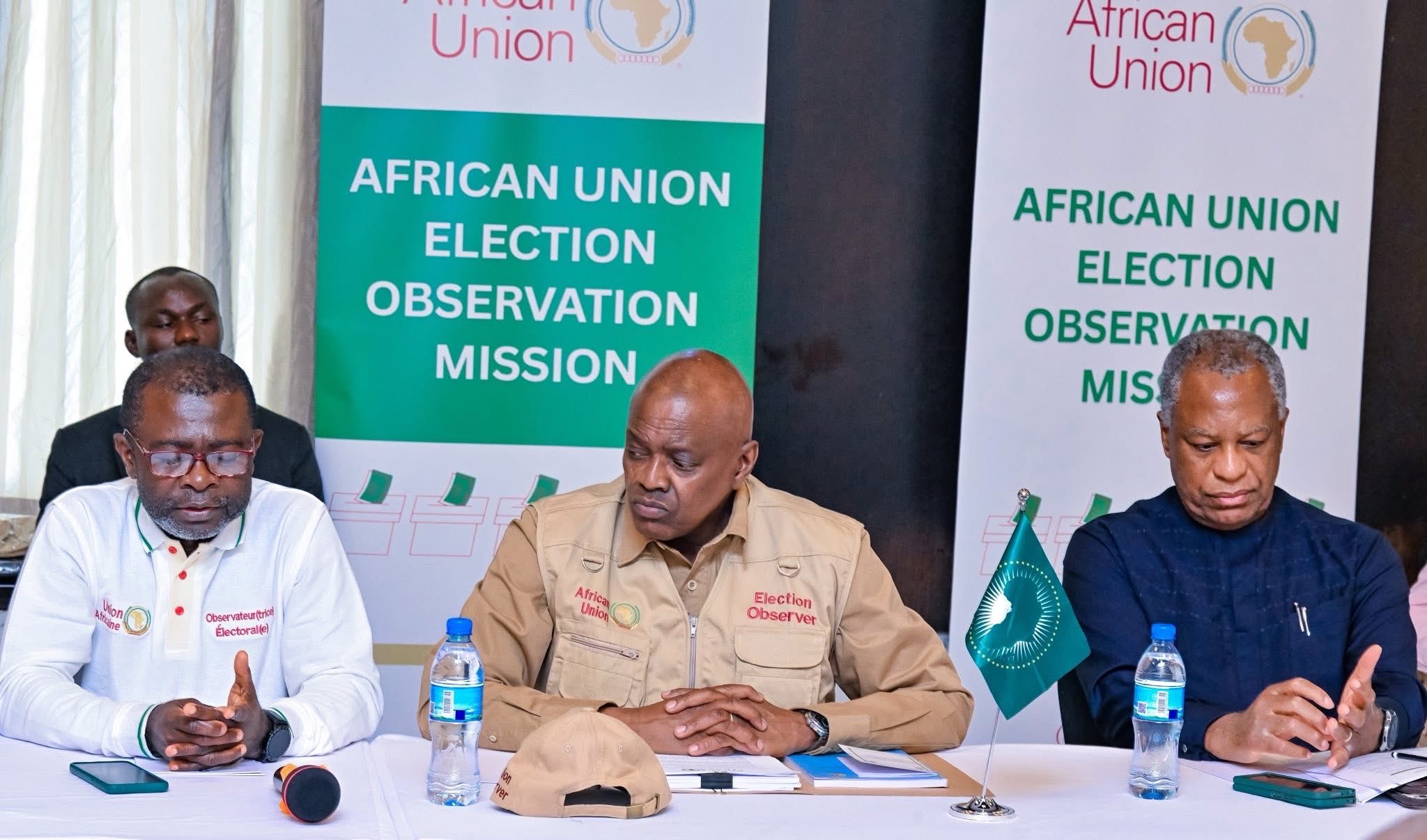
In an unusually blunt assessment, the African Union observer mission has declared Tanzania's October 29 general election "flawed, undemocratic," and failing to meet the standards of a credible poll.
This damning verdict, a rare departure from the AU's typically restrained tone, deals a severe blow to the credibility of President Samia Suluhu Hassan.
The AU joins a growing list of poll observers who have declared the election a sham as Tanzania comes to terms with the scale of violence that engulfed the country during and after voting.
In the unprecedented verdict, the AU observation mission declared that the elections “did not comply with AU principles, normative frameworks, and other international obligations and standards for democratic elections.”
The preliminary report released Wednesday said the political and security environment before, during, and after the vote was not conducive to the peaceful conduct or credible acceptance of electoral outcomes.
The team was led by former President of Botswana Mokgweetsi Masisi.
The mission documented serious irregularities across multiple polling stations such as ballot stuffing, allowing voters to cast their ballot without their identities being checked and issuance of multiple ballots in full view of the observers.
The report further cited repression, and systemic flaws, as well as the protests and gunfire that disrupted voting in some parts of the country.
“The mission also observed some ballot stuffing at several polling stations, where voters were issued multiple ballots to vote, compromising election integrity. Most of these instances were noted in polling stations where only the presidential ballot box was set up.
"Such stations did not appear to be manned by political party agents, only having INEC officials, including in Zanzibar,” the report reads in part.
The AU observers also took note of low voter turnout, raising questions on the final outcome in which President Samia Suluhu Hassan reportedly garnered 31 million votes, representing 97.7 per cent, with unprecedented 88 per cent voter turnout.
“All polling stations observed exhibited low voter turnout, indicating voter apathy and disengagement from the electoral process,” observers said.
In some of these stations, they add, ballot counts did not tally, raising questions about vote manipulation.
Ballot stuffing in “several areas” and issuance of multiple ballots compromised election integrity, the observers said.
The AU team also noted that its observers were expelled from some polling stations before the counting concluded, while in others they were restricted to only five minutes per station. This limited their ability to verify the transparency of the tallying.
“During the counting, several of our observers were asked to leave polling stations before the process concluded. Such restrictions on observation were not consistent with any of the INEC [Independent National Electoral Commission] or ZEC [Zanzibar Electoral Commission] procedures and overall limited the transparency of the vote count,” the report adds.
In several polling stations, it continues to document, only the presidential ballot box was set up, manned exclusively by INEC officials without the presence of political party agents. This violated basic principles of multi-party oversight during elections.
The AU mission also criticised the total internet shutdown that occurred during the mid-stage of the election, warning that it “compromised the transparency and integrity of the electoral process.”
The blackout blocked communication between polling officials, observers, and citizens, raising fears of manipulation during the tallying process.
In conclusion, the AU mission said the integrity of the general election, under the circumstances, was compromised and the environment not conducive to peaceful conduct and acceptance of electoral outcomes.
It called for sweeping political and electoral reforms, which it said should be underpinned by “transparent and accountable conduct by state institutions, inclusion and accommodation of divergent views, citizen participation, and the upholding and respect for human rights”.
The report negates the congratulatory message by AU Commission chairperson Mahmoud Ali Youssouf to President Suluhu following the declaration of the outcome.
Uganda’s member of the Pan-African Parliament Nsamba Oshabe on Wednesday regretted that the continent was increasingly witnessing sham elections, silencing of dissent, and misuse of state institutions — yet the AU remained silent.
Oshabe called for urgent AU engagement and oversight on, among other issues,manipulation of elections and suppression of opposition.
The AU findings corroborate the equally damning verdict of the Southern African Development Community Observer Mission.
The SADC mission said overall, the election fell short of the requirements of the regional bloc’s principles and guidelines governing democratic elections.
“It is the SEOM's [observer mission] tentative conclusion that, in most areas, voters could not express their democratic will,” it said.
The mission also noted “a very low voter turnout in all polling stations observed”, and in some centres, there were no voters at all.
“The mission observed that in some polling stations observed, there were multiple orderly stacked ballots in the ballot box during voting, which created a perception of ballot stuffing, and an impression that individual(s) cast more than one vote at a time with the intention to cheat the election system,” SADC mission said.
The EAC also released its report, which appeared to blow hot and cold on the conduct and outcome of the election.
However, even with its subtle critical observations and recommendations, the EAC observation mission also raised some integrity questions on the election.
For Instance, it observed that in two polling stations in Dar es Salaam, some ballot boxes were not sealed appropriately as required.
Additionally, just like the AU and SADC, the EAC mission observed that most of the polling stations did not have queues of voters waiting to vote.
The mission, headed by former Uganda vice president Speciosa Kazibwe Wandira, said it did not observe the national tallying process of the results as it was not informed of a designated national tally centre.
“ The disruptions of internet connectivity and communication affected the mission’s ability and timeliness in finalising the compilation and analysis of the reports from the observers,” it added.
Curiously, however, the mission claimed political parties were “largely able to campaign peacefully … without interruption”.
It is, however, public knowledge that leading opposition party Chadema was banned from participating in the election with its presidential candidate Tundu Lissu remaining in jail during the election.
ACT Wazalendo's presidential candidate Luhaga Mpina was also blocked from vying, citing lack of qualifications.
While the other reports indicated the media was widely restricted and pro the ruling CCM party, EAC mission claimed it observed a “vibrant and pluralistic media environment” that offered “extensive coverage of the electoral process”.
The AU findings further deepen scrutiny over the credibility of the vote, which the Chadema party has dismissed as a sham.
The European Union in an earlier statement raised concerns over restrictions on political activity by the main opposition parties, internet shutdowns and intimidation of civil society.
Together, these reports paint a picture of a poll lacking credibility, transparency and fairness, with serious consequences for Tanzania’s democratic credentials and its standing in East Africa and on the continent.
However, President Suluhu , who was sworn-in in a military installation in the absence of the multitude of citizens as is the practice, insisted the election was “free and democratic” and dismissed critical observer mission reports.