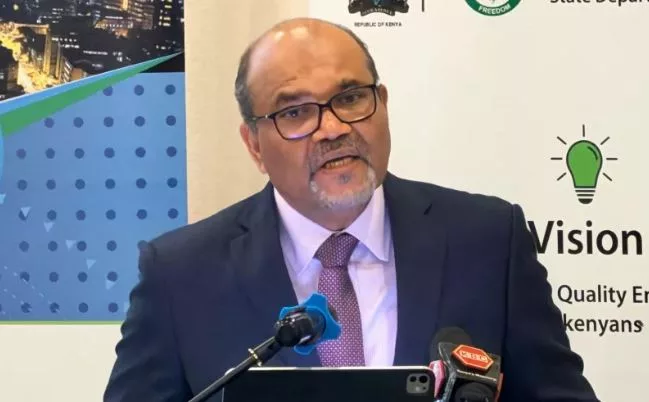
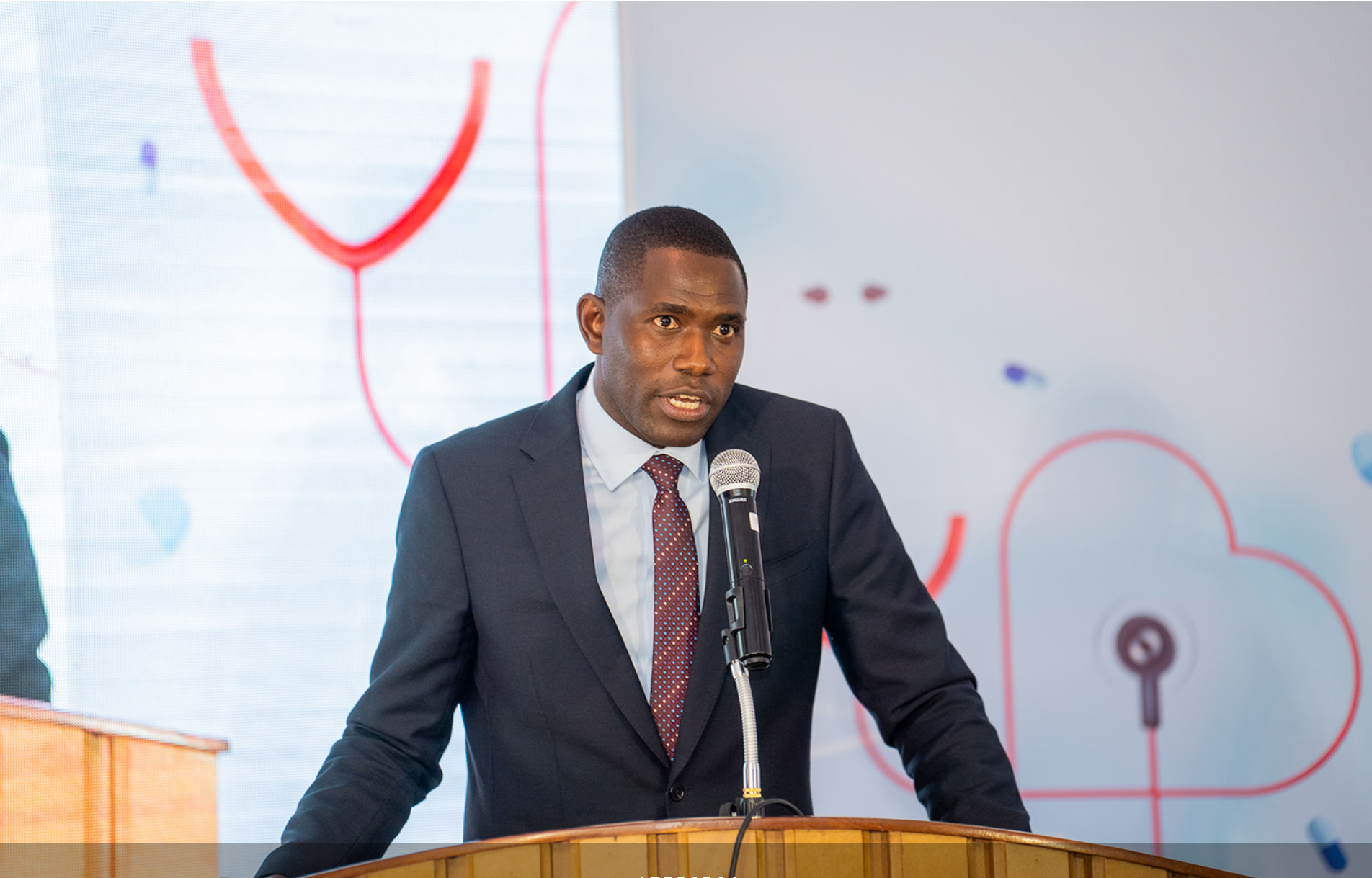
 Dr Ouma Oluga, Principal Secretary in the State Department of Medical Services, Ministry of Health.
At the recently held Africa Health Systems Forum, hosted by Strathmore Business School (SBS) under the PRISM Centre supported by the Gates Foundation, policymakers, financiers, and health experts gathered to confront a defining challenge: how to sustain and deepen Africa’s health gains in an age of shrinking donor funding and reduced trust in the global health system.
Under the theme “Resilience in Transition: The Case for Sustainable Health Financing and Africa’s Way Forward,” the forum examined how Africa can safeguard decades of health gains amid shifting global priorities and tighter budgets. While countries are stepping up domestic resource mobilisation, participants underscored that continued donor engagement remains essential to protect progress in maternal and child health, infectious and neglected tropical diseases, primary health care, and to strengthen resilience through better data, surveillance, AI, and locally led research and development, manufacturing, and regulation.
Over the past two decades, Africa has made notable progress in expanding access to lifesaving health services. Yet with donor-led financing in retreat, preserving those gains will require visionary local leadership, smarter investments, and long-term planning.
Speakers explored key themes including the evolution of the health financing landscape and shift from aid-led models to country-driven systems, adaptation to the realities of reduced aid through innovation and health system integration, and the urgent need for reimagined partnerships and sustainable investments.
The forum spotlighted a growing consensus that while African countries must lead and expand domestic resource mobilization, sustained donor support remains essential to protect hard-won health gains. In this moment of tightening budgets, mechanisms like GAVI and the Global Fund, which heads into replenishment in November 2025, are critical to maintaining lifesaving programs in HIV, TB, malaria, and routine immunization. The path forward is country-led financing paired with strong global partnerships to ensure progress is not reversed.
Speaking when he delivered his keynote address, Dr Ouma Oluga, Principal Secretary in the State Department of Medical Services, Ministry of Health, emphasised the importance of steady, predictable and sustainable health financing anchored in domestic resource mobilisation.
“Many people don’t appreciate the input of health in driving countries and economies, in terms of productive populations and lost man hours. It is not just about the money we put into health—we need to look at the opportunity cost of poor health,” said Dr Oluga.
“If you look at health as an economic imperative then you begin to see the opportunity cost of failing to invest in it, and what the actions in health policy and delivery of care mean for population health and the economy. Those are the driving forces of why the government is looking at financing health through our two-pronged approach to mobilisation of domestic resources: taxes and insurance contributions,” he added.
His remarks reflected the deepening realisation among global health stakeholders that African countries must take the lead in shaping the future of health on the continent at a time when the sector is at a critical inflection point and donor funding is rapidly dwindling.
“Our reality today calls for urgent reflection and action. Africa must chart its own path, rooted in self-reliance, sustainability, and accountability,” said Dr Caesar Mwangi, Dean of Strathmore Business School.
He added: “As global priorities shift, donor fatigue sets in and resources diminish, we must rethink how Africa will fund health and sustain health gains. We must find a way to figure it out with the right local and international partners and by prioritizing our needs based on the available resources. The time to act is now."
Acknowledging the gradual decline in trust in health systems, both between the public and health institutions and between actors in public and private health service delivery, Dr Kanyenje Gakombe, Chairman of the Kenya Healthcare Federation, called for concerted efforts to raise trust capital alongside innovation and investments in building health system resilience.
“Trust is a very important form of capital we need right now. It is how we unlock the efficiency gains to close today’s funding gaps. We must also remember that capital is shy and business likes predictability. If there is too much noise in the sector and lack of trust between public sector and private sector players, we cannot unlock the capital or efficiency gains we need to strengthen the building blocks of the health sector,” he said.
Looking ahead, stakeholders are now calling for a shared commitment to translate ideas into action through local investment, coordinated governance, community engagement and partnerships that outlast donor cycles.
“There is no country that can be entirely self-sufficient, operating without the support of its partners and neighbours. When we talk about self-sufficiency we should also be talking about how we work with our partners,” said Dr. Elizabeth Irungu, Regional Technical Advisor for Implementation Science, Jhpiego.
“Aid still matters. But it needs to be catalytic rather than a substitute for public investment. It cannot replace what the government is supposed to be doing. And so we also need to do better as a country. As difficult as things have been, we have an opportunity to move away from inefficient practices. Once we start working within the system, we get to improve it,” she reiterated.
In the near term, experts have also called for enhanced efficiencies to optimize the reach and impact of finite resources, including through integration of health services, data-led decision-making and strengthening of supply chains.