Learning in public universities is expected to resume after lecturers called off their nationwide strike on Wednesday.
The industrial action, which had disrupted academic activities for 49 days, brought teaching, research, and university operations to a halt in at least 42 public universities.
The breakthrough came after a meeting between officials from the Ministry of Education and representatives of the three lecturers’ unions: the Universities Academic Staff Union (UASU), Kenya Universities Staff Union (KUSU), and the Kenya Union of Domestic, Hotels, Educational Institutions, Hospitals and Allied Workers (KUDHEIHA).
The meeting was held at Jogoo House in Nairobi.
In the agreement, both parties committed to resolving the outstanding financial and contractual issues.
The government agreed to settle Sh7.9 billion owed to lecturers in arrears. This will be paid in two phases.
The first tranche of Sh3.8 billion will be disbursed between November and December 2025, while the remaining amount will be cleared by July 2026.
“We have agreed to be paid in two instalments; one between November and December for 3.8 billion shillings, and the second in July next year. We are happy that we have secured the whole amount,” UASU Secretary-General Constantine Wasonga said.
He added that union members had agreed to resume work in good faith after receiving assurances that all pending issues would be addressed promptly.
The unions and the Ministry of Education also agreed to conclude negotiations for the 2025–2029 Comprehensive Bargaining Agreement (CBA) within the next 30 days.
The unions insisted that implementation of existing agreements must continue without delay.
It has now emerged that Deputy President Kithure Kindiki played a key role in ending the stalemate, despite not being physically present during the final meeting.
According to union officials, Kindiki had been engaging UASU leadership since early October.
His involvement is said to have been instrumental in bridging the divide between the lecturers and government officials.
Wasonga praised the Deputy President for what he described as personal mediation that helped resolve the crisis.
“We particularly thank the Deputy President of the Republic of Kenya, who mediated and managed to offer us 50-50. I also want to thank the National Assembly Education Committee that bridged the gap between us and other stakeholders,” he said.
Initially, the Ministry of Education had proposed paying the Sh7.9 billion arrears in three phases.
However, the unions rejected this plan, arguing that it would delay relief to their members and undermine trust.
The unions credited Deputy President Kindiki with proposing a revised two-phase, 50-50 formula that they found acceptable.
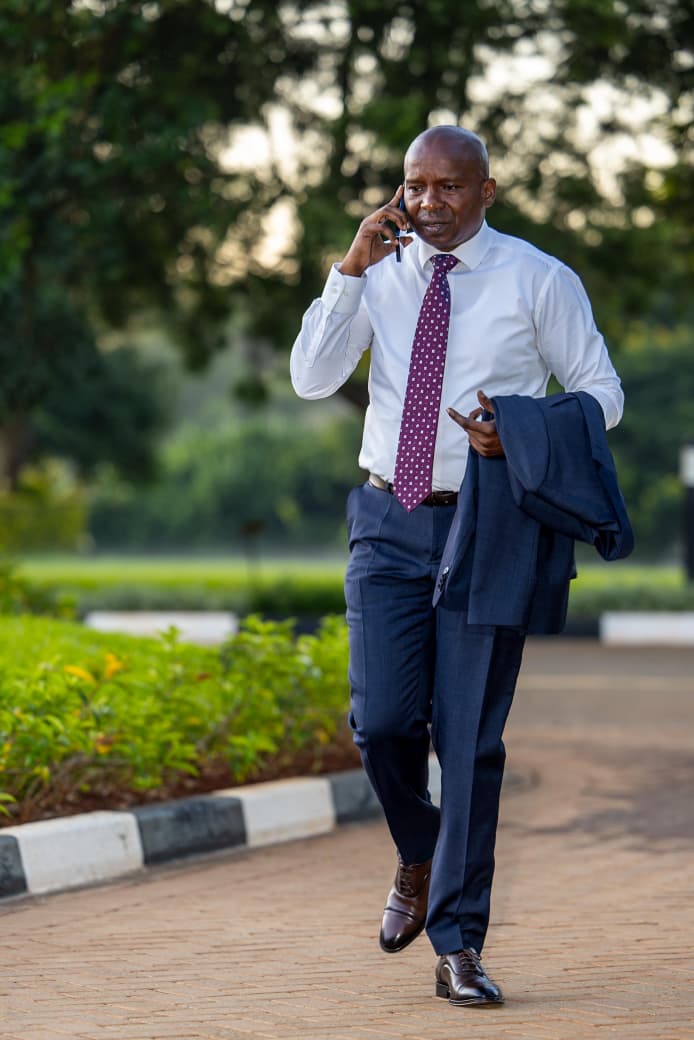
According to KUSU Secretary-General Charles Mukhwaya, the return-to-work formula was largely initiated by the Deputy President.
“His Excellency the Deputy President of this country was at the centre of this particular success. He took us in together with our parent ministry, sat us down and was able to bring down what had initially been proposed to us, the three-phase payment plan. He committed and said the government can try and pay within two phases of 50-50. The success that we have signed here today stems from his own initiative, and so we thank him,” Mukhwaya said.
The signing of the agreement was witnessed by Education Cabinet Secretary Migos Ogamba and Principal Secretaries Prof Julius Bitok (Basic Education) and Beatrice Inyangala (Higher Education and Research).
The strike began in mid-September, just as the first semester was starting.
Thousands of first-year students, who had recently completed orientation and were settling into campus life, were among the worst affected.
Lectures were suspended, examinations postponed, and administrative services delayed across the universities.
On Tuesday, a day before the strike was called off, union representatives attended a session with the National Assembly Education Committee.
During the session, they signaled a willingness to compromise provided the government agreed to address their core demands.
These included settlement of salary arrears and immediate commencement of negotiations for the next CBA.
Throughout the seven-week strike, the unions maintained that their actions were justified by the government's failure to fully implement previous agreements.
They also argued that delays in salary payments had placed lecturers under financial strain.
In the final agreement, the Ministry of Education acknowledged the importance of restoring normal academic operations and pledged to work with all stakeholders to prevent similar disruptions in the future.
With the deal now in place, universities are expected to recall staff and resume teaching immediately.