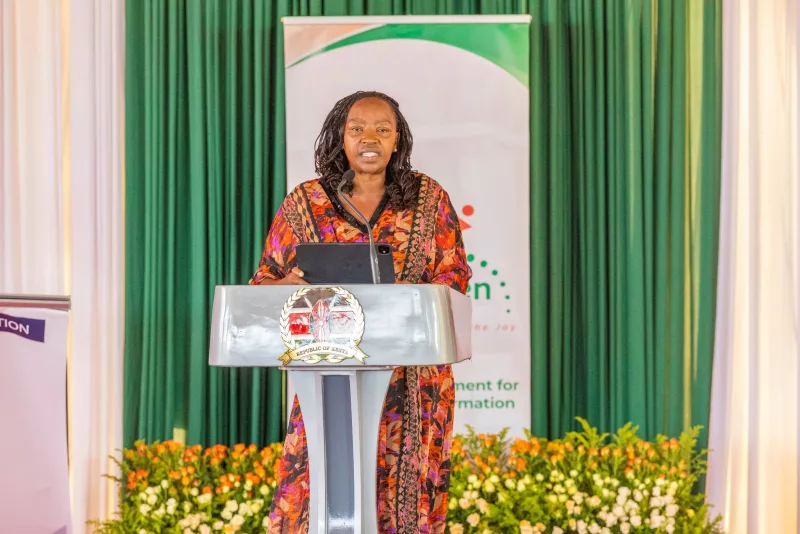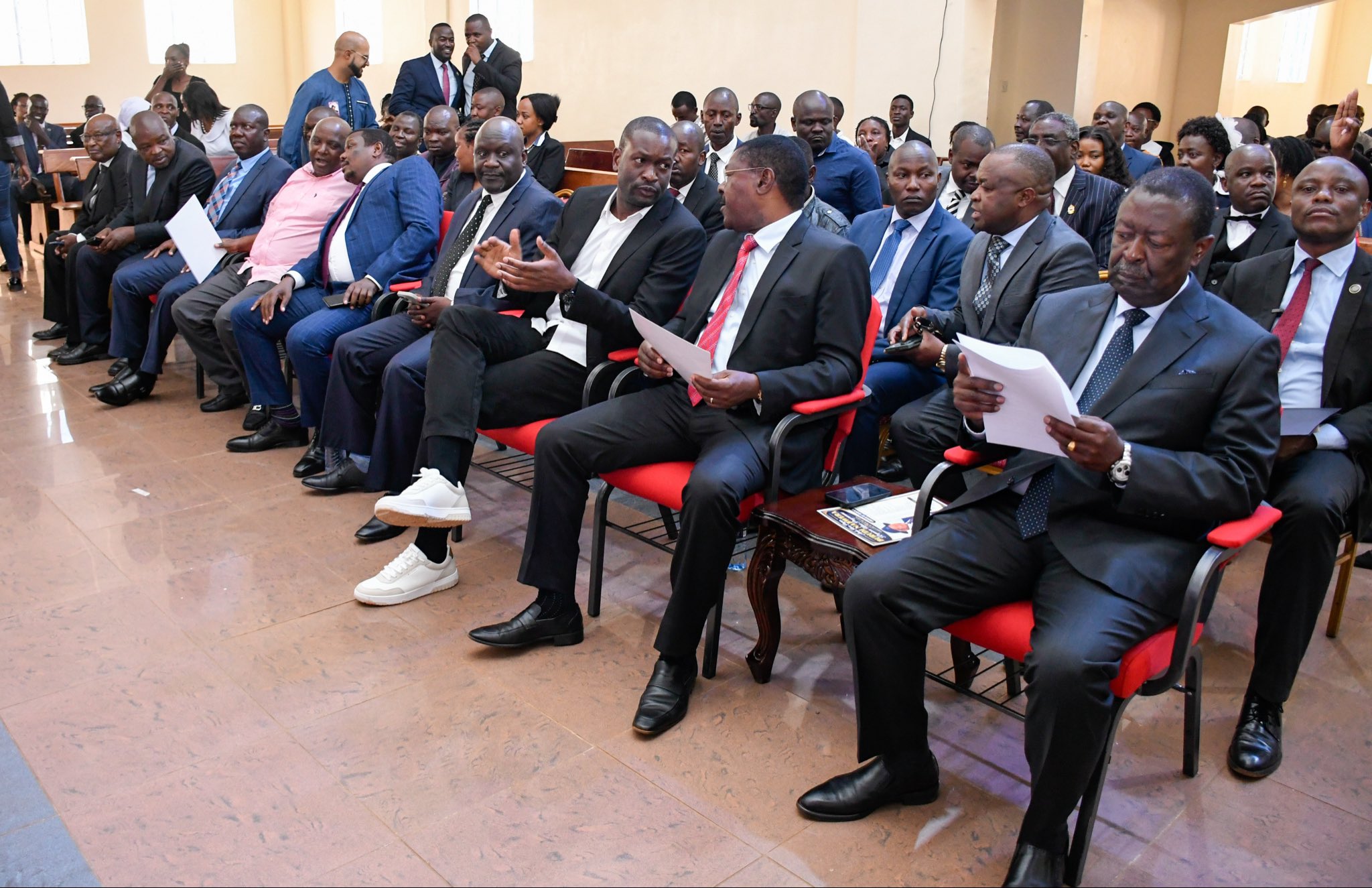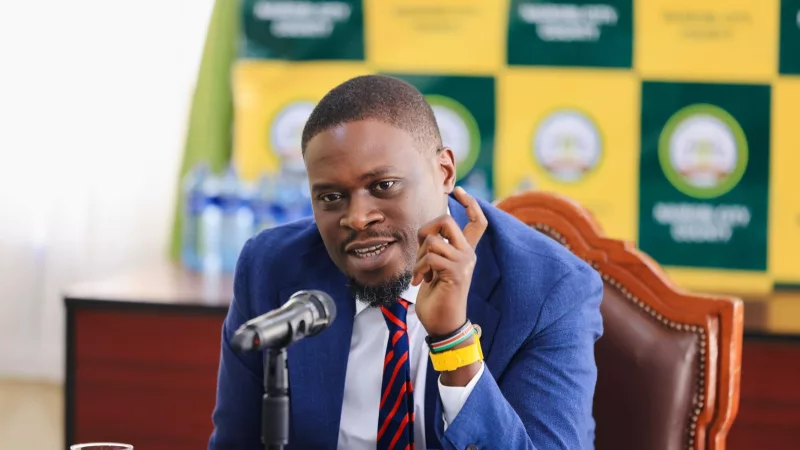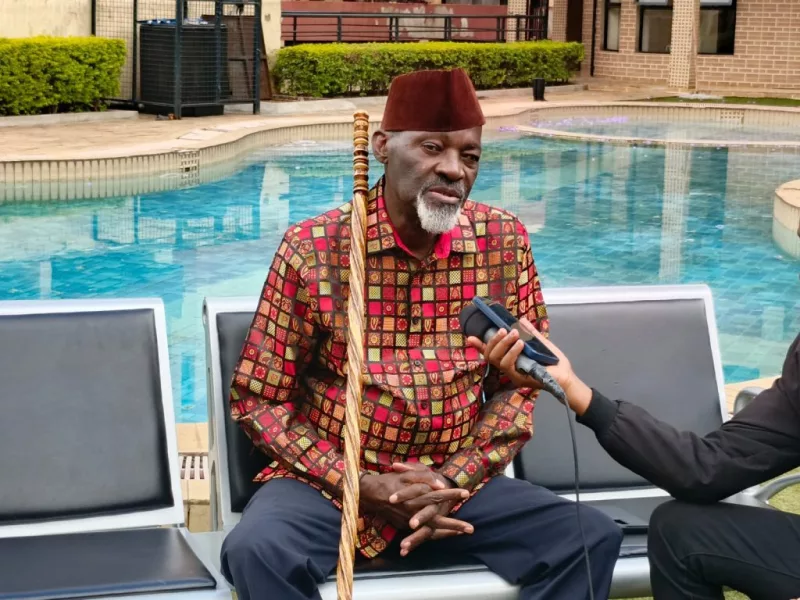
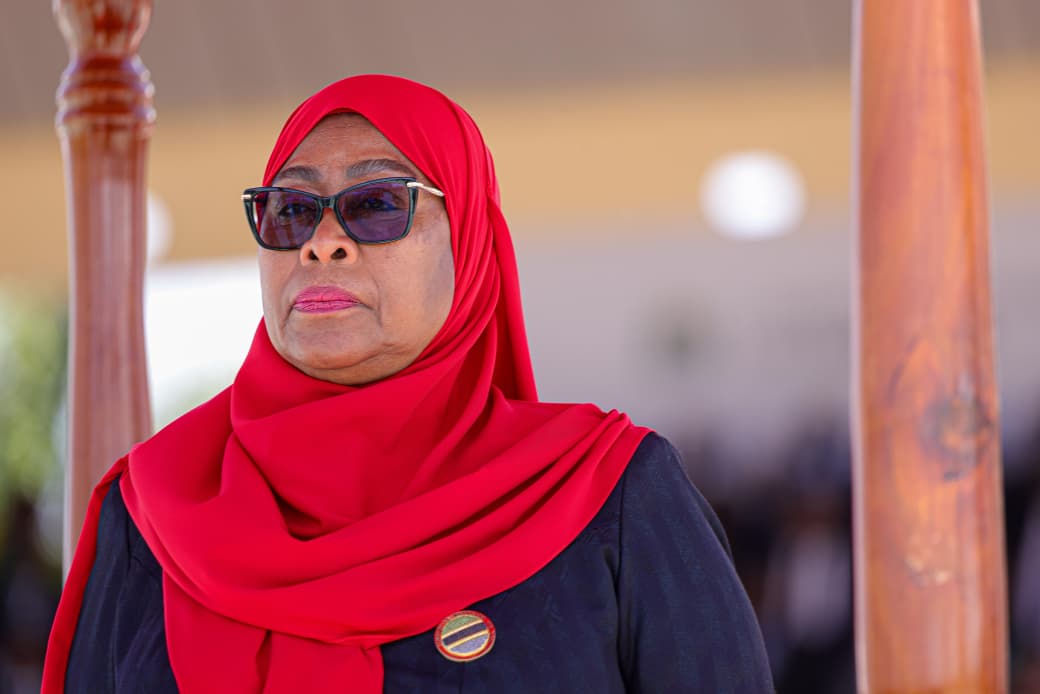
 Tanzania President Samia Suluhu Hassan during her inauguration on November 3, 2025./DPCS
Tanzania’s President Samia Suluhu Hassan’s re-election is facing mounting international scrutiny amid claims of a one-sided contest, violent repression, and a shrinking democratic space.
Tanzania’s Independent National Electoral Commission declared Suluhu the winner of the October 29 general election with 97.7 per cent, representing 31.9 million votes, with turnout nearing 87 per cent. There were 37.6 million registered voters.
However, opposition, human rights and election monitoring groups, inter-governmental institutions and foreign governments have described the process as deeply flawed and “devoid of legitimacy.”
Chadema, the main opposition party whose potential candidate Tundu Lissu remained in jail during the polls, has rejected the results, alleging fraud, intimidation, and disqualification of key challengers.
Party leader Freeman Mbowe, recently freed after months in detention, said Tanzanians were “denied their voice through fear and force.”
The SADC Electoral Observation Mission in its preliminary report said voters could not express their democratic will in most cases.
“Overall, the 2025 General Election in the United Republic of Tanzania fell short of the requirements of the SADC Principles and Guidelines Governing Democratic Elections,” the report concluded.
The report said the arrest of members of the opposition, notably Lissu, and the disqualification of Luhaga Mpina of Act-Wazalendo raised questions about the fairness of the electoral landscape, especially on the mainland.
“Some stakeholders viewed the arrests and disqualification as undermining Tanzania’s multi-party system by removing legitimate competition in the electoral process. This appears to create an uneven political playing field, which in turn also discourages public participation and voter turnout,” the report said.
The Mission noted a very low voter turnout in all polling stations observed, where some centres had more police officers than voters, while others did not have voters at all.
The mission was led by Richard Msowoya, the former Speaker of Parliament of Malawi.
Beyond the critical electoral observation, which Suluhu trashed in her inauguration speech, the protests against the vote resulting in heavy casualty, internet shutdown and the dusk-to-dawn curfew in several regions has raised credibility questions.
Rights groups and opposition sources claim hundreds were killed, with some putting the number as high as 3,000.
The UN initially confirmed at least 10 deaths in what it described as “credible reports of excessive use of force.”
Malawi President Arthur Peter Mutharika, who serves as the SADC chairperson of Politics, Defence, and Security Cooperation, said the organ was concerned by the “loss of life, injuries, and destruction of property and public infrastructure” in Tanzania.
“SADC calls upon all stakeholders to exercise maximum restraint and refrain from actions that may further escalate violence and unrest. SADC reaffirms its readiness to assist, through appropriate mechanisms, in facilitating a peaceful resolution to the current challenges,” he said.
The Office of the UN High Commissioner for Human Rights urged Tanzanian authorities to ensure accountability and respect for the right to peaceful protest.
The swearing-in of Suluhu at a military installation in Dodoma in the absence of citizens did little to help the situation.
The function saw a poor attendance of heads of state, with only presidents Hakainde Hichilema (Zambia), Hassan Sheikh Mohamud (Somalia), President Evariste Ndayishimiye (Burundi) and President Daniel Chapo (Mozambique).
President William Ruto, who is also the EAC chairman, skipped the inauguration and sent Deputy President Kithure Kindiki, while Uganda’s Yoweri Museveni was also represented by the Vice President Jessica Alupo.
Western governments have taken a firmer stance. The EU issued a statement saying the election “fell short of international democratic standards,” citing the absence of genuine competition, pre-poll intimidation, and internet restrictions.
“The EU calls for the immediate release of detained politicians and for transparent investigations into reported abuses,” the statement said, while urging Tanzania to move towards a “fully fledged multiparty system.”
US Senate Foreign Relations Committee ranking member Senator Jean Shaheen called for a review of their diplomatic relations following the “fraudulent elections”.
“Tanzania’s ruling party has endangered the safety of its citizens and tourists in the country. After these fraudulent elections, the US-Tanzania relationship must be reviewed,” Senator Shaheen said.
The Tanzanian constitution does not allow the petition of presidential elections in court, a provision SADC team noted was inconsistent with the bloc’s principles of democracy.
“Legal victory does not always equal political legitimacy domestically and internationally. What will matter now that the situation is here is how Suluhu governs going forward. Will she open dialogue and restore trust, or double down on control?” a diplomat credited to the region said.
Notably, other than the ambassadors of France, Germany, Italy, and Lithuania, most of the other European envoys gave the event a wide berth.
Suluhu has, however, dismissed the criticism, insisting the vote was “peaceful, fair and transparent.” She said the electoral commission operated independently and that international partners should respect Tanzania’s sovereignty.
“Tanzanians have spoken through the ballot,” she said during her swearing-in, even as she accused “foreign forces” of trying to undermine the country’s stability.
In a statement addressed to international media, Tanzania Foreign Affairs Minister Mahmoud Thabit Kombo claimed the elections were conducted with “utmost transparency and adherence to democratic principles.”
Kombo added that in a view to enhancing that transparency, the electoral commission invited local, regional, and international observers to observe the polls in line with national laws and regional and international standards.