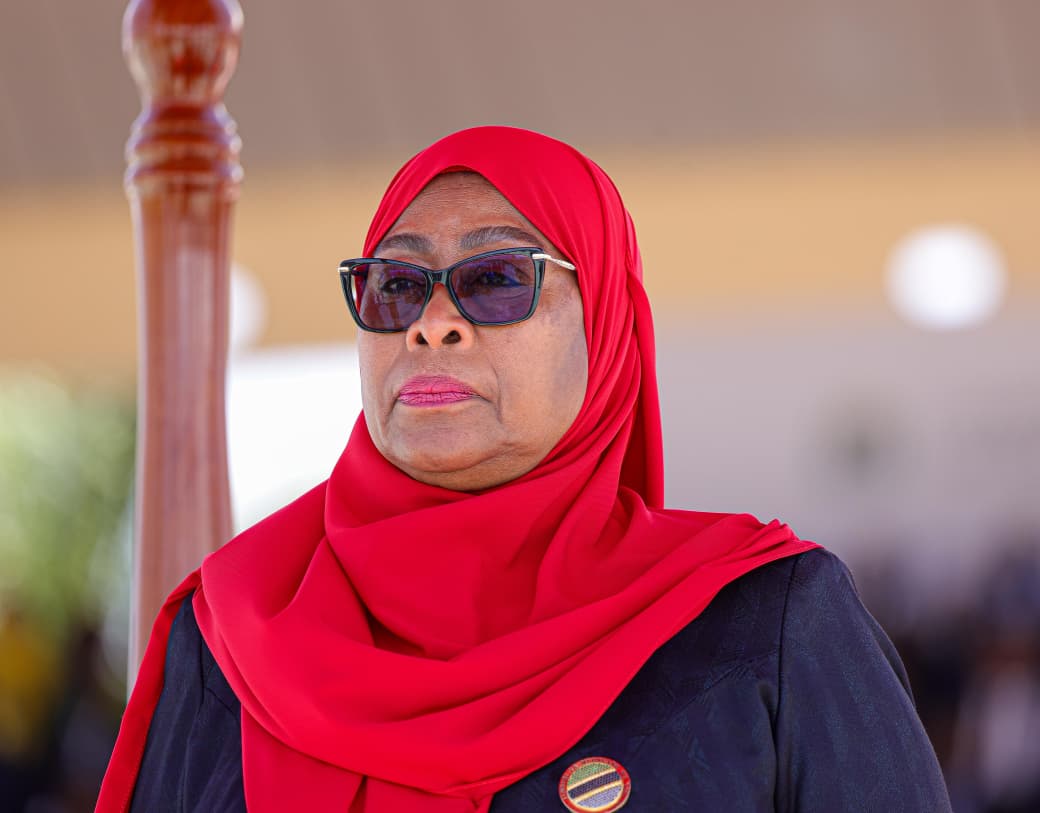
 Tanzanian President Samia Suluhu during her swearing-in ceremony in Dodoma/DPCS
After taking the oath of office amid controversy, Tanzanian President Samia Suluhu Hassan faces the most difficult chapter of her leadership.
Her re-election—marred by allegations of fraud, intimidation, and deadly violence—has plunged Tanzania into political and diplomatic uncertainty.
With reports suggesting that hundreds were killed during post-election protests, Suluhu inherits not only a divided nation but also a wary international community demanding accountability and reform.
Suluhu, 65, was sworn in before Chief Justice Ibrahim Hamis Juma, pledging to “protect and defend the Constitution and the unity of the United Republic of Tanzania.”
The ceremony came just days after violent demonstrations rocked major cities, including Dar es Salaam, Arusha, and Mwanza, following her declaration as the winner of the October 29 general election with an overwhelming 97 per cent of the vote, according to the National Electoral Commission.
Opposition parties swiftly rejected the results, alleging widespread irregularities and intimidation.
They accused state agencies of harassing poll monitors, suppressing dissent, and shutting down media coverage. The scale of the unrest that followed was unprecedented in Tanzania’s recent history, leaving a trail of destruction, grief, and political bitterness.
In her first speech after being sworn in, Suluhu struck a tone of both sorrow and resolve.
“I am deeply saddened and troubled by the consequences of the destruction of peace, the loss of lives, and the damage to both public and private property that occurred in some parts of the country, especially in cities and towns,” she said.
She urged Tanzanians to reject violence and focus on rebuilding national unity, describing peace as the country’s most valuable asset.
“Our responsibility is to build our nation and make our tomorrow better than our yesterday. Let us continue to uphold our ideology of unity and solidarity,” she added.
However, behind her calls for calm lies a daunting challenge.
Suluhu’s immediate priority will be to restore public trust and bring the protests to an end.
Analysts say this will require a blend of firmness and reconciliation—acknowledging the grievances of the opposition and the victims of the crackdown while reassuring her supporters that the country remains stable.
She has already instructed national, regional, and district defense and security committees to restore normalcy.
But critics warn that stability cannot be achieved through security measures alone.
Many observers believe Suluhu must open the political space, lift restrictions on independent media, and allow civic freedoms to thrive if she hopes to mend the national divide.
Political analysts suggest that the president could initiate a national dialogue involving opposition leaders, faith-based organizations, and civil society to chart a way forward.
“Tanzania cannot afford a return to business as usual,” one governance expert noted.
“A credible truth-seeking and reconciliation process would send a strong signal that the administration values accountability.”
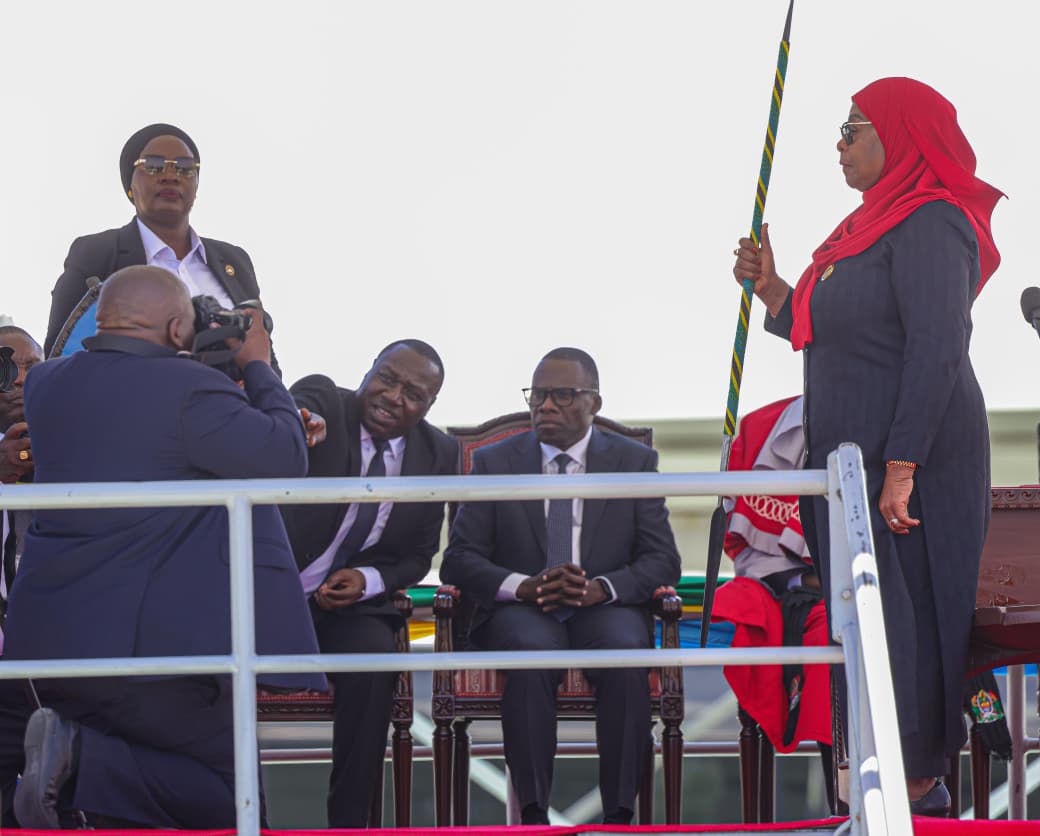 Tanzanian President Samia Suluhu during her swearing-in ceremony/DPCS
Beyond Tanzania’s borders, Suluhu faces a diplomatic balancing act. The European Union, the United States, and several African partners have voiced deep concern over the conduct of the polls and the violent aftermath.
The EU’s foreign policy chief, Kaja Kallas, said Brussels was “deeply concerned by the violence, the internet shutdown, and reports of irregularities in the electoral process in certain areas.”
She urged Tanzanian authorities to exercise “maximum restraint in order to preserve human lives.”
Regional bodies have echoed these concerns. The Southern African Development Community (SADC) Election Observer Mission, led by former Malawi Speaker of Parliament Richard Msowoya, concluded that the 2025 elections “fell short of the requirements of the SADC Principles and Guidelines Governing Democratic Elections (2021).”
While acknowledging that voting day was largely peaceful, the mission reported that in many areas, voters were unable to freely express their democratic will due to intimidation and restricted freedoms.
“SADC appeals for calm and urges Tanzanians to resolve grievances through lawful channels,” Msowoya said during the mission’s briefing in Dodoma.
Human rights groups have been even more critical. Amnesty International condemned the post-election crackdown, citing reports of killings, arbitrary arrests, and excessive use of force.
Human Rights Watch (HRW) also alleged that police and security forces shot protesters and bystanders, though it said it was still verifying the extent of the violence.
These reports have placed Suluhu’s administration under intense scrutiny.
Suluhu has however rejected calls for sweeping electoral reforms, dismissing criticism from regional and international observer missions as “external interference” in the country’s internal affairs.
“We thank all communities that brought election observers. We have received their opinions with great respect,” she said.
“However, as President Mkapa said, when they praise us, we receive that praise humbly. But when they give us instructions on what to do — we reject those instructions.”
Suluhu added that her government would “consider constructive advice” while upholding sovereignty and peace as non-negotiable national principles.
Analysts say Suluhu’s diplomatic options are clear, though not easy. She can adopt a strategy of engagement rather than defensiveness — inviting international observers for post-election assessments, cooperating with regional mediators such as the African Union (AU) or SADC, and committing to governance reforms.
Such steps could help restore Tanzania’s global image and reassure investors unnerved by political instability.
Alternatively, she could take a harder line, framing international criticism as interference in domestic affairs — a stance that might appeal to nationalist sentiments but would deepen the country’s isolation.
Suluhu acknowledged messages of support from regional leaders, including the presidents Hakainde Hichilema (Zambia) and Évariste Ndayishimiye (Burundi), who attended the ceremony.
“In their speeches here today, the Presidents of Zambia and Burundi have emphasised that internal unrest in a country is not good—it has no price, no value, and brings no benefit to anyone,” Suluhu said. “Therefore, my fellow citizens, I urge you all to cherish and maintain the peace, unity, and stability of our nation.”