Sometimes I feel as if we have a parallel continent. While beautiful, uplifting and optimistic forums are discussing very pertinent issues, especially on how to involve the youth, including governments, partners, youth leaders and all the relevant players in the region.
On the other hand, we endure endless political strain and conflict in the continent, which are getting more and more embarrassing by day, with particular focus on recent turbulent elections, upcoming elections and the current hanging economies of our countries.
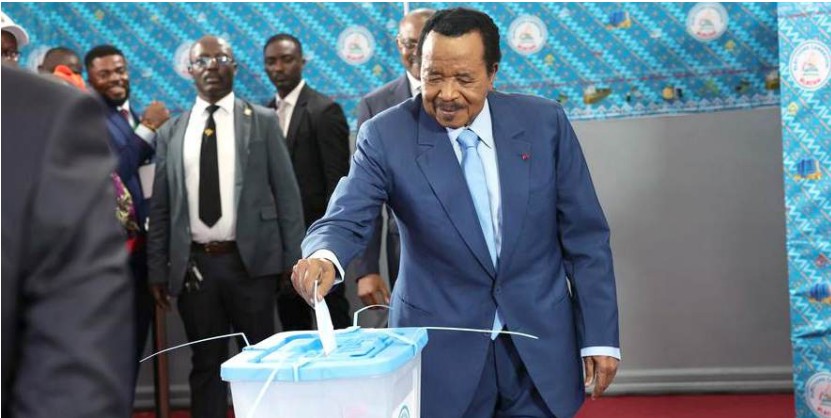
How embarrassing has it gotten? Just this week, Cameroon’s long-serving leader, 92-year-old President Paul Biya, was officially declared the winner of the presidential election, securing 53.66 per cent of the vote for an unprecedented eighth term. He was declared the victor despite widespread criticism and allegations of electoral malpractice.
In Ivory Coast, President Alassane Ouattara, aged 83, and a former IMF official who has been in power since 2011, was also declared the winner with nearly 90 per cent of the vote. The opposition has dismissed the polling as neither free nor fair and rejected the result.
Meanwhile, in Tanzania, President Samia Hassan, who became the nation’s first female president in 2021 following the death of John Magufuli, ran for her first full term in the October elections. The poll was on Thursday.
Her campaign has drawn criticism after several opposition candidates were disqualified and her running against herself raises questions about the credibility of the polls.
In Uganda, President Yoweri Museveni, who has been in power since 1986, has been endorsed by his ruling National Resistance Movement to run yet again in the January 2026 general election. He says his presumed victory will be his “last term”.
Meanwhile, in Madagascar, the former DJ-turned-politician Andry Rajoelina was removed in a military coup this month in October.
The army revoked his Malagasy citizenship after revelations he held dual French nationality, forcing him to flee the country as the African Union swiftly suspended Madagascar.
Despite their controversial reigns, some argue these long-serving leaders have at least maintained a semblance of stability, kept their nations from total collapse, and sustained a level of continuity in governance that, though imperfect, has prevented deeper chaos.
However, in all these countries, one thing remains the same, the biggest victims are the voiceless African youth. And just as in Kenya, they are the most numerous and prominent in protests as many remain angry and have very little say in or control on how to handle the political crises in their countries.
For instance, youths have been killed in the current protests in Cameroon, led by opposition candidate Issa Bakary.
Since last year, Gen Z protests have erupted in Uganda, Nigeria, Kenya, Morocco, Togo, Mali, Mozambique, Madagascar, with more or less similar causes. And this is not the end.
In the meantime, just a small Google search will lead you to many forums across the continent, with elaborate programmes and noble principles, good visions and high-level delegations in attendance.
All seriously mean well, and I speak from experience in attending, speaking and actively participating in plenary sessions.
Many pan-Africanists and partners go for these forums in good faith and with passion for change.
But why the parallel continent? What can we do to bridge the deep divide that seems to separate the Africa we talk about from the Africa we live in?
The truth is, we have mastered the art of speaking about change more than living it. Many African countries have had forums, lots of papers, strategies, some of them implemented, while many important ones are shelved.
For instance, the number of regional and national forums on youth leadership does not translate into opportunities given to the youth in leadership. Youth leadership is still, unfortunately, tokenistic, as the older generation clinches everything possible politically.
We unfortunately have leaders and institutions in Kenya, and Africa enjoying the glamour of engagement but fearing the discomfort of transformation, with these last presidential elections typical examples. Youth leadership and empowerment only remain convenient slogans in speeches; youth and their issues are sidelined in decisions.
It’s almost as if there are two Africas: one that debates inclusion in conference halls, and another that bleeds on the streets for the same cause. Until we begin to translate these high-level dialogues into measurable accountability and empower youth to meaningfully participate, not as decoration but as decision makers, the gap between these two Africas will only widen.
Africa has so many ideas, but to actualise them, our leaders need more sincerity, courage, inclusivity and the passion to follow through, for the Africa we want.