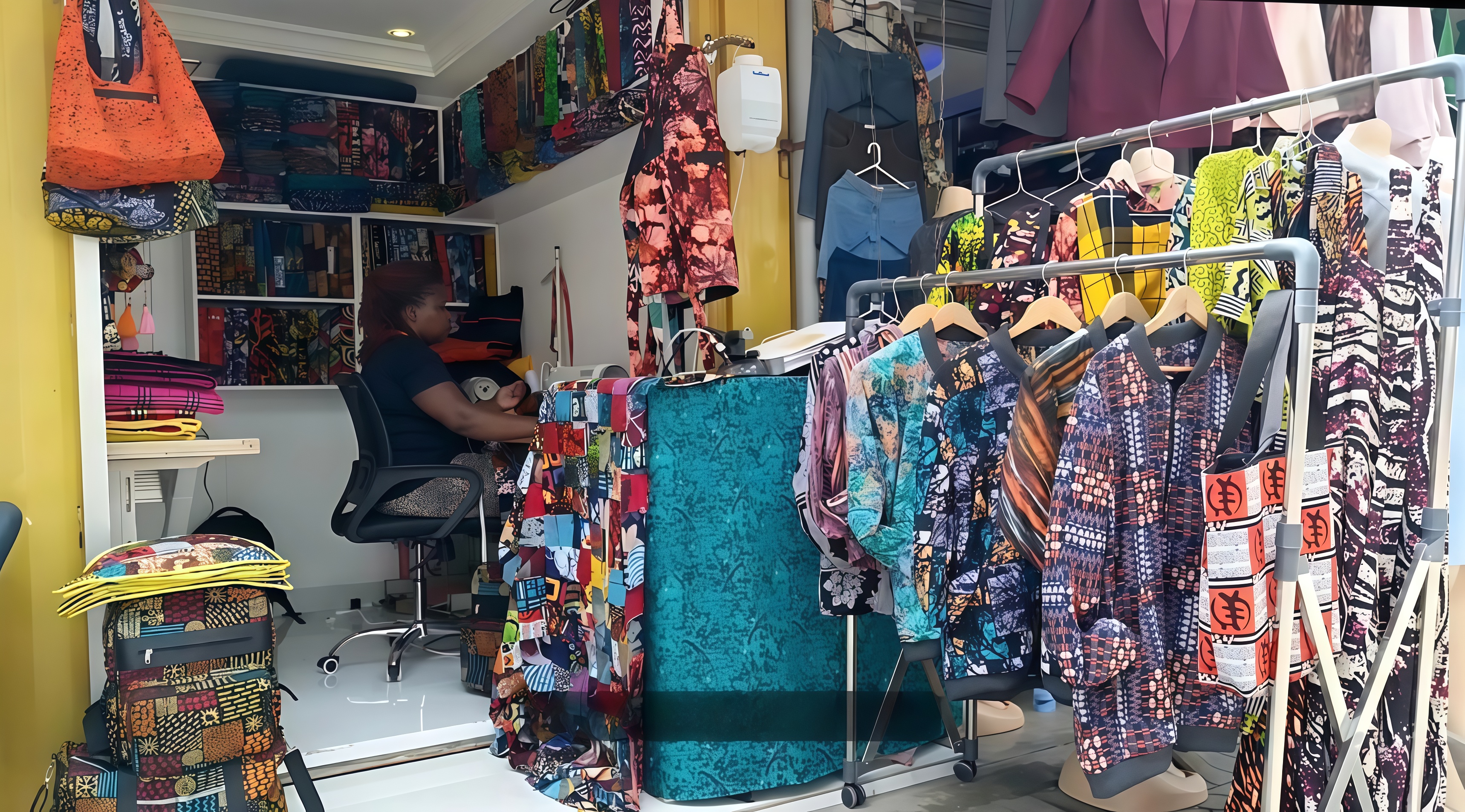
Across Africa, women account for the majority of the creative labor force; however, their impact in this sector is hardly felt due to structural and cultural obstacles that limit how far their talent can take them.
In creative fields where visibility is currency and absence often translates to irrelevance, women often grapple with exclusion due to a lack of necessary collateral needed to secure credit.
“When I took a leap of faith in 2024 and turned my passion for fashion design into a career, I soon realised how difficult it is for young women in the creative industry to get funding from a bank,” said Leah Muyoma, a fashion designer.
According to the African Development Bank (AfDB), 56 per cent of the adult population, which is still financially underserved in the developing world, is women.
“Without sufficient resources, I couldn’t secure a physical shop for my newly launched business, nor procure equipment or hire the team I would need to grow my business,” said Muyoma.
Yet, beneath the surface of these challenges lay a quiet determination to make it work.
Then came a pivotal moment. She discovered the Sanara programme, an initiative by the Mastercard Foundation, in partnership with HEVA, SNDBX-Ubuntu, Baraza Media Lab and GoDown Arts Centre to help women and men aged 18-35 years run profitable businesses.
“Sanara changed everything for me. Not only did it open funding doors for me, it also helped me learn how to plan my day, keep records, and manage my money properly,” Muyoma said.
“Before, I had no idea if I was making a profit. Now, I track everything and I know I’m earning a reliable profit each month.”
From a talented hobbyist operating on instinct and hope, she has turned into a businesswoman with a clear understanding of her earnings - a tangible, consistent profit each month.
“The Sanara Programme didn’t just teach me business skills—it gave me the confidence to dream bigger,” she said.
Her story has a striking resemblance to that of Damackline Oginda, a young girl from Kibera slums, who, from a young age, dreamt about becoming a musician, but did not have the resources to turn her dream into reality.
“It was a very tough beginning. At some point, I didn’t even have the fare to attend events. I could not even afford little things like petroleum jelly for my skin,” Oginda said.
These were not just logistical hurdles; they were deeply emotional wounds.
“I used to feel very discouraged. Even my family members could not see it (my passion) as something that will one day come to pay off,” she added.
She kept on moving and strengthening her vocal muscles in choirs and bands, making progress each and every day. She would also watch her role models, ceaselessly visualising herself on those same stages, moving crowds.
One day, a team from Sanara that happened to be in the audience during one of Oginda’s performances spotted her talent and passion.
The moment opened up several other doors for her, exposing her to platforms where she was able to grow her brand and start making something out of her career.
The impact of the programme wasn’t confined to financial aid, as she gained crucial skills in online marketing and learned how to present her craft to a wider world through digital marketing.
The stories of Damackline and Leah are a compelling testament to the idea that with the right support, a deeply loved hobby, a personal passion can indeed be woven into a thriving business.
The two creatives now stand at an exciting juncture, ready to move on to the next, even more ambitious chapters of their careers.