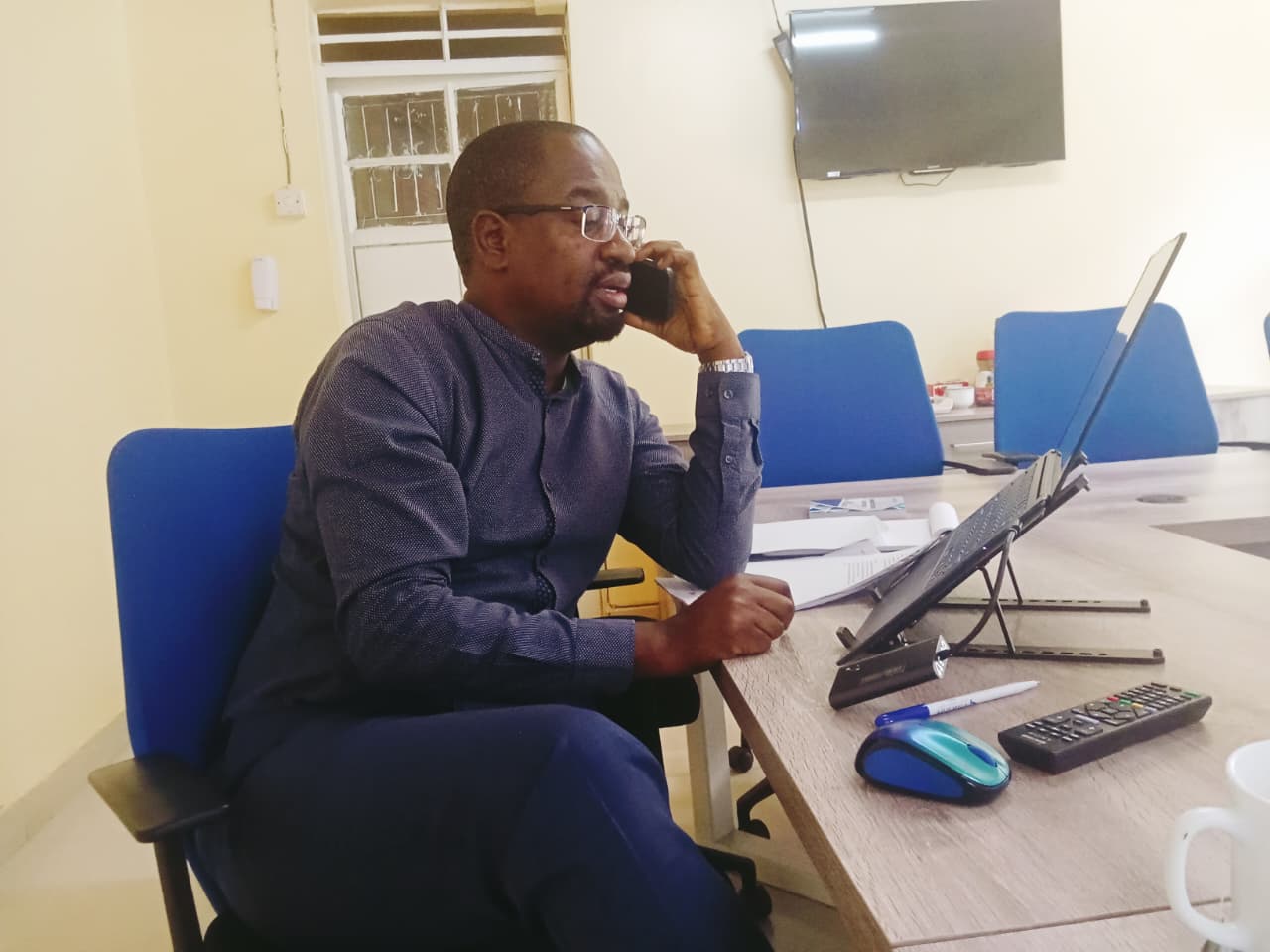
As a boy, Allan Maleche dreamed of becoming a physician, a physiotherapist, or at the very least, a psychologist. But his grades didn’t make the cut. Instead, he qualified to study law—which in hindsight, proved just as life-saving.
With a passion for medicine at heart and legal skill in hand, Maleche has become a formidable advocate for health rights.
From fighting for justice for women living with HIV forcibly sterilised in public and private health facilities by the government in the 1990s, to waging spirited legal battles against the jailing of TB patients who interrupted their treatment medication, Maleche now prepares lawsuits against healthcare facilities accused of beating and harassing mothers in labour wards.
The quintessential health lawyer serves as the executive director of the Kenya Legal and Ethical Issues Network on HIV and Aids (Kelin).
Speaking to the Star, Maleche reflected on how fate enabled him to repurpose his legal training to confront injustices in the health system—particularly those targeting marginalised groups and women.
His latest victory came just weeks ago, when Kelin and its partners succeeded in striking down several provisions of the National Reproductive Health Policy 2022–2032 in the High Court.
Kelin had joined petitioners Rachael Mwikali, Esther Aoko and the Ambassador for Youth and Adolescent Reproductive Health Programme (AYARHEP) in challenging key aspects of the policy.
Their objection was based on a clause requiring that, during medical abortion procedures, doctors consider not only the health of the pregnant person but also that of the unborn child.
They also raised concerns about how the policy had been developed—especially with regard to public participation.
"We were apprehensive that the policymakers had been hijacked by anti-rights forces and religious fundamentalists to amend the constitution through the backdoor—which recognises the right to abortion,” he said.
“By requiring that medics must consider the health of the unborn child, the policy was going to impose roadblocks to access abortion care services. A mother who has passed out, or has a heart attack or some other emergency, cannot be helped because doctors would have to second guess whether to focus on the child or start with saving the mother,” he explained, describing the court’s decision on October 2, as a major win.
The team had also contested a provision that restricted access to cervical cancer screening to women aged 25 to 49.
“The petitioners felt that this was discriminatory because girls as young as 18—even teens— are sexually active and need to access this crucial service. Locking them out not only violates their rights but also exposes their health to risk,” he said.
Maleche recounted Kelin’s earlier work supporting a group of 40 women who had been forcibly sterilised simply for living with HIV.
Only five had documentation strong enough to stand up in court, but the judges ruled in their favour in late 2014—even though the case is still pending in the Court of Appeal.
“The case was brought to our attention after research revealed these women were being subjected to tubal ligation without their informed consent after testing positive for HIV—supposedly to stop mother-to-child transmission. We conducted our own interviews and their recurring demand was for justice,” he said.
In another landmark case, he recalled how, in August 2010, three men were jailed in Kapsabet for failing to adhere to their tuberculosis treatment.
“These men were sick but had not taken their medicines as required and so they were taken before a magistrate who jailed them. We acted—and served them justice,” he said.
Currently, Kelin is preparing litigation on obstetric violence, to be filed within a month, he confirmed.
Maleche is a former board member of the Global Fund, representing developing country NGOs. He has over a decade of experience promoting ethical, rights-based approaches to health policy, programming, and service delivery.
In 2018, he was awarded the prestigious Elizabeth Taylor Human Rights Award.
He is also a former fellow at the FXB Centre for Health and Human Rights at the Harvard TH Chan School of Public Health.
He holds a Bachelor of Laws from the University of Nairobi and a Diploma in Gender and Human Rights from Uppsala University.