

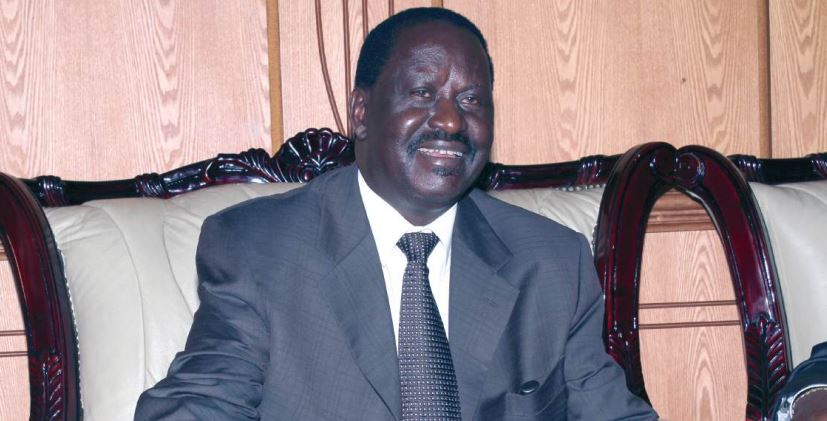
 Former Prime Minister Raila Odinga /FILE
As an adult, I first met Raila Odinga, formally, in October 2007. He was the presidential candidate for Orange Democratic Movement. This is how. Every Tuesday afternoon, I would meet my father, Wilson Ndolo Ayah for tea.
He had retired from politics. We would catch up and by about 6.30 pm, close the conversation for the next week. That Tuesday he asked me, who would win the presidential election? We discussed and he said, “I am meeting Honourable Raila Odinga and I want you with me. I am going to support him, and you need to do the same.”
At that time I was a little surprised because it was not often, he would be so direct with me. Raila had launched his campaign a few days ago and there was a lot of euphoria.
Two days later, on Thursday, we met in the mezzanine lounge at the Nairobi Safari Club Hotel along the University Way. The two discussed for a few minutes and then my father called me over, formally introduced me and together each of us gave our support to him. I was struck then, how the image I had of the man, was different from how I now interacted with him.
The next time I spent time with Raila was in March 2016. My father had passed away a few days earlier. I got a call. He wanted to come to my house to condole and was asking for directions. I gave and he arrived in the evening. He sat together with my family in the verandah for the whole evening. It was such a comfort. He told me stories of my father, how he grew up in the politics of the 1960s watching his father, at a time when my father was Oginga Odinga’s aide. Those stories are how we connected.
When in 2020, I wanted to get involved in direct politics in Seme constituency, I sought him out. We discussed and he gave me advice how to approach the task. But we kept a parallel conversation. About the history of Kenyan politics. He educated me about how the different communities settled in Nairobi. How the death of Tom Mboya, then Economic Planning and Development, in 1969 created internally displaced persons, with Luo community having to seek refuge in Kibra area, among the Nubians, fleeing the northern part of Nairobi. I had assumed, naively that the joke, that they followed the railway line. He explained his politics, the Kenya he wanted to see. How institutions needed to be strengthened.
After the 2022 election, I saw another side of him. The human side. We would at times gym together. For a man in his 70s he was strong and determined. As happens in politics, after his loss, many people would shy away from talking to him. But he took all this in his stride. After gym work, he would tell me stories.
One of his favourite stories was how he learned political driving. In 1969, my father was campaigning for MP for Kisumu Rural. Raila had just learned to drive. On the last day of campaign, they were driving into Kisumu town along the Kakamega road. It is a fairly steep descent to the Kondele junction. The brakes failed.He would laugh at the recollection. “I didn’t know how to drive well!’ Your father was so calm! The car was borrowed! How would I explain?” He managed to bring the car to a halt on the side of the road. They made it to the counting hall. But that was not the problem.
At 2 am after results were announced, my father still had no car. Raila was told, “Take Ndolo Ayah home, to Seme”. Everyone was exhausted. The former Prime Minister also remembered the car had no brakes! “ I drove so slowly!” my first time to your home in Seme. He would look at me and chuckle.
Somehow that little story, encapsulates the man. He had time for people. He spent his life driving this Kenyan car, which half the time has no brakes. Steering it, bring people safely home. The problem as Kenyans, is that we always asked him to drive only when we had an emergency.
Personally I will miss him for his stories and wisdom.







