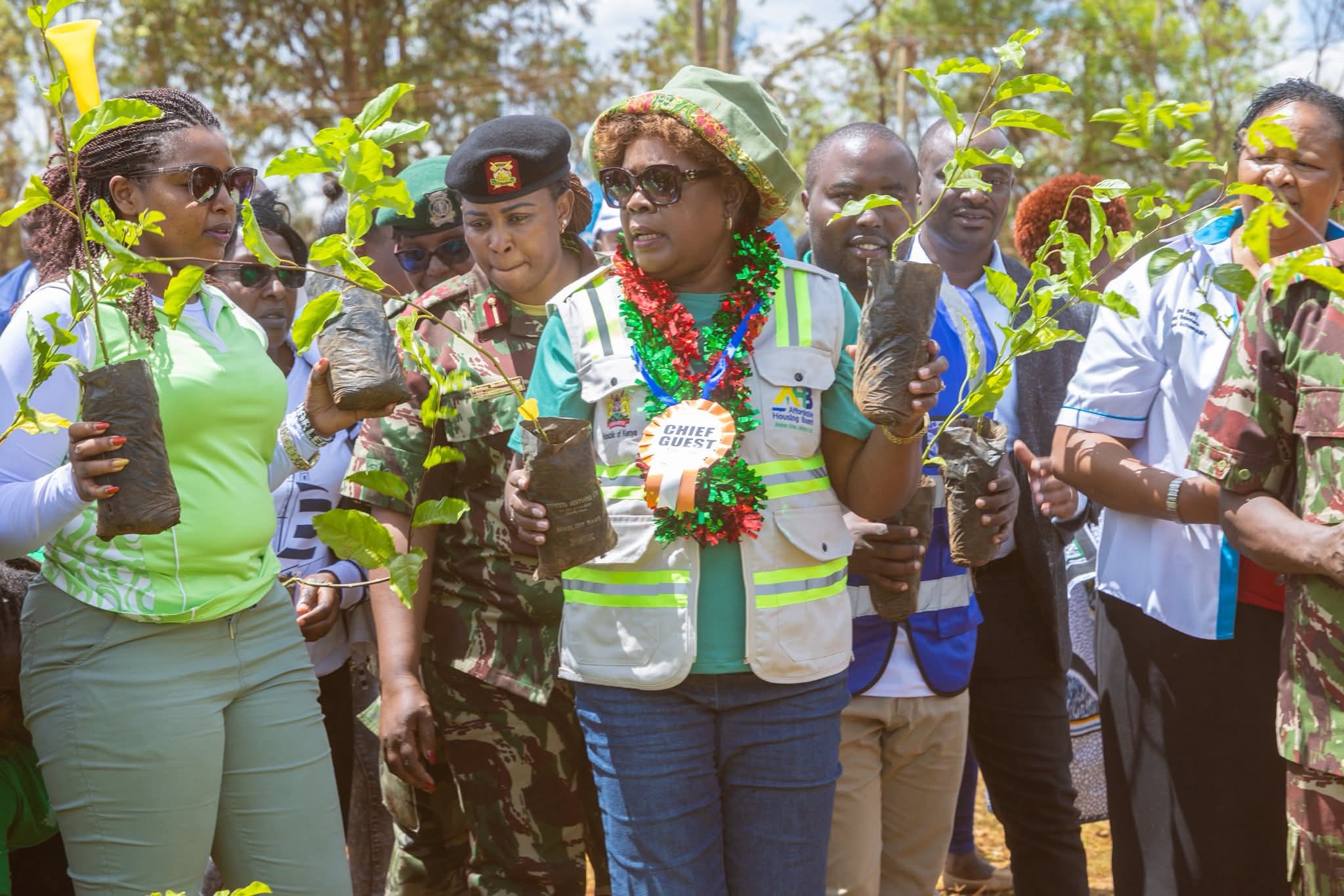
The revelation was made by Lands Cabinet Secretary Alice Wahome who said huge tracts of forest land have been destroyed through unregulated human activities over the years.
She said the government has no room for encroachment of forests that negates the gains made in environmental conservation such in the country as thousands continue the effects of erratic weather patterns.
The government plans to plant 15 billion trees by 2032, with President William Ruto recently announcing that 1.06 billion trees have already been planted in the last two years.
"There's quite a lot of encroachment in the country right now. It's a policy dilemma for the government because some of the people affected don't have a place to live or earn a living," she said.
She said the Cabinet has received a petition by communities living in former forested areas that are still gazetted as forests 50 have them releases to them legally to cushion them from relocation.
But she noted that the Ministry of Environment has prepared a report with the partnership of her ministry to find ways of handling formerly forested areas that have since been converted into private homes and public institutions such as schools and dispensaries established.
"In such instances, we have to balance because the forests are public but the people also belong to the government. We will give recommendations on the report by the Environment Ministry but we will also look into getting alternative land and reafforest degraded forests" she said.
Wahome who spoke at Karumu primary school in Kandara constituency while leading a tree-planting exercise however cautioned Kenyans against conducting unlawful activities that could further degrade forests.
She added that each minister has been allocated two counties to oversee planting of trees, with hers being Laikipia and Nyeri counties.
In 2018, the government established a taskforce to investigate illegal logging, degradation and encroachment of public forests, water towers and catchment areas.
The forest sector is key to social and economic wellbeing of Kenyans with most sectors relying on environment based resources.
By then, the sector contributed about Sh7 billion to the economy with over 50,000 direct and over 300,000 indirect jobs.
The taskforce revealed that forests were getting depleted at an alarming rate of 5,000 hactares per annum which it said caused water reduction by approximately 62 million cubic meters annually.
It proposed the establishment of an organ to vet Kenya Forest Service personnel and ensure those culpable of malpractice are prosecuted.
It also called for the banning of logging of cedar trees on all forests and use of cedar products, and illegal squatters removed from forests through consultative processes that included key stakeholders.
The main drivers of degradation of forests include increasing population, poverty, historical land allocations, corruption, weak enforcement and urban expansion among others.
The Forest Status Report for 2025 revealed that over 20 percent of Kenya's land mass is degraded with 12,000 acres of forest land concerted to other uses.
The report established that the average annual degradation rate stands at over 14,000 hactares while deforestation rate is at over 84,000 hactares.
Wahome donated over 6,000 fruits seedlings to the primary school and community members, urging teachers to ensure they are tended to to maturity.
Ends
Instant Analysis
The Forest Status Report for 2025 revealed that over 20 percent of Kenya's land mass is degraded with 12,000 acres of forest land concerted to other uses.
The forest sector is key to social and economic wellbeing of Kenyans with most sectors relying on environment based resources.