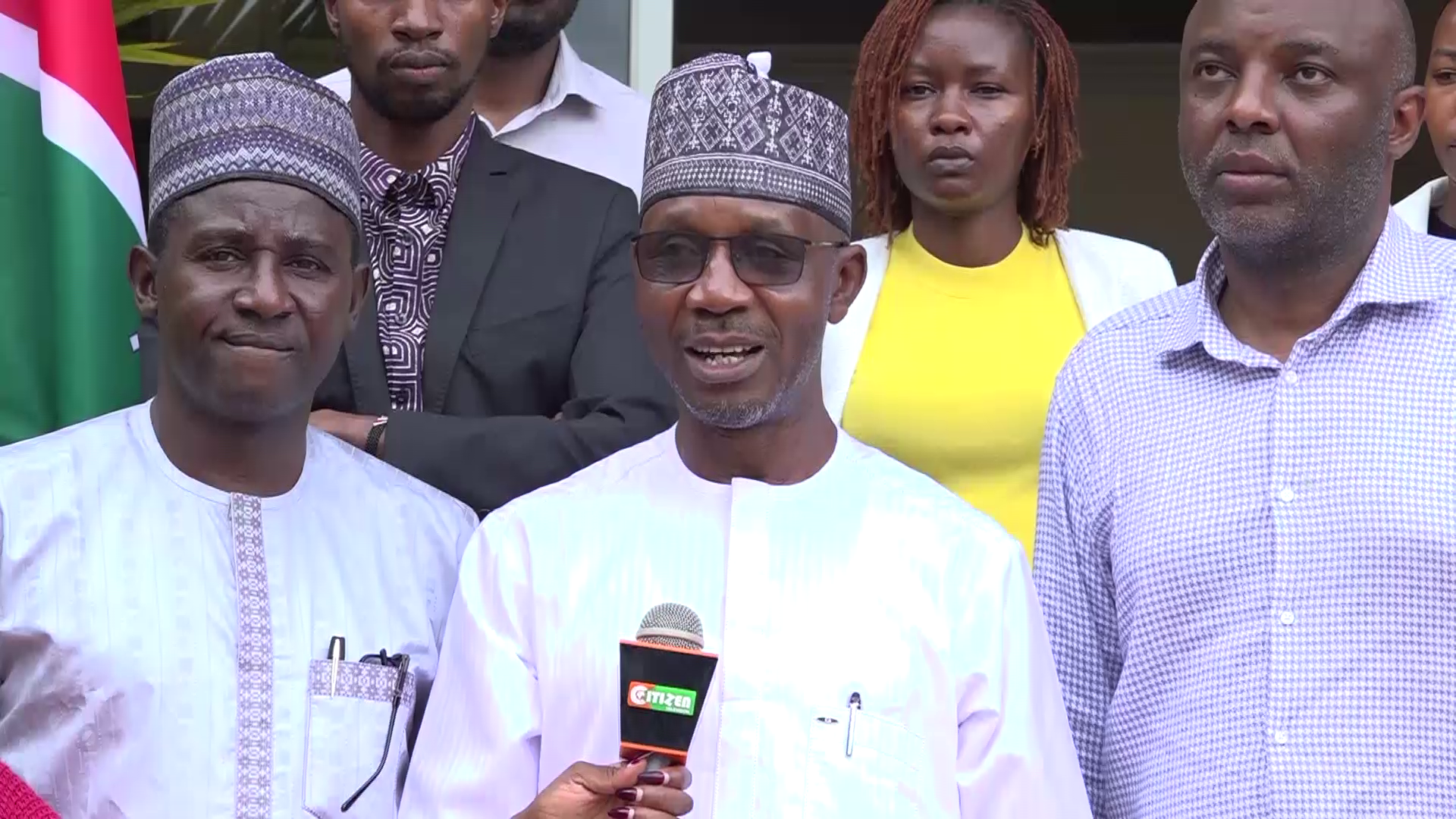
 Niger State Permanent Secretary in the Ministry of Health Dr Usman Abdullahi Imam addressing journalists outside Murang'a county offices, accompanied by governor Irungu Kang'ata on April 30, 2026 /ALICE WAITHERA
Murang’a’s growing reputation as a hub for innovative healthcare delivery has attracted attention beyond the borders.
This is after a high-level delegation from Nigeria’s Niger State visited the county to study its health systems and explore possible adoption of similar programmes back home.
Imam said Niger State had identified Murang’a as a model sub-national government whose health interventions could offer practical lessons for the Nigerian state.
“We realised that we have so much in common because as sub-national administration, we are serving limited populations compared to national authorities, and what Murang’a is doing was very attractive to us,” he said.
He said they were particularly impressed by Murang’a’s deployment of telemedicine, saying the technology offered a practical solution to the shortage of specialised healthcare workers in Nigeria.
This, he said, would come-in handy to resolve the perennial challenge of high-skilled health workers leaving the country, straining local health systems.
“We have seen how telemedicine is being deployed through virtual consultation and diagnosis and how Murang’a is optimising its human resource for health. If we can optimise the available human resource through telemedicine, it will be very helpful,” he said.
Imam further praised Murang’a’s decentralisation of specialised renal care through mobile dialysis services and said the approach could help Niger State strengthen management of non-communicable diseases such as diabetes, hypertension, kidney failure and heart complications.
Governor Kang’ata said the Nigerian delegation sought to understand how Murang’a has leveraged technology and targeted public financing to improve healthcare access, especially for vulnerable households.
The visiting team was taken through Murang’a’s flagship health programmes including Kang’ataCare, the county-sponsored medical insurance scheme covering 40,000 vulnerable households—equivalent to about 160,000 residents.
The programme provides poor families with access to inpatient and outpatient care, chronic disease treatment and emergency services.
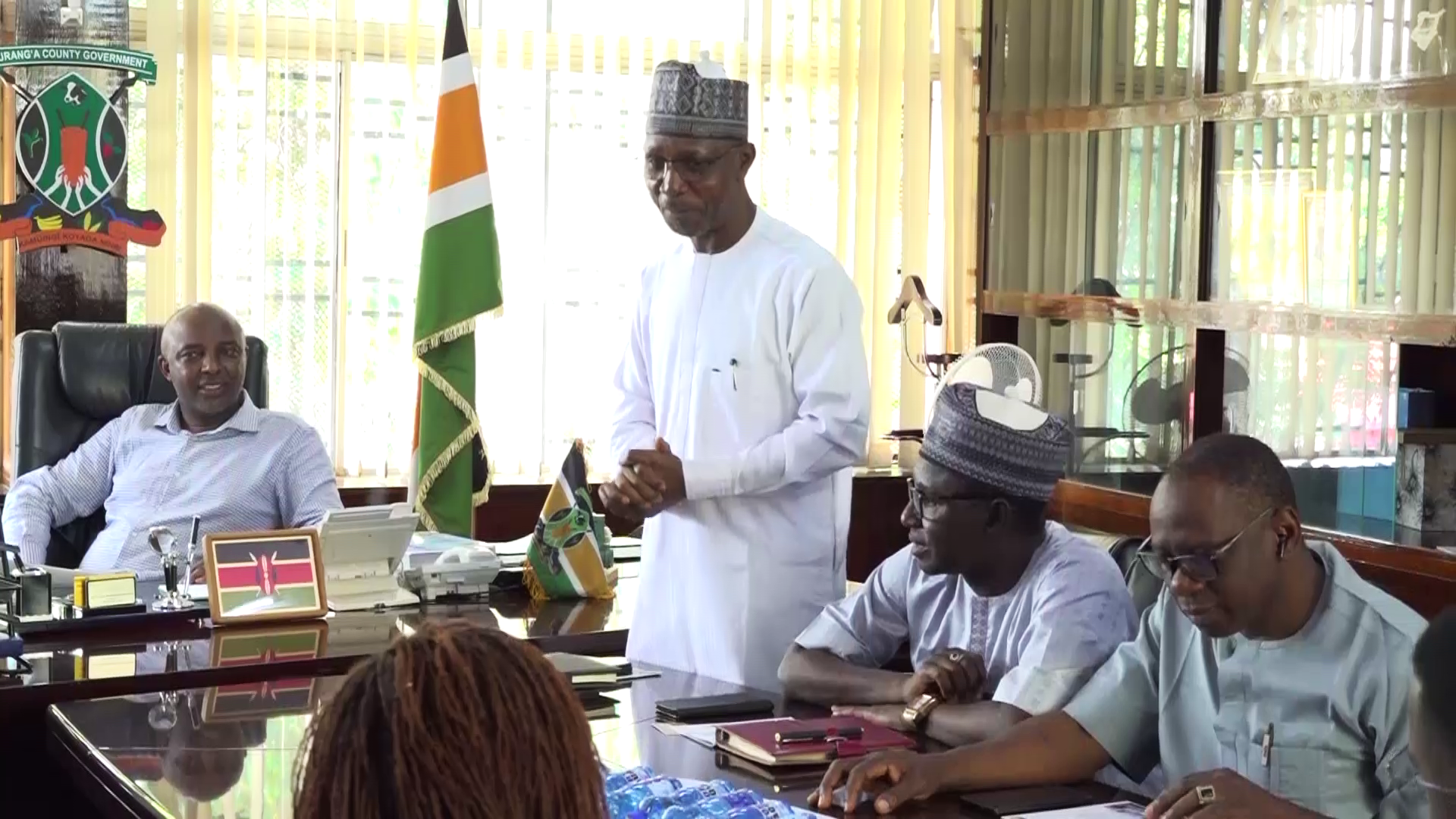 Niger State Permanent Secretary in the Ministry of Health Dr Usman Abdullahi Imam leads a delegation of officials during a visit to Murang'a county on April 30, 2026 / ALICE WAITHERA
They also reviewed the county’s telemedicine programme, through which residents in remote facilities can consult doctors and specialists virtually, reducing congestion at referral hospitals and cutting travel costs for patients.
The programme currently links dozens of health facilities across the county and has served thousands of patients since its rollout.
Another highlight of the benchmarking mission was Murang’a’s mobile dialysis truck, which was introduced to bring renal services closer to kidney patients in remote areas and reduce the burden of travelling long distances for treatment.
“They wanted to see our interventions in health, particularly the medical insurance that we give to the poor, automation of care, telemedicine technologies and the dialysis systems so they may replicate some of them in Nigeria,” Kang’ata said.
The governor said the visit also offered Murang’a an opportunity to learn from its Nigerian counterparts and deepen intergovernmental collaboration on healthcare innovation.
Niger State, one of Nigeria’s 36 states, is the country’s largest by land area and has an estimated population of more than six million people.
Located in Nigeria’s north-central region, the state is widely known as 'The Power State' due to the presence of major hydroelectric dams including Kainji, Jebba and Shiroro. Its economy is largely driven by agriculture, livestock keeping, hydroelectric power generation and solid mineral extraction.
Despite its economic significance, like many Nigerian states, Niger State faces healthcare challenges including inadequate specialist personnel, overstretched public facilities and the migration of trained health professionals abroad—a trend locally referred to as 'Japa'.
The benchmarking visit to Murang’a is part of wider efforts by the Nigerian state to modernise healthcare delivery and improve efficiency in the use of limited public resources.


Comments 0
Sign in to join the conversation
Sign In Create AccountNo comments yet. Be the first to share your thoughts!