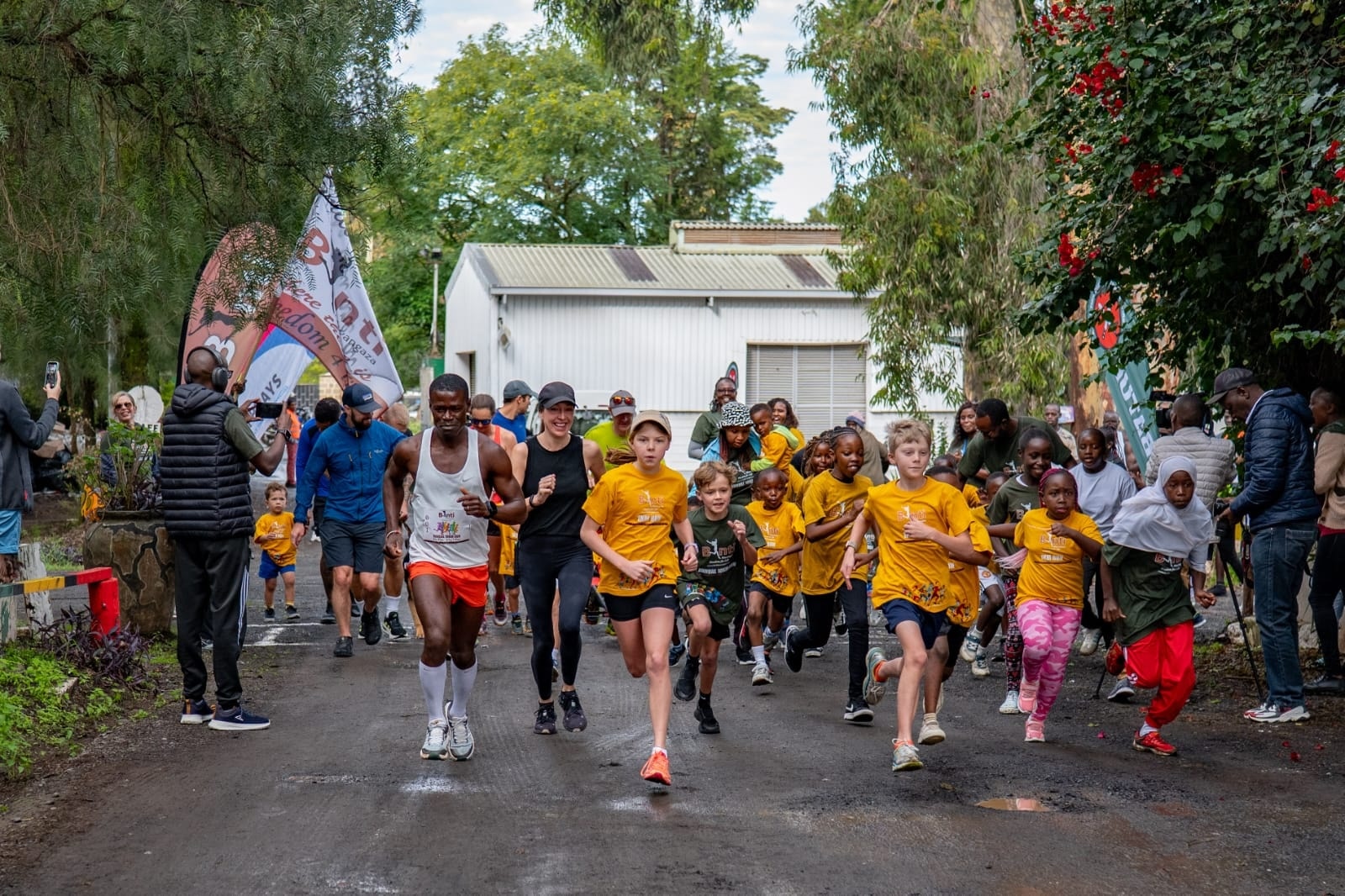
 British soldier Isaac Debrah (left) leads other soldiers and their children in a 10-km race to raise awareness on menstrual hygiene/ ALICE WAITHERA
Soldiers from the British Army Training Unit Kenya joined volunteers and residents in Nanyuki for a charity race aimed at raising awareness on menstrual hygiene.
It was also aimed at mobilising support for vulnerable girls and women struggling with period poverty.
The event, organised by Nanyuki-based community organisation Binti Mwangaza, featured a 10-kilometre race for adults and a one-kilometre fun run for children, marking the seventh edition of the annual initiative.
Founder Ann Muriuki said the race is part of the organisation’s menstrual hygiene and sexual education programme and serves as a fundraiser for reusable sanitary towels manufactured at the group’s workshop in Nanyuki.
“Today, we had the seventh edition of the 10km run, and it was also a first for one kilometre for the young ones,” Muriuki said.
She said the event targeted to raise 1,000 dignity kits for girls in schools the organisation supports in Nanyuki and Meru, but managed to secure 550 kits during the event.
Muriuki said each dignity kit contains reusable sanitary towels and educational materials on menstrual hygiene, designed to help girls manage their periods safely and remain in school.
She said although conversations around menstrual health have grown in recent years, access to sanitary products remains a major challenge for many girls in rural and low-income households.
Muriuki said Binti Mwangaza was established to tackle the practical and social barriers surrounding menstruation, including stigma and misinformation.
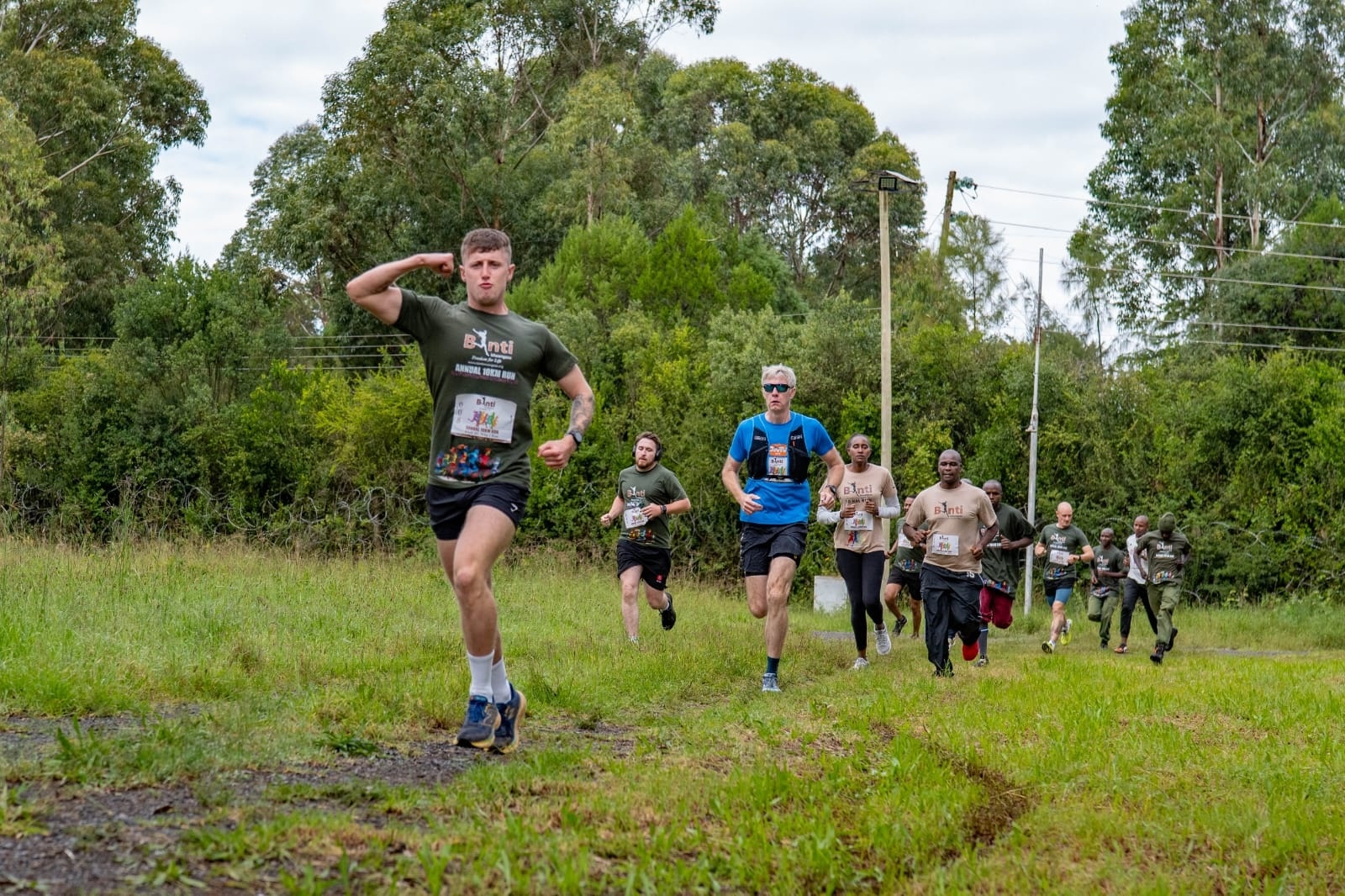 British soldiers during a 10-km marathon to raise awareness on menstrual hygiene/ ALICE WAITHERA
She said the organisation’s reproductive health sessions help girls understand their bodies, challenge harmful myths and gain confidence in managing puberty.
Batuk soldiers were among those who participated in the race, with British soldier Isaac Debrah helping coordinate logistics and map out the route.
He said the event has grown steadily over the years and now attracts significantly more participants than when it started.
“Today we had over 100 participants including children and adults, which is a really great sign of progress,” he said.
He said organisers hope to expand the programme’s reach beyond Nanyuki to serve more girls and women across the region.
Binti Mwangaza has for more than a decade championed menstrual health awareness and dignity for girls and women in northern Kenya through the production and distribution of reusable sanitary pads and reproductive health education.
The organisation operates a workshop in Nanyuki where reusable sanitary towels are manufactured locally before being distributed to girls and women from disadvantaged communities, many of whom are at risk of missing school because they cannot get them.
Its outreach programmes have focused on schools and pastoralist communities in Laikipia, Samburu, Isiolo and Meru counties, where access to sanitary products is often limited by poverty and long distances to retail centres.
To date, the organisation says it has supported more than 30,000 girls and women with menstrual products and menstrual health education.
Period poverty remains one of the most persistent barriers to girls’ education and well-being in Kenya, despite growing awareness and policy interventions by the government and non-governmental organisations.
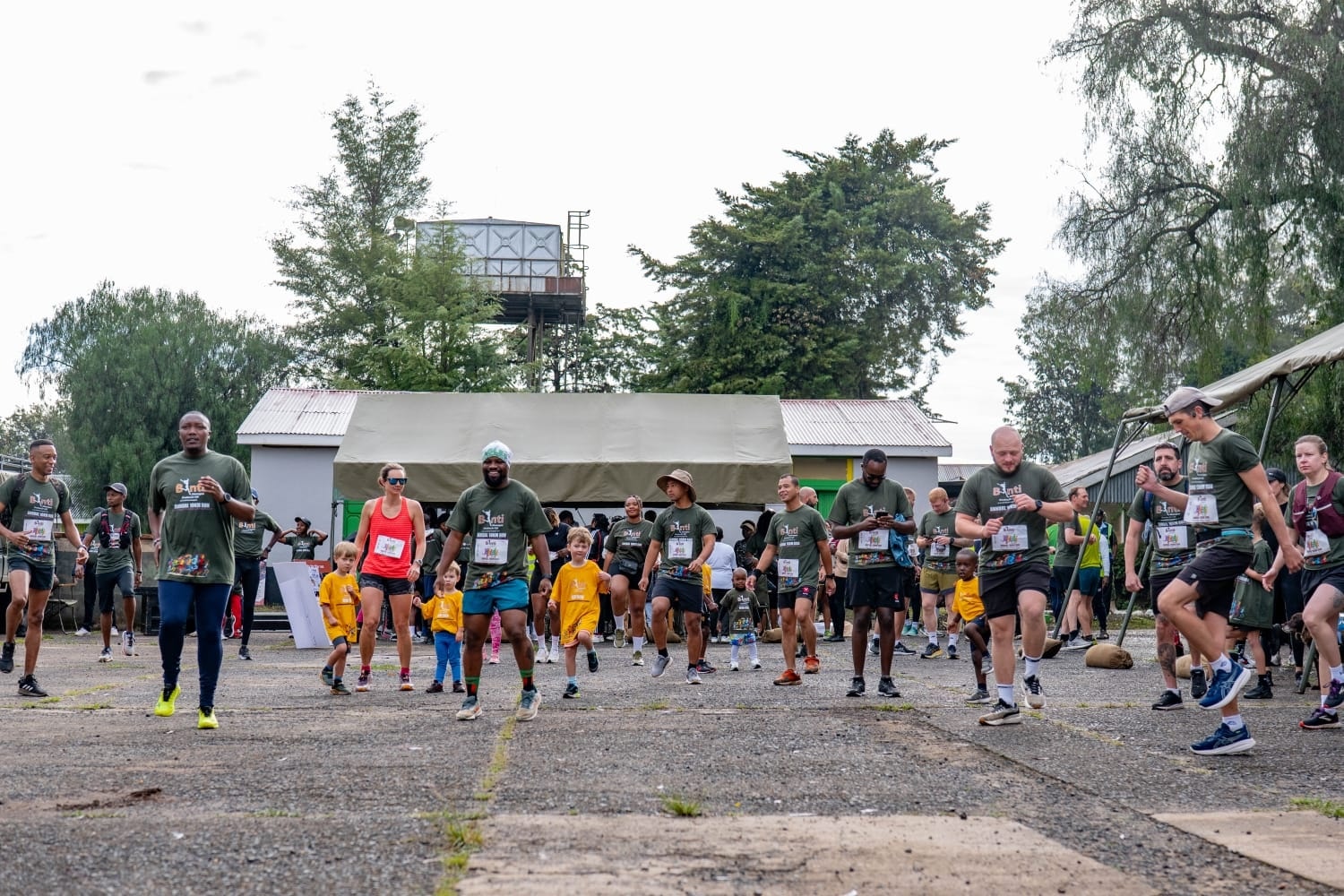 British soldiers preparing to participate in a 10-km run to raise awareness on menstrual hygiene in Nanyuki/ ALICE WAITHERA
According to Unicef, about 65 per cent of girls in Kenya are unable to consistently afford sanitary products, with a packet of basic pads costing about Sh130—often beyond the reach of poor households.
In many rural communities, girls resort to using improvised materials such as old cloth, mattress stuffing or tissue paper, increasing the risk of infections and discomfort, exposing them to exploitation by older men or predatory peers who offer money for sanitary pads in exchange for sex.
Inadequate menstrual hygiene management contributes significantly to absenteeism in schools, with some girls opting to stay home during their periods for fear of embarrassment or lack of supplies.
Participants in the race praised the initiative and called for broader public support to help tackle menstrual inequality.
Craftsman (Cfn) Joseph Kagure, another Batuk soldier, described the race as challenging but rewarding because of the cause behind it.
“The objective of this charity is to support young girls and other people in society who are in need, and I think we’ve met that objective with this run,” he said.
“The run was challenging, especially because of the weather and hilly route, but at the end of the day we managed to do it and it was amazing. I encourage more people to come and take part next time.”
Instant Analysis
Binti Mwangaza founder Ann Muriuki said the race is part of the organisation’s menstrual hygiene and sexual education programme and serves as a fundraiser for reusable sanitary towels manufactured at the group’s workshop in Nanyuki. It targets schools and pastoralist communities in Laikipia, Samburu, Isiolo and Meru counties, where access to sanitary products is often limited by poverty and long distances to retail centres.


Comments 0
Sign in to join the conversation
Sign In Create AccountNo comments yet. Be the first to share your thoughts!