Kenya stands to gain up to Sh33 billion every year if it invests in simple, cost-effective eye health measures such as school eye tests and the distribution of on-the-spot reading glasses, new research released ahead of World Sight Day has revealed.
The report, titled The Value of Vision, was produced by the International Agency for the Prevention of Blindness (IAPB) in partnership with the Seva Foundation and the Fred Hollows Foundation. It highlights that every Sh1 invested in eye health could return Sh10 in economic and social benefits for Kenya.
According to the findings, about 7.5 million Kenyans are living with avoidable sight loss, a challenge that contributes to unemployment, reduced productivity, lower education outcomes, and an increased caregiving burden, particularly for women.
The report estimates that a Sh3.3 billion investment in eye health would yield Sh33 billion in annual economic gains, including Sh19.7 billion from productivity improvements, Sh5.3 billion from increased employment, Sh3.3 billion from reduced caregiving needs, and educational gains equivalent to 8,628 extra years of schooling.
“We often take our sight for granted, but it’s a gateway to everything, from education to earning a living,” said Senator Crystal Asige, Secretary General of the Kenya Disabled Parliamentarians Association.
“The research is clear: investing in eye health brings significant returns for our country. We must commit to proven, cost-effective priorities like school vision screenings and reading glasses distribution. By doing so, we can ensure every Kenyan has access to the care they need.”
The Value of Vision report identifies six key priorities for governments to prevent sight loss: community-level vision screening, immediate access to reading glasses, strengthening the eye health workforce, improving surgical efficiency, removing barriers such as cost and distance, and enhancing cataract surgery standards through innovative training and post-operative care.
Victor Opiyo, President of the Optometrists Association of Kenya (OAK), said the findings confirm what optometrists witness daily across the country.
“The solutions to sight loss are simple, affordable, and life-changing. With the right investment, we can restore vision for millions while unlocking billions for the economy,” he said.
“Eye health is not a luxury, it’s essential to education, productivity, and dignity. By prioritising vision, Kenya can ensure that no child is held back in school and no worker loses their livelihood.”
Globally, nearly 1 billion people in low- and middle-income countries live with preventable vision impairment, yet most of these cases can be corrected through affordable interventions such as cataract surgery and prescription glasses.
Peter Holland, CEO of IAPB, said investing in vision is one of the smartest public health decisions any government can make.
“Sight loss is a universal issue that impacts every part of life. Most of it can be prevented with simple, affordable interventions like expanding eye tests and improving cataract surgery. By investing in vision, we invest in our future,” Holland said.
The Value of Vision report was launched during the United Nations General Assembly at a high-level meeting hosted by IAPB and the UN Friends of Vision Group.
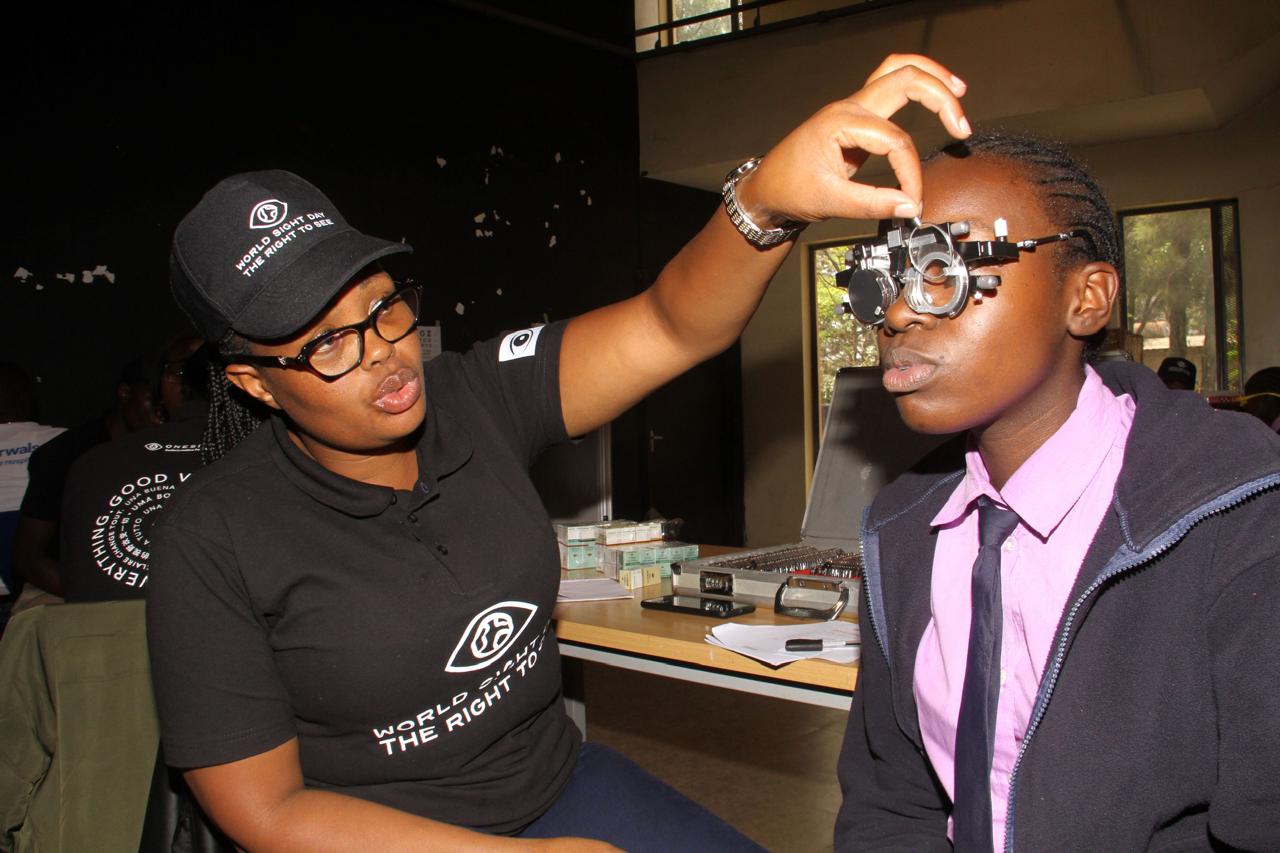
As the world marks World Sight Day, the Love Your Eyes campaign is calling on Kenyans to prioritise regular eye checks, noting that better vision means not only better health but also a stronger economy and a more equitable society.