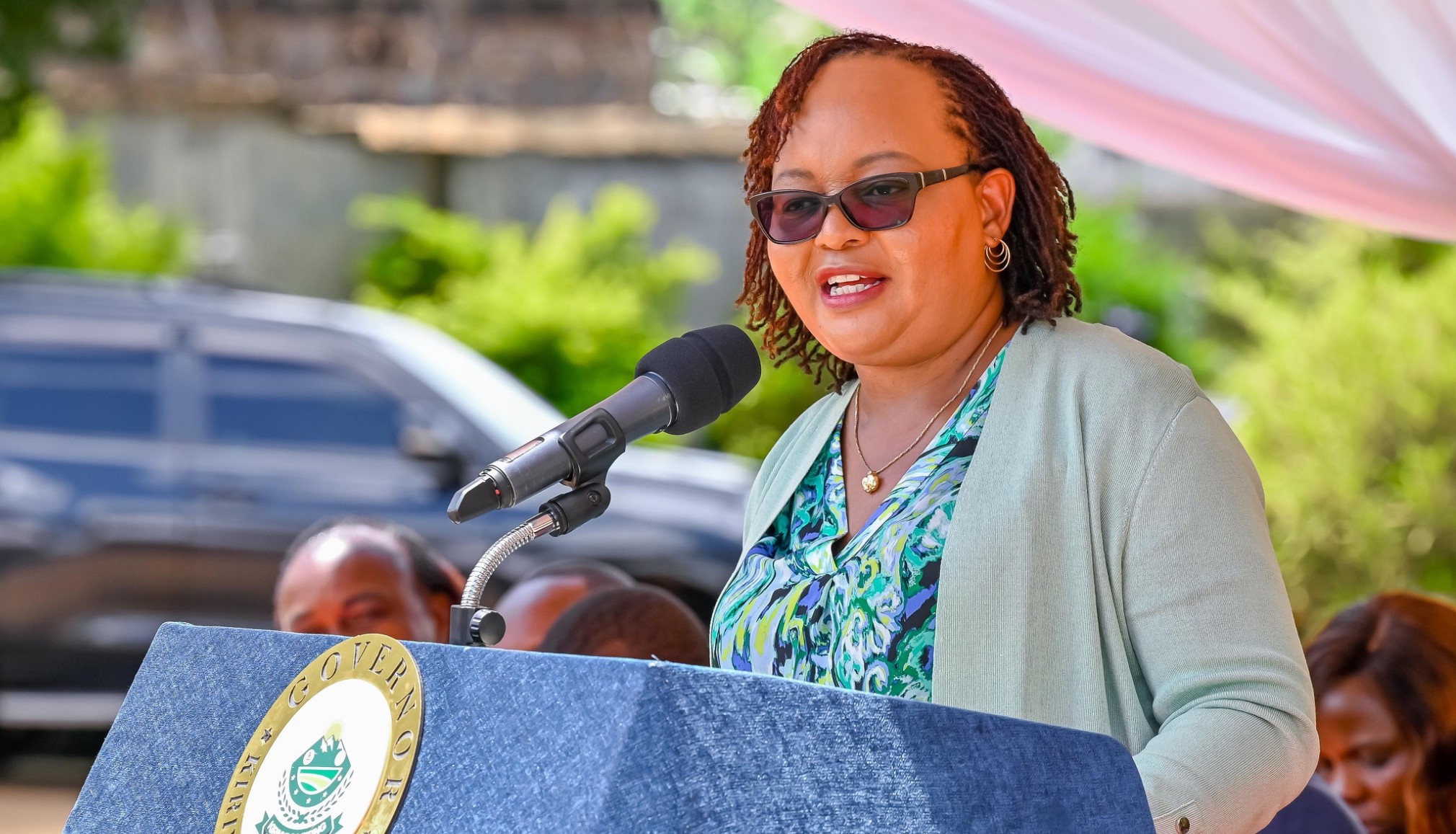
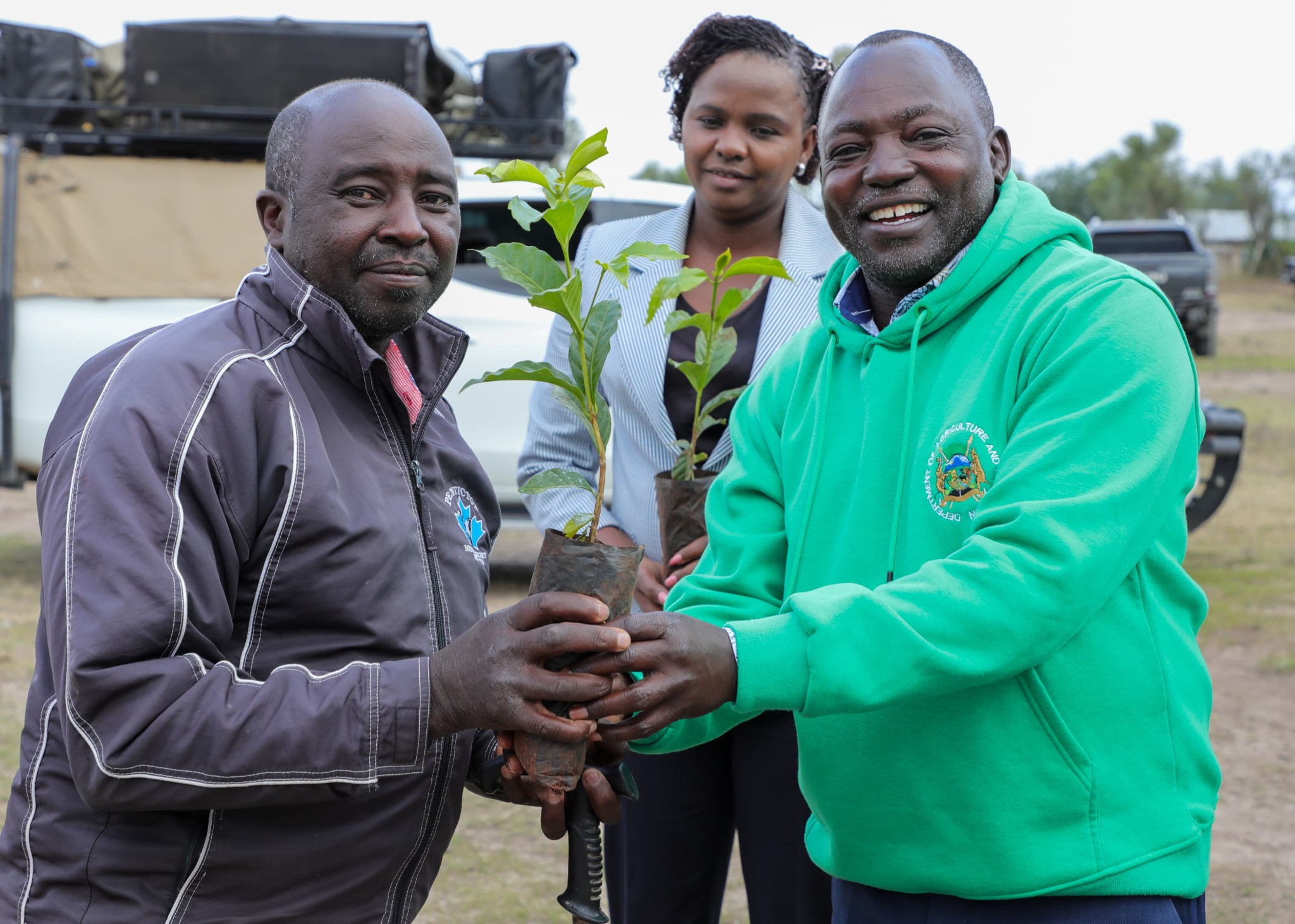
 Laikipia Governor Joshua Irungu issues coffee seedlings to a farmer in Chuma village on October 1, 2025
IN 2022, the Laikipia county government embarked on a project that is transforming the lives of residents.
Governor Joshua Irungu started a coffee farming to liberate locals from poverty occasioned by subsistence farming amid harsh climatic conditions. Today, farmers are reaping the benefits.
Lying near the Equator, Laikipia is predominantly semi-arid with a climate that has both dry and wet seasons, leading to serious water shortages.
In 2002, the county located in the rain shadow of Mt Kenya was classified as 50-80 per cent arid and semi-arid by the government, with annual rainfall that varies between 400 and 750mm.
With its main economic activities being agriculture and tourism, livestock keeping is the most dominant land use. Half of the county’s land is dedicated to grazing, ranching and pastoralism while only about 25 per cent is in high and medium altitude and is suitable for crop and dairy farming.
The county government established a coffee seedlings nursery at Lariak forest and a demo farm in Gatirima, where farmers were trained on coffee farming.
Irungu partnered with the Coffee Research Institute, Kenya Agricultural and Livestock Research Organisation (KARLO) and Dedan Kimathi University to undertake research on the parts that could be suitable for coffee farming.
“Even before we did the research, some farmers such as myself had already started coffee farming some years back and it has been doing well,” the governor said.
Speaking while issuing 7,000 Batian seedlings at Chuma on Wednesday, Irungu said the programme will help farmers engage in diversified agriculture where they will plant food crops as well as the cash crop to improve their income.
Statistics from the county agriculture department indicated that in 2017 the estimated livestock population was 55,000 heads of dairy cattle, beef cattle 200,000, sheep 450,000, goats 350,000, camels 10,000, donkeys 12,000, poultry 320,000, beehives 132,000 while about 2,000 hactares were on pasture grass.
In crop production, the county had 40,000 acres of maize, wheat 4,000, beans 23,000, irish potatoes 2,200 and horticultural crops 4,900.
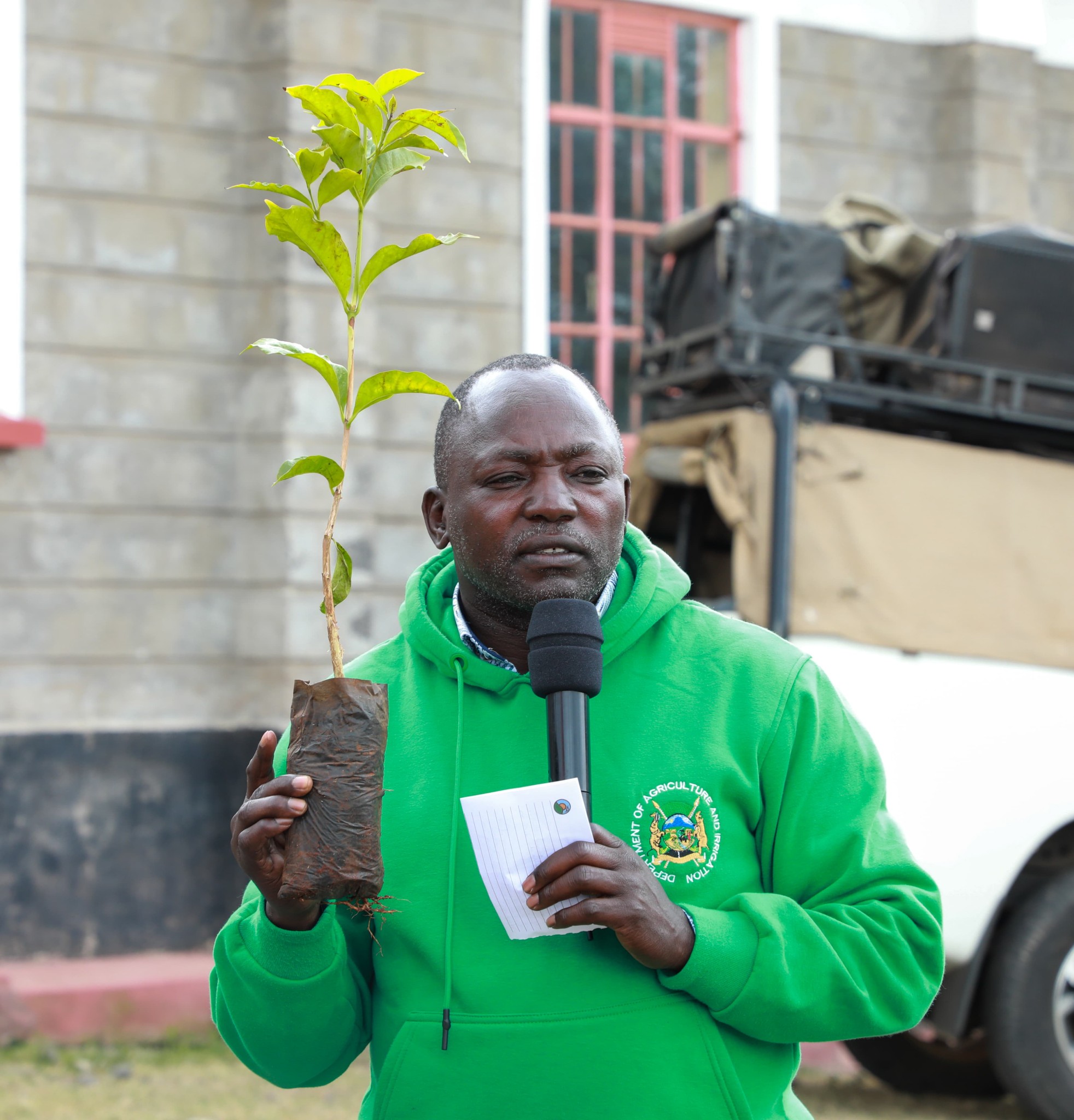 Laikipia Governor Joshua Irungu during the distribution of coffee seedlings in Chuma village on October 1, 2025
The county’s dairy production is estimated at about 100,000 litres per day, which drops by about 80 per cent during drought.
Further, farmers have been trained to engage in conservation agriculture to preserve moisture in the soil and help crops grow faster.
The governor said his administration’s plans are to disburse eight million seedlings to farmers by 2027 and ensure the coffee contributes about Sh10 million in revenue by 2030.
The programme will create more jobs in the agriculture sector that already provides employment to over 66 per cent of the county’s labour force.
It has seen the number of farmers increase from a paltry 400 in 2023 to about 1,500 after being issued with Batian and Ruiru 11 seedlings that are high-yielding.
The seedlings have been distributed in Marmanet, Igwamiti, Chuma, Ol Moran and Ngobit where agricultural officers have been dispatched to support farmers.
Already, farmers who planted the crop when the programme started are reaping the fruits and have reported earning at least Sh600 per bush, far more than in maize, beans and potato farming.
The governor said demand for coffee globally is immense, guaranteeing returns for farmers despite being less strenuous.
The programme will significantly boost coffee production in the country from the current 53,000 metric tonnes and boost earnings from the Sh38 billion earned last year, with the average prices at the Nairobi Coffee Exchange ranging between Sh130 and Sh140 per kilo of cherry this year.
Daisy Wambui, a beneficiary, said she has been a subsistence farmer for decades, struggling to support her family and educate her children.
“We welcome this change with open hands. We are optimistic that it will bring more returns and improve our lives,” she said.
Her sentiments were echoed by Charles Ndiritu, who said the programme was long overdue and will transform the county financially.
Coffee payments, he added, will significantly boost the cash flow in the villages, improving business activities.