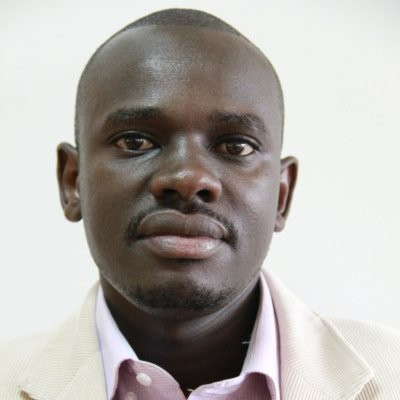
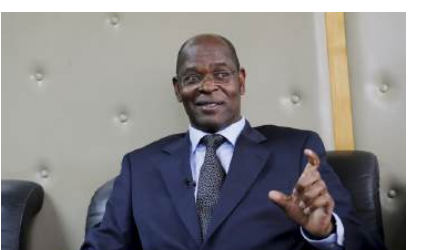
 Philip Kinisu
/FILE
Philip Kinisu
/FILE
Top politicians who benefited from the 2008 maize imports scandal tried to influence investigations to lay blame on their rivals, a new book reveals.
Philip Kinisu, former chairman of the Ethics and Anti-Corruption Commission says in his memoir, ‘The interrupted accountant’, that he resisted the attempts to change the conclusions of the investigations.
The scandal arose out of a serious shortage of maize, Kenya’s staple food, that followed the 2007 post-election violence, which disrupted agricultural production and supply.
Kinisu, then heading the local PricewaterhouseCoopers firm, was tapped by President Mwai Kibaki’s national unity government to conduct a forensic audit into the scam after the police, the Director of Public Prosecutions and the then Kenya Anti-Corruption Commission failed to apprehend the perpetrators.
Years later, Kinisu would rise to the chairmanship of EACC, after the new constitution passed in 2010 transformed the toothless KACC into a constitutional body with vast powers.
In his new book, he stops short of naming the politicians because of confidentiality issues.
“Soon after the scandal surfaced, top leaders (including some whose proxy companies benefitted from the scheme) started deflecting responsibility and shifting blame onto others, in order to cloud the national debate.
“Some of them leaned on us, (unsuccessfully, of course) hoping to steer the investigation in a direction to pin down their opponents,’’ he writes.
To cover the shortage, also caused partly by drought, it was necessary to import additional stocks, yet the government had banned importation of maize to protect local farmers against unfair competition from their foreign counterparts whose governments subsidised production.
“The ban on maize imports was lifted in the last quarter of 2008,” Kinisu writes in the book which will be launched on Friday at Serena Hotel, Nairobi.
Following this development, the National Cereals and Produce Board in conjunction with other government agencies floated tenders for importation of maize.
The imported maize was to be sold to millers at subsidised prices, who would in turn sell flour to vulnerable sections of the public at affordable prices.
However, irregularities emerged in the allocation of import permits and distribution of maize, leading to allegations of fraud and profiteering.
“The scandal involved award of tenders to companies and individuals that did not qualify. Therefore, a few well-connected and powerful individuals reaped undeserved benefits at the expense of the public who, naturally, did not get the relief intended.”
The scandal came to light against a backdrop of a highly charged political atmosphere, as the country had just emerged from an orgy of violence following the 2007 presidential elections.
Incumbent Kibaki was declared winner but his challenger, Raila Odinga, disputed the outcome. The violence that followed killed 1,133 people and displaced thousands of others, according to an official inquiry.
“Thus, when the scandal emerged and a number of powerful politicians were mentioned, the excitement elicited was palpable. Could the scandal spell doom for some of the politicians?” Kinisu adds that the results of the audit were explosive.
“At the government’s request, I held a press conference at the Kenyatta International Conference Centre to present an executive summary of the report. Mr Odinga, who had teamed up with President Kibaki and was Prime Minister in a national unity government and Deputy Prime Minister and Finance minister Uhuru Kenyatta, attended the presser.
“Following release of our report, heads rolled, fingers were pointed and innocence was claimed. Government action was unprecedentedly decisive and swift—resulting in the removal from office of eight ministers and senior officials.”
Kinisu writes that his experience revealed certain shortcomings in the fight against corruption in Kenya at the time.
“The main impediment was, of course, the weak institutions charged with the fight. The government appointed PwC to do the assignment precisely because the police, the Kenya Anti-Corruption Commission (precursor to present-day Ethics and Anti-Corruption Commission) and public audit departments had failed to do the job.”
As is now the tradition, once the dust settled, many of those implicated in the scandal and sanctioned bounced back, albeit in different ministries and capacities.
For Kinisu, the successful execution of the audit, coupled with his long work on auditing donor funded projects from the 1990s, made him an obvious candidate for EACC chairmanship when the position fell vacant in 2015.
Having retired from PwC in 2014, after a 35-year career, Kinisu applied for the position and emerged the winner in interviews conducted by the EACC selection panel.
He was duly appointed by President Uhuru Kenyatta and sworn into office.
However, the book details the frustrations he faced in the new job.
His first move, to vet staff working at the commission, sent alarm bells ringing in some quarters. He was eventually forced to resign from the job after just seven months.
Analysing his experience and the runaway corruption, Kinisu laid the blame squarely on citizens, whom he accuses of being in bed with their corrupt leaders.
“The millions of voters who bear the brunt of bad governance must have genuine self-reflection on their own role in propping up the status quo,” he writes.
“Every Kenyan must decide what informs their electoral choices. Is it a candidate’s character, political party affiliation, tribe or the financial favours he dispenses?”
He urged political candidates who aspire to make a difference to “recognise that systemic change starts with them. Revolutions, political or otherwise, must have a vanguard.”



Comments 0
Sign in to join the conversation
Sign In Create AccountNo comments yet. Be the first to share your thoughts!