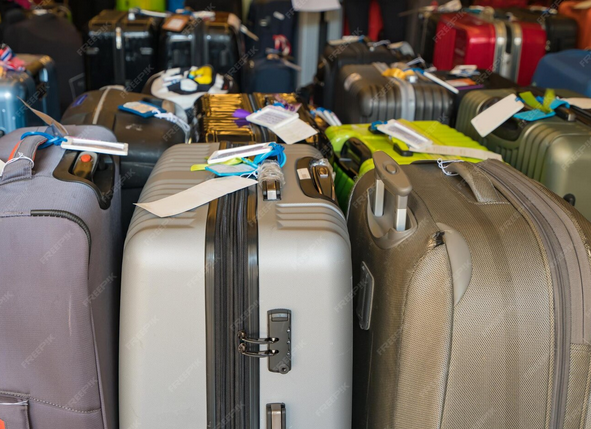
The steady stream of travelers through any major airport leaves behind an inevitable trail of forgotten, abandoned and prohibited possessions.
From oversized bottles of shampoo to pocket knives and uncollected baggage, these items represent a curious blend of personal history and security protocol.
Their ultimate fate is governed by a strict, often legally-defined process that transforms them from passenger property into government surplus or retail stock, a path that ultimately feeds the public auctions you see on social media.
Confiscated Items: From security checkpoint to state surplus
There is no one rule that fits to all airports, but Kenya offers a clear example of how these processes are managed under both global and East African regional regulations.
As with most countries, the process for items confiscated at the security checkpoint or customs is distinct from lost baggage.
The two primary bodies involved are the Kenya Airports Authority (KAA) Security and the Kenya Revenue Authority (KRA) Customs.
When you are boarding at JKIA or Moi International Airport and you happen to be carrying knives, liquids over the limit, and self-defense sprays, they will be confiscated.
This is done under international aviation security rules and the Kenya Airways and KAA guidelines, which state that any forbidden object detected at security is immediately confiscated and disposed of.
The primary directive is to maintain air safety, and therefore, the item is not returned.
The disposal method, which can range from secure destruction to being handed over to the relevant state agency, is in line with the global practice of preventing these items from entering the secure area.
Unlike some US states, where the Transport Security Administration (TSA) hands over all items (even low-value ones) for public auction, the Kenyan process focuses on disposal of these specific security-risk items.
The legality behind the practice is governed by the regional East African Community Customs Management Act, 2004 (EACCMA), which applies across Kenya, Uganda, Tanzania, Rwanda, and Burundi.
In some cases, some goods can be auctioned if they were confiscated for tax evasion, or other non-prohibited goods seized for breach of customs law.
The auctions are managed by the KRA and conducted to recover the lost revenue and storage costs, similar to government surplus auctions globally, but focusing on items seized for tax and import violations rather than carry-on security breaches.
In countries like the United States, lost and found items, as well as surrendered prohibited goods, are generally retained for a minimum period, often 30 days.
If unclaimed, they do not simply get discarded. Instead, they are turned over to state agencies for surplus property disposal.
This is where the public auction loop begins. State surplus agencies dispose of these items through various means: destruction, donation to charities, or sale as excess property.
The latter is the mechanism that allows the public to buy bulk lots of confiscated goods, often through online government auction platforms.
This system ensures that agencies can recoup some of the costs associated with handling and storing the abandoned property.
The auctions feature a wide range of goods, including knives, multi-tools, electronics like headphones, and even jewelry, sold "as is" to the highest bidder.
Legally prohibited items, like firearms, that are improperly transported are usually turned over to law enforcement and may result in fines or criminal action, not public sale.
The mystery of lost baggage: A three-month quest
The process for checked baggage that is lost or never collected at a major hub like JKIA follows international aviation treaties, predominantly the Montreal Convention, which Kenya is a signatory to.
The Convention is an international treaty ratified by most countries engaged in international air travel, which establishes rules for international carriage, including liability for lost, delayed, or damaged baggage.
In case of unclaimed baggage, officials begin a tracing process between the first day and the 21st.
At this time, the bag is initially considered delayed. The airline uses the baggage tag number and global tracing systems (like WorldTracer) to locate it.
The passenger files a Property Irregularity Report (PIR).
In the case that a passenger reports and the bag is not found within 21 days, it is officially declared lost. The airline must then compensate the passenger, with liability limits governed by the Montreal Convention.
Once the airline has compensated the original owner, their legal obligation is largely fulfilled, and the bag and its contents are considered legally relinquished property of the airline.
At this point, the airline can sell the baggage and its contents, often in bulk, to specialist salvage or liquidation companies.
It is important to note that airlines are remarkably successful at reuniting baggage with its owner, with sophisticated tracking systems resulting in a success rate of over 99.5 percent.
However, a small fraction goes genuinely lost or unclaimed.
One of the most famous examples of this is the "Unclaimed Baggage Center" in the US, which purchases lost baggage from airlines.
The contents are meticulously sorted: about a third is deemed suitable for resale, with personal data on electronics wiped; another portion is donated to charity; and the remainder is recycled or destroyed.
There is a case of Tiktok videos where people buy the bags, and open in full glare of the camera to showcase what a traveller was carrying.
In these cases, it is almost certainly those that have gone through this entire rigorous legal and commercial process.
Once the original owner has been compensated and the bag has passed into the possession of the salvage company, the obligation to the original owner is extinguished.
The subsequent public opening and resale, though perhaps a violation of privacy for the former owner, is a commercial activity undertaken by the buyer of the legal surplus property.
The international practice, backed by legal frameworks like the Montreal Convention, is therefore focused on compensating the original owner and ensuring the items do not go to landfill, while commercial entities legally leverage the opportunity to resell the relinquished goods.