The National Police Service (NPS) has introduced sweeping new Standing Orders that formally redefine and expand the mandate of the elite General Service Unit (GSU), the most significant structural shake-up ever conducted in years.
The changes, contained in Legal Notice No. 158 of 2025 and published in a special issue of the Kenya Gazette on September 19, 2025, insert an entirely new Chapter 2A into the National Police Service Standing Orders.
The amendment, signed by Inspector General of Police Douglas Kanja, sets out a clear chain of command, a broadened operational scope, and new welfare and oversight measures for one of the country’s most visible police formations.
For decades, the GSU has been known primarily for riot control and crowd dispersal during protests and volatile public gatherings.
Yet it often operated under internal guidelines rather than a fully fleshed-out legal framework.
The new orders change that by giving the unit a formal legal foundation and spelling out its place within the National Police Service hierarchy.
Under the new law, “The GSU shall consist of the Commandant and such other staff as the Unit may require.”
“The Unit shall be headed by a Commandant and shall be subject to the direction, command and control of the Deputy Inspector General of the Kenya Police Service," it reads in part.
The unit has also been placed firmly under the Kenya Police Service (KPS). A key operational safeguard is also now in black and white.
“In the event of a joint operation with other security agencies, the Unit shall not, under any circumstances, be placed under the direction, command or control of an officer who is not a member of the Service," the orders state.
According to senior police officers, this provision ends years of ambiguity about who commands the GSU during multi-agency assignments and could prevent confusion when it works alongside the military or intelligence services.
The IG has also clarified deployment powers.
“The Inspector General may deploy Companies in the Unit to any part of the Country,” the orders say, while “the Commandant may re-deploy companies or platoons within their areas of responsibility."
The amendment further expands the GSU’s role well beyond riot control.
The new Standing Orders list 21 core functions of the Unit.
They include providing security to the President, the Deputy President and their families, former Presidents and former Deputy Presidents, security to State Houses and State Lodges and security to visiting Heads of State, government officials and other dignitaries.
They also provide security to persons designated as very important persons, security to designated airlines and sea vessels, designated vital installations and strategic assets and designated embassies, consulates, high commissions, diplomatic missions and chanceries.
The officers from the Unit shall also control riotous mobs and civil disturbances as well as provide crowd management services at State functions and designated public gatherings.
Additionally, they provide escort services for currency and designated special consignments. Frontline security operations are also central to the new mandate.
The Unit will be responsible for suppressing acts of banditry and cattle rustling, profile and counter terrorist and insurgent activities, collect, analyse and disseminate combat intelligence and provide special operational support to designated security agencies.
The orders give the unit an escort and protection mandate. It shall be tasked with escorting services for dangerous criminals and prisoners in support of the Kenya Correctional Service.
Training and special operations are part of the remit.
The GSU shall provide specialised training to officers of the Unit, other security agencies and designated government departments and conduct specialised operations and other duty as may be directed by the KPS DIG "from time to time."
Internally, the orders create a detailed organisational chart.
“The Unit shall comprise the Headquarters operations sub-unit, National Police College Embakasi ‘B’ campus, Recce tactical sub-unit; Presidential Guard sub-unit, National Police Service College Magadi Field campus and Combat training centres.
It shall also have operational commands in five regions of Central, Coast, Eastern, Central Rift and Western regions.
The Recce Tactical sub-unit itself will include Rapid Response Team (RRT), Crisis Response Team (CRT), Special Protection Embassy Augmentation Response (SPEAR), and Counter Terrorism Special Operation (CTSO). Command roles have also been codified down to company and section level.
“A Company Commander shall be under the direction, command and control of the Commanding Officer of the Operation Command and shall be responsible for ensuring effective and efficient administrative and personnel management functions within the Company," it reads.

Similarly, a platoon commander shall be under the direction, command and control of the Company Commander and shall be responsible for coordinating patrols and preparing patrol reports and enforcing discipline within the platoon. Human resource policy has also been clarified.
A constable recruited directly into the GSU shall serve for a minimum period of nine years.
The orders declare, while “The Unit shall undertake an annual change-over exercise for its companies and groups between the months of January and March of each calendar year.” Training and career development receive a major boost.
“Training under the Unit shall be provided by the National Police College, Embakasi ‘B’ Campus, National Police Service College, Magadi Field Campus, Recce Tactical School, Ruiru and Combat Training Centres including Mackinonn, Ndumuru, Lami Nyeupe, Kachiuru and any other Combat Training Centre as may be established by the Commandant.”
The Embakasi campus is now mandated to “conduct training of staff to the highest possible standards of competence and integrity, offer paramilitary training to the GSU recruits, offer promotional courses to the GSU officers, and be a research centre for emerging policing security issues and crimes.”
Discipline and accountability are explicitly tied to constitutional requirements.
The orders say: “All disciplinary proceedings in the Unit shall be in accordance with this National Police Service Standing Orders and in compliance with Article 47 of the Constitution relating to fair administrative action.”
The GSU’s identity is also officially recognised.
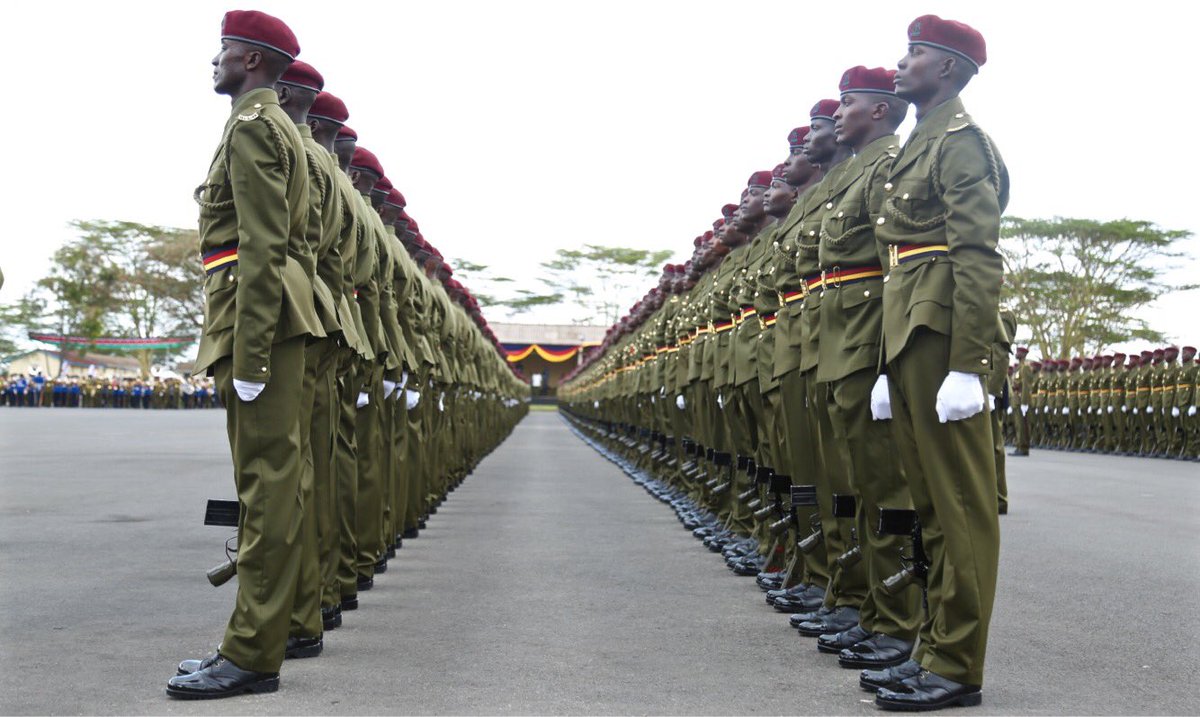
“The Unit flag shall be maroon in colour with the badge centrally superimposed…and shall be flown at the Unit Headquarters, and all sub-units, operation commands, companies, components and platoons.”