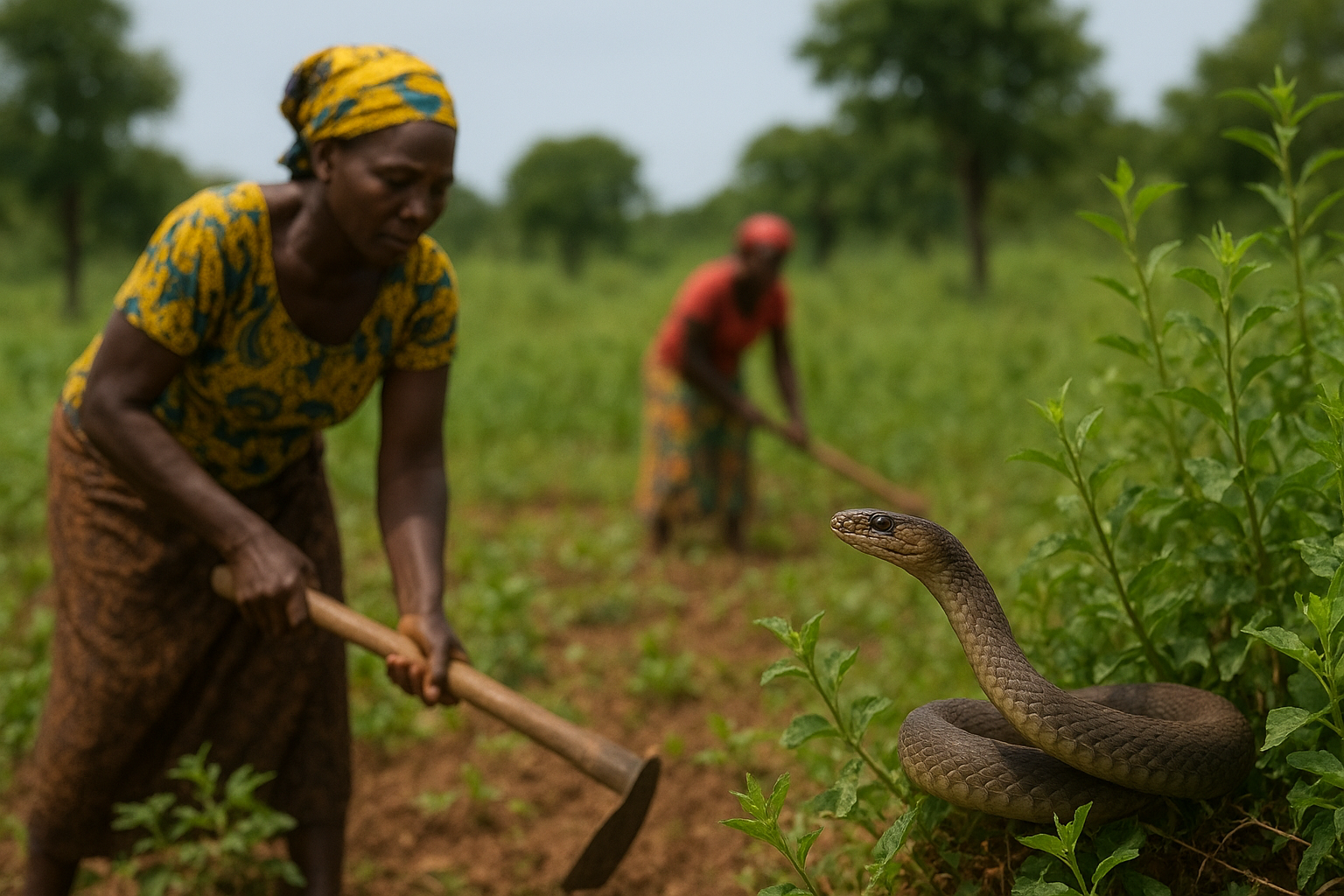
 According to the WHO, an estimated 5.4 million people worldwide are bitten by snakes each year. /AI
Snakebite remains a neglected public health issue across many tropical and subtropical countries, with Africa, Asia and Latin America bearing the greatest burden.
The World Health Organisation (WHO) designated September 19 as Snakebite Awareness Day to draw the attention of health authorities and policymakers to this neglected tropical disease.
According to the WHO, an estimated 5.4 million people worldwide are bitten by snakes each year.
Of these, between 1.8 and 2.7 million result in envenoming.
Snakebites cause between 81,410 and 137,880 deaths annually, while up to three times as many people suffer amputations or other permanent disabilities.
In Africa alone, between 435,000 and 580,000 snakebites occur annually that require treatment.
The highest toll is felt in countries where health systems are weak and medical resources are limited, with women, children and farmers in poor rural communities most at risk.
Children, in particular, tend to experience more severe effects and at a faster rate than adults due to their smaller body mass.
Bites from venomous snakes can cause paralysis that may prevent breathing, bleeding disorders that can lead to fatal haemorrhage, irreversible kidney failure, and severe tissue damage that can result in disability or limb amputation.
Unlike many other serious health conditions, effective treatment exists in the form of antivenoms.
However, challenges remain in their production, especially in ensuring that antivenoms reflect the geographical variation of snake venoms.
Most deaths and serious consequences of snakebites are preventable if safe and effective antivenoms are made more widely available and accessible.
In 2017, the Snakebite Envenoming Working Group was set up to guide the development of a strategic WHO road map.
The strategy aims to achieve a 50 per cent reduction in mortality and disability caused by snakebite envenoming by 2030.
The recognition of snakebite envenoming as a priority disease came in June 2017, following requests from several UN member states.
This was built on a December 2015 programme to evaluate the safety and effectiveness of antivenoms intended for use in sub-Saharan Africa.
Findings from that technical and laboratory assessment provided regulators and procurement agencies with evidence-based guidance on which antivenoms best meet the region’s needs.
What should you do if someone is bitten by a venomous snake?
- Time is critical: seek medical care without delay.
- Ensure the victim receives antivenom within 4–6 hours of the bite.
- Immobilise the person and keep them from moving.
- If possible, place them on their side to help protect their airway and breathing.
Doctors advise extreme caution even when the snake is no longer alive.
Handling a dead snake carelessly may cause envenomation through reflex bites or contact with fangs.