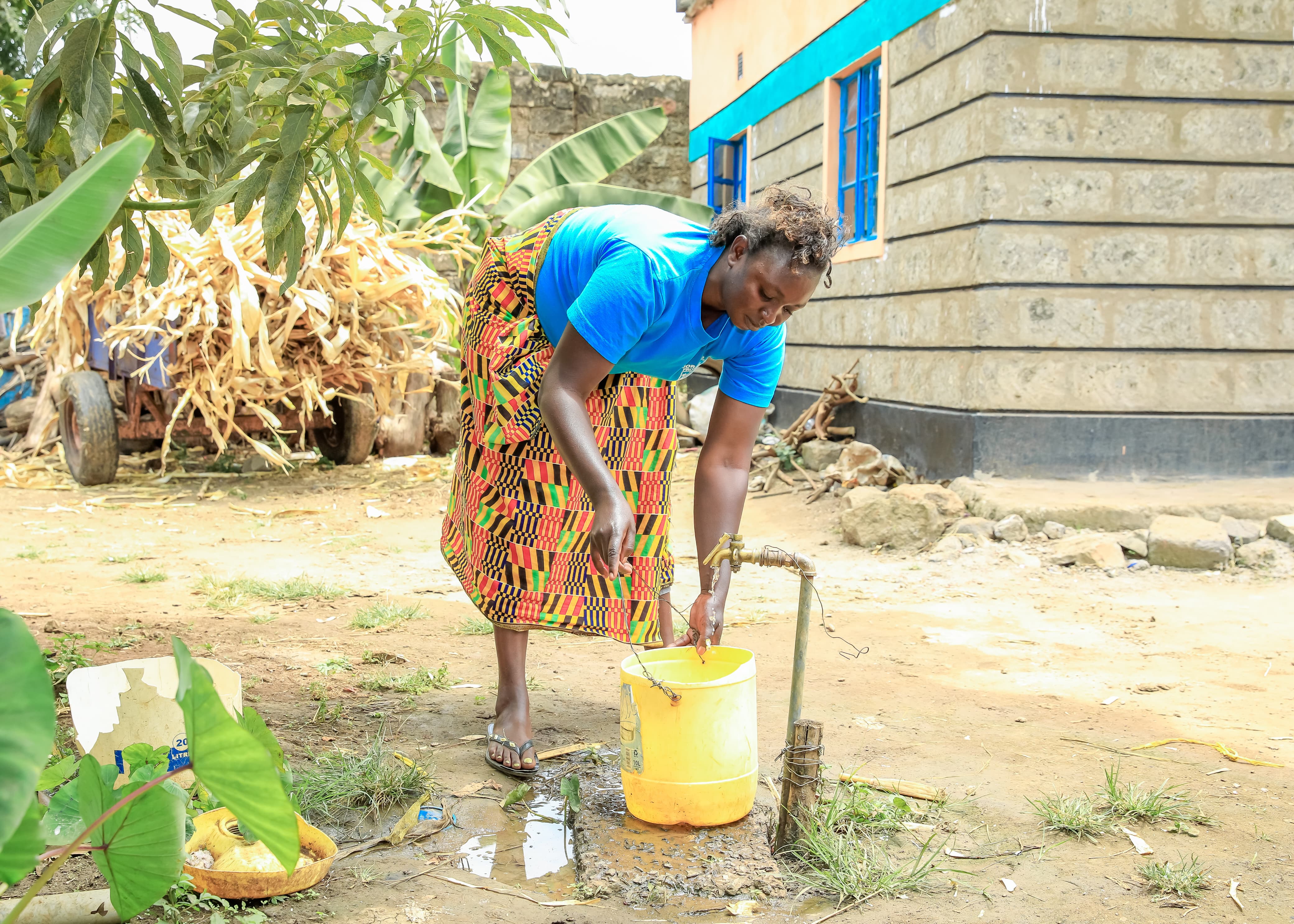
 Florence Muthoni from Kamucege village fetching water from a tap in her homestead in Kirinyaga county
The Kirinyaga government has announced plans to implement 42 new water projects in the current financial yearto expand access to clean and reliable water.
The projects, spread across all 20 wards, are expected to benefit more than 30,000 residents, with each serving between 300 and 500 households.
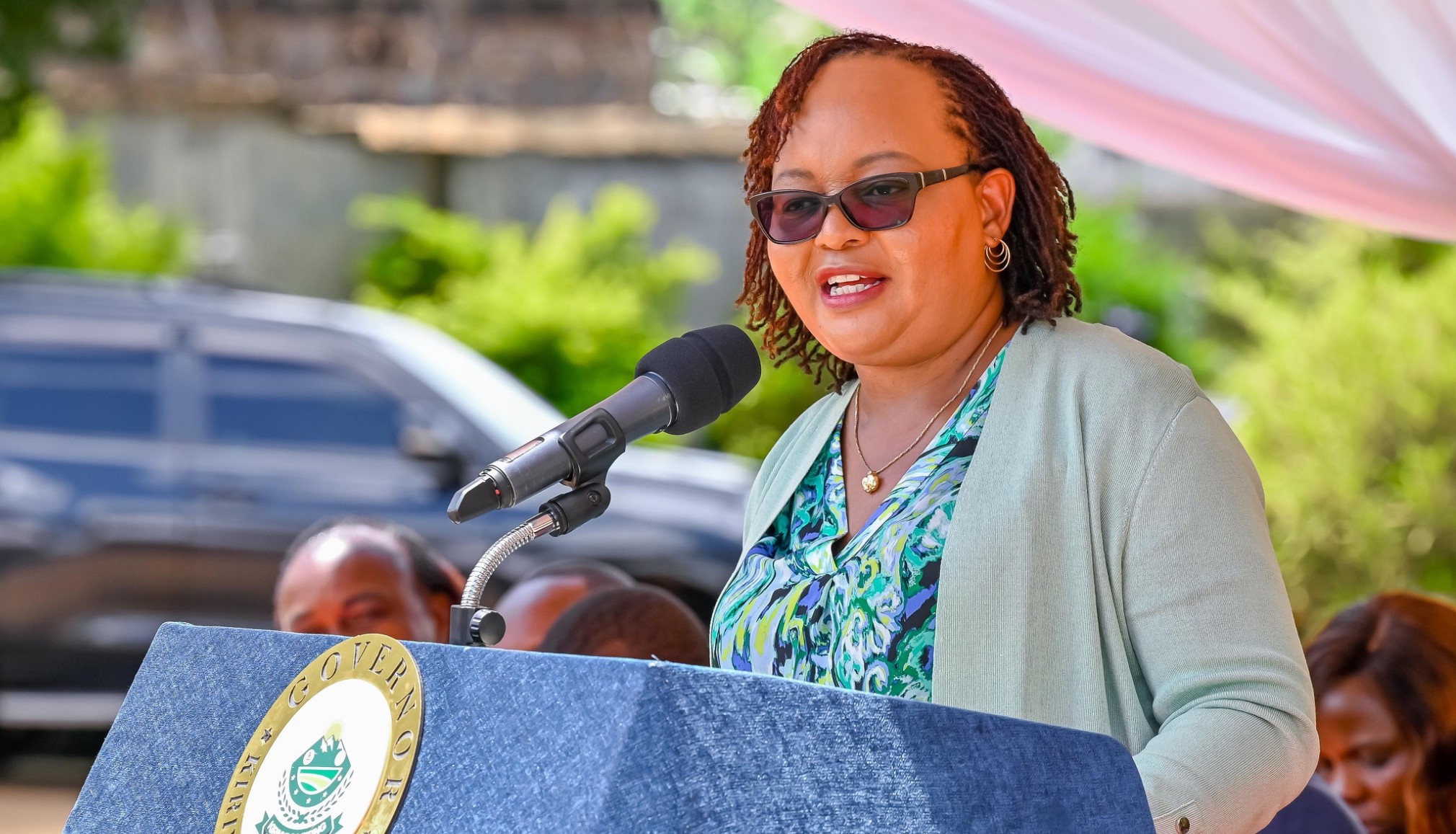
In a statement, Governor Anne Waiguru said the programme will include drilling and solar powering boreholes, installing water tanks, extending pipe networks and rehabilitating intakes to ensure every household and school has reliable water.
The county is also investing in environmental conservation and climate resilience through the Financing Locally-Led Climate Action (FLLoCA) Programme, which aims to build local resilience to climate change by empowering counties and local communities to undertake own climate resilience programmes and projects.
“Every home deserves safe water, every farmer needs irrigation support and every child deserves to go to school without worrying about unsafe water. That is the future we are building for Kirinyaga,” the governor said.
She reiterated that the water agenda remains a priority as her administration works to improve health, promote farming and give Kirinyaga residents a dignified life.
In the 2024-2025 financial year, the county completed 37 water projects, including the Kiorugari Water Project in Nyangati, Rukenya Irrigation Project in Kabare and Kugeria Water Project in Murinduko.
The county has also drilled six boreholes since last year and is adding five more this year to expand supply.
According to environment, water and irrigation executive James Kinyua, the ongoing water coverage expansion is easing pressure on communities and boosting agricultural production.
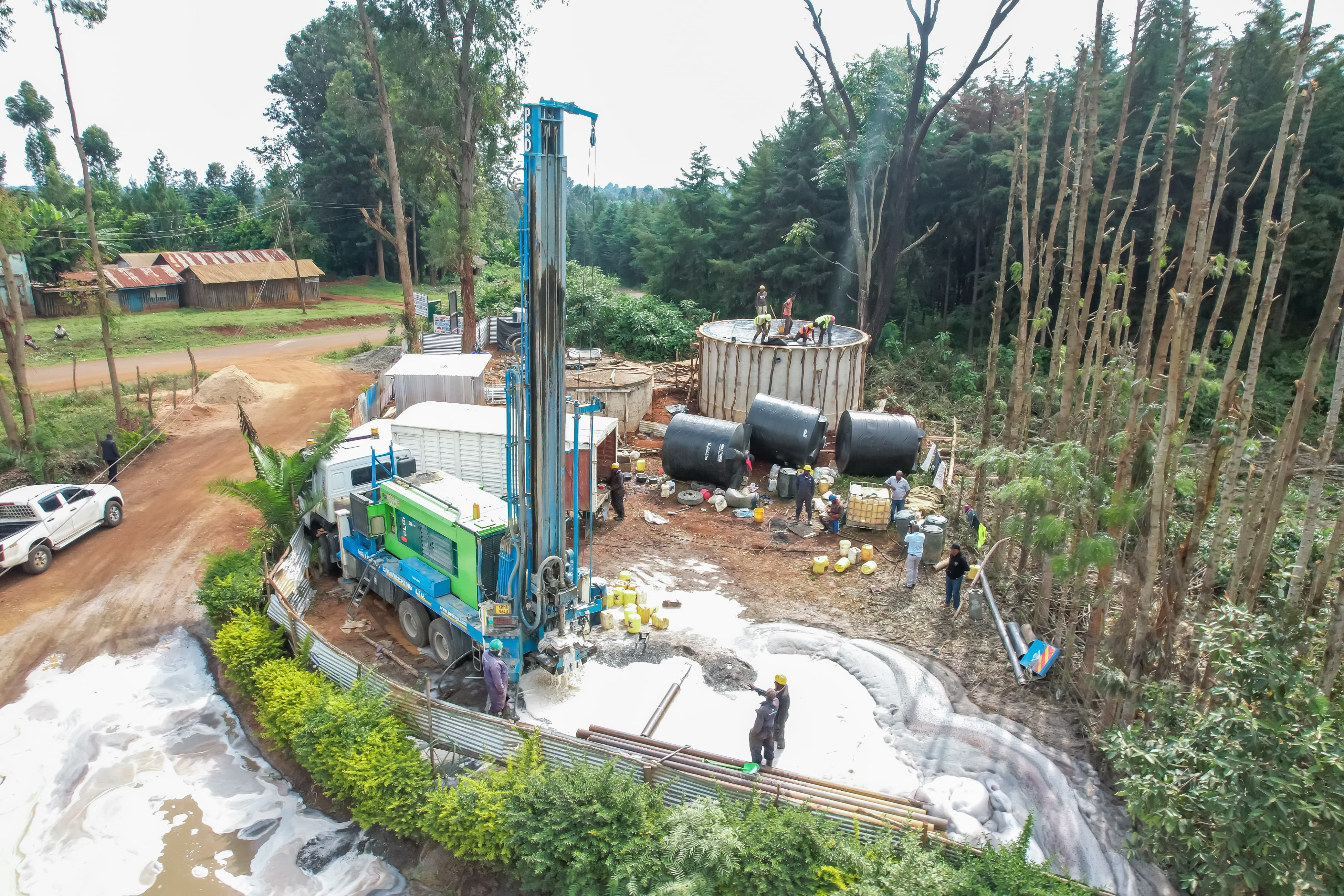 Workers sinking Kibingo borehole in Kiringaya county.
“The Jiinue Rupingazi Water Project is among many others transforming livelihoods. Families now have water for both domestic use and irrigation,” Kinyua said.
The impact of the projects is already visible across villages, schools, and marketplaces. At Kamucege Primary School in Gathigiriri ward, Kamucege borehole serves 420 learners, drastically cutting absenteeism linked to waterborne diseases.
“Before this borehole, learners were constantly missing school due to bilharzia and stomach infections from contaminated water. Since clean water was made available, attendance has improved and learning hours are no longer lost,” said head teacher Charles Weru.
Florence Muthoni, a Kamucege resident, said more than 700 households in Bahati and Kamucege villages now have direct access to clean water.
“We used to fetch water from canals using donkeys or carry it on our backs. Now, we have taps at home. Women are less tired and our homes are cleaner. We also have thriving kitchen gardens,” Muthoni said.
John Wachira, a trader from Kibingo in Inoi ward, noted the project’s economic benefits.
“This borehole serves more than 1,200 people. Even during the dry season the supply is steady. Customers at the market appreciate the fresh produce grown with clean water,” Wachira said.
Beyond boreholes, the county has also distributed 20 10,000-litre water tanksto community groups to promote rainwater harvesting, helping families establish kitchen gardens, improve nutrition and cut household food expenses.
Last year, the county launched Kerugoya-Kutus bulk water project that sources water from rivers Thiba and Kiringa, ensuring over 400,000 residents have a steady supply and ending perennial water shortages in most parts of the county.
The project channels over 20,000 cubic metres of water daily to towns such as Sagana, Kagumo, Kerugoya, Makutano, Kagio, Kangai and Mutithi and is managed by Kirinyaga Water and Sanitation Company,
INSTANT ANALYSIS
The projects, spread across all 20 wards, are expected to benefit more than 30,000 residents, with each serving between 300 and 500 households.
In the 2024-2025 financial year, the county completed 37 water projects, including the Kiorugari Water Project in Nyangati, Rukenya Irrigation Project in Kabare and Kugeria Water Project in Murinduko.
The county is also investing in environmental conservation and climate resilience through the Financing Locally-Led Climate Action (FLLoCA) Programme which aims to build local resilience to climate change by empowering counties and local communities to undertake own climate resilience programs and projects.