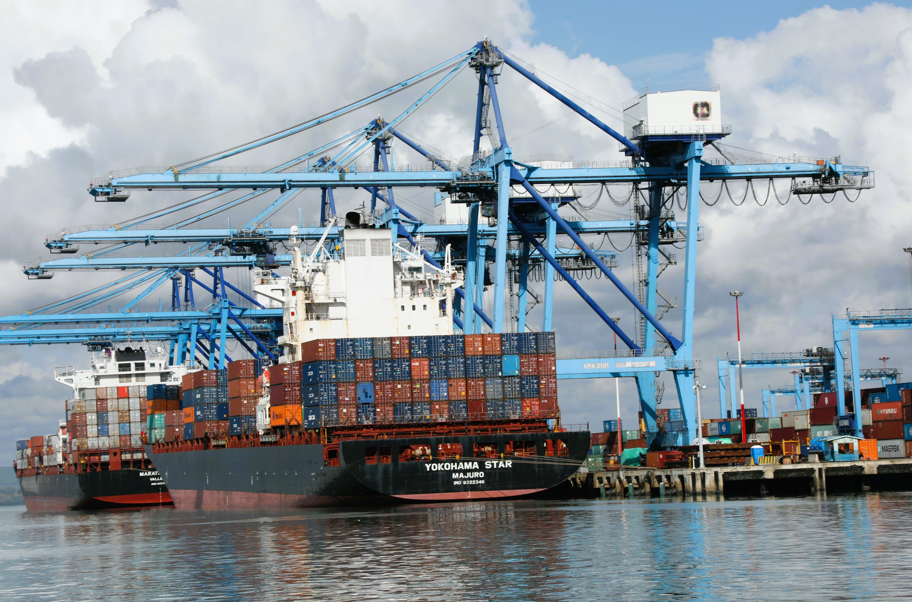
Kenya being a net importer, has led to a review of prices in various goods as the costs are passed on by shipping lines and traders.
The latest of these fees is the planned increase of the Shippers Cargo Fee, formerly Merchant Shipping Levy by Kenya Maritime Authority (KMA), from $1.5 (Sh192.96) per tonne to $2.5 (Sh321.60) per tonne, a 67 per cent increase or Sh129 per tonne.
This is a cargo-based levy charged on imported and exported cargo, collected by KMA in partnership with Kenya Revenue Authority (KRA) under the Merchant Shipping (Fees) Regulations and supportsKMA's revenue collection for its operations.
With Mombasa Port’s total cargo throughput of 40,986,000 (40.1 million tonnes) last year, it means KMA collected about Sh7.9 billion in shipping levy during the year.
The maritime sector regulator also wants to register clearing agents whom are equally licensed by KRA.
The planned increase on the shipping levy comes as both Kenya Plant Health Inspectorate Service (Kephis) and Kenya Ports Authority are also pushing to adjust their charges upwards.
While KPA’s plan was suspended in a September 10, 2025 order by Justice Ngaah Jairus, after the Container Freight Stations Association of Kenya moved to court, it is seeking to adjust tariffs on at least 25 services at its facilities, mainly Mombasa, Lamu and Inland Container Depots.
Managing director William Ruto had indicated that the KPA Tariff 2025 edition would take effect from September 15, 2025, affecting majority of services being offered at ports with some charges more than doubling.
Among them is an annual fee of up to Sh971,148 for vessels depending on ownership, capacity and other operational terms.
Pilotage fees, tug services, mooring services, light dues, port and harbour dues, dockage, buoyage and anchorage, supply of fresh water, salvage and towing operations, stevedoring, container handling charges, storage charges and penalties are all set to go up.
Kephis on the other hand is pushing for higher payment on inspection of maritime vessels and containers.
The fees include 50 cents per kilogramme, with a minimum charge of Sh100, and an additional Sh500 per phytosanitary certificate and inspection. This is targeted at all fresh produce exports.
For imported agricultural produces, traders are expected to pay 50 cents per kilograme plus Sh600 per plant import permit.
It also eyes between Sh500 and Sh10,000 for inspection of ships depending on the size (including dhows and canoes), aircrafts, containers and other tests such as moisture content determination.
Kephis and KMA are however at loggerheads over the fees. While the regulator has directed Kephis to stop the move, the inspection body insists it is its mandate.
“Shippers are under siege from most government agencies' increases in their levies. The burden of levies is becoming unbearable every new day,” the Shippers Council of Eastern Africa (SCEA)CEO Agayo Ogambi said yesterday.
This, even as he questioned the use of the shipping levy funds which have gone up with the continued increase in port throughput, even as KMA also eyes registration of clearing agents which are also licensed by KRA.
“We hope to get a justification on the role of KMA in registering clearing agents and who are also licensed by KRA, the specific services to be provided and an impact assessment report of the proposed Merchant Shipping (Fees Regulations),” said Ogambi.
He said KMA, which also oversees pollution in the maritime sector, should liaise with other agencies such as NEMA and who are also desirous to protect the environment, to avoid duplication.
KMA further wants the incorporation of overtime charge despite having the responsibility of to providing services 24 hours.
KPA’s new tariff also has a port greening and conservation fee at $0.2 (Sh25.73).
“Government needs to seriously rethink the funding of the government agencies, especially providing trade facilitation services,” Ogambi noted.
Kenya Ships Agent Association CEO Elijah Mbaru reiterated that procedures must be consistently aligned with international standards and regulatory frameworks, ensuring compliance with applicable trade laws and practices, even as he called on the government to ensure port operations remain fluid and unimpeded.
The multiplicity of government agencies, all charging for their services, is threatening trade in Kenya and the region, shippers have further warned.
While the government in 2020 issued a memo sending over 20 state agencies out of the Port of Mombasa, leaving a select few like immigration, Port Health, KRA and Kebs in a move to improve port efficiency and cut bureaucracy, the number is said to have gone back to 38.