You want to be free from police harassment, including arbitrary arrest, shooting or being disappeared? Don’t operate wine and spirits, avoid sex work, matatu tout, and don’t be a dreadlocked youth in slums, poor, or have a Somali-like appearance, a new report shows.
The baseline survey by International Justice Mission also shows that wines and spirits businesses and matatus are easy money machines for police, even when they are compliant, complete with licenses and ticking regulatory boxes.
It also shows that people who look like Somali Kenyans are often shot or disappeared, frequently labelled as terrorists or al-Shabaab sympathisers.
Slum youth and boda boda-riding men are viewed as potential thugs and muggers, while sex workers are seen as easy targets for extortion.
The IJM study assessed the prevalence of police abuse of power between March 2022 and March 2024. The study utilised multistage cluster-stratified random sampling to identify participants engaged through a quantitative household survey, and purposive sampling to identify participants engaged in the qualitative component of the prevalence domain through Focus Group Discussions (FGDs).
A total of 5,700 participants were engaged through a quantitative household survey covering nine counties and 17 FGDs were conducted across these counties.
The study was conducted in Garissa, Kakamega, Kisumu, Machakos, Mombasa, Nairobi, Nakuru and Uasin Gishu counties, representing the former provincial regions.
FGDs with participants from the sampled counties facilitated exploration into their experiences around police abuse of power, including some of the factors that predispose citizens to police misconduct.
The findings point to a high prevalence of alleged police-linked abuses across the country. A total of 42.9 per cent (2,444 out of 5,700) participants reported having been victimised through police abuse of power during the period under review.
However, when compared with the Independent Policing Oversight Authority end-line survey of 2019, the results show a slight decline in prevalence from 46.2 per cent to 42.9 per cent. Additionally, approximately 69.9 per cent of respondents reported having witnessed police misconduct within the same period.
Participants noted that youth are frequently targeted by police officers, often being mistreated or wrongfully handled. One participant narrated accounts that claim the general police attitude towards youth is that they are criminals and should only prove otherwise. “The police over here view the youth as criminals. That is their first perception when they see us. They also look at your dress code and presentation,” one participant said.
A wines and spirits operator said he “used to own a wines and spirits business. I have a business license that allows me to operate from 7 am to 11 pm. I have also installed CCTV cameras because I know these guys (police) would come at any time. There is a deputy OCS who came into the business premises demanding to be shown the business license. He was shown the license by shop attendant who I had employed but the officer did not care about that. He demanded Sh5,000.”
In the matatu sector, turn-boys and the young men who crowd stages scavenging for passengers for matatus are easy targets, the report says.
A participant said that, “the police target ‘turn-boys’ who work with vehicle drivers. You find that the main driver is in full driver’s uniform while the ‘turn-boy’ has no uniform. Obviously they will target the ‘turn-boy’ knowing that he will have money to bribe them. Those who work in matatu stages are also arrested and extorted of their money even if they have uniforms with badges of matatu saccos they work for,” he said.
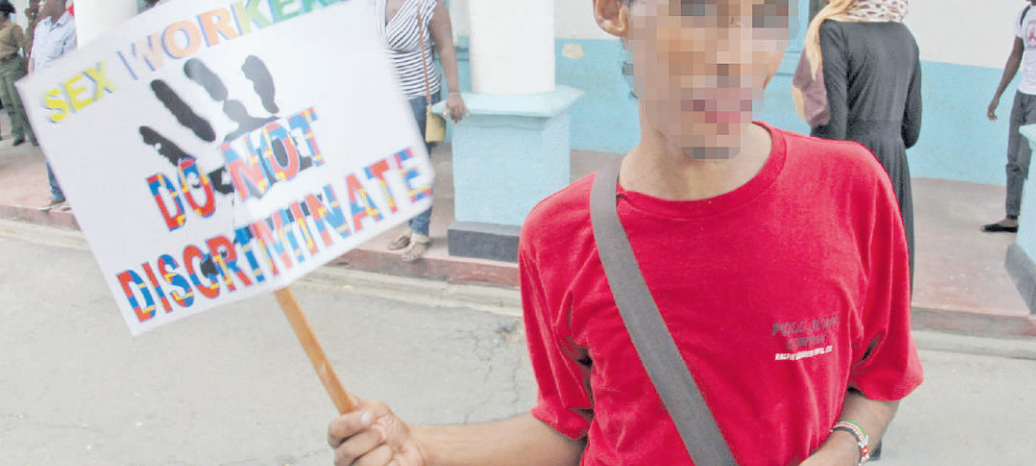
For sex workers, participants in the survey suggest that the men in blue tend to operate in state-sanctioned harassment because they know the law is on their side.
“For the extortion, I would say sex workers suffer very much in the hands of the police. The police often come to specific spots where sex workers operate and extort money from them,” it says.
“They always come to these spots and extort money from them, informing them that the work they are engaged in is illegal and if they do not part with some money, they will be arrested and locked up in cells. One can be held in the cells even for a week without anyone coming to free them. Once in the cell, the police often ask for Sh2,500 or Sh5,000 to free the arrested sex workers. These women have really suffered because of the police,” another said.
Human rights defenders are also easy targets and have to work hard to be safe and evade the dragnet of the police. A participant said, “There was a day I was arrested and locked at the police station. In that case, HRDs are at risk because we stand up against instances of police abuse of power.”
On religion, ethnicity and physical appearance, the report says that people in Muslim clothing or looking like Kenyan Somalis are often wrongfully victimised by police officers, being labelled as terrorists.
“I am Christian, what is worse is that our children from the Muslim religion are always targeted as criminals, labelled as al Shabab. I am saying this because three of my brothers have now converted to Islam from Christianity. They no longer have peace where they reside since they are targeted and labelled as bad people or radicalised,” a respondent said.
Another said, “What I have experienced is that police assume we are criminals of some sort. I was with my friends on a boda boda, and when they [police] see at least three youths of a Somali origin on a boda boda they conclude that these people are thieves.”
Participants indicated that having long dreadlocks, tattoos, or specific styles of dressing attracts mistreatment by police officers, especially in poor urban neighbourhoods. “You are just criminalised because you have dreadlocks,” one victim said. “Even when you try to defend yourself, they will insist that you use bhang and you will be taken to the police station. At that stage, they have already made up a charge for you,” the participant added.
Yet another said, “The police over here view the youth as criminals. That is their first perception when they see us. They also look at your dress code and presentation. Particularly, all police officers who are posted and work in North Eastern, especially in Garissa, Wajir and Mandera, all assume and view us as criminals.”
“Community members who are of Burji, Borana and Somali reside in regions that border the North Eastern part of Kenya. Now it is a challenge to differentiate between members of these communities who are Kenyan and those who come from Ethiopia or Somalia. In this case, police officers often arrest them, both the young and the old,” another one said
INSTANT ANALYSIS
The IJM report exposes systemic profiling and abuse by police targeting Kenya’s most vulnerable groups. Despite a slight decline in reported cases, impunity and discrimination remain deeply entrenched.