A distinguished tourism executive with over 25 years in leadership, transforming Uganda's tourism landscape and advancing conservation initiatives across Africa, Lilly Ajarovafell in love with nature when she was five years old, inspired by her father who was at the time a surgeon and also naturalist who climbed the Rwenzori Mountains in 1975.
Lilly who was raised in a medical family forged her own path into the tourism and wildlife world becoming a CEO at the Uganda Tourism Board where she successfully led the rebranding of "Explore Uganda, The Pearl of Africa".
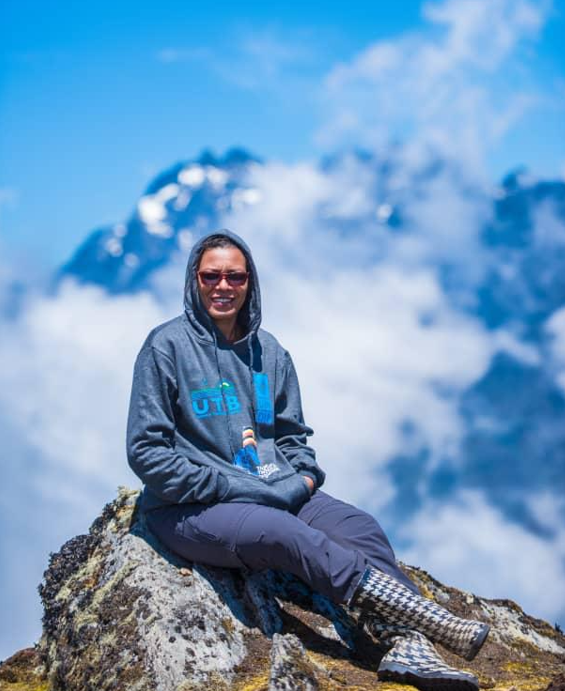
The now Senior Presidential Advisor on Tourism to the President of Uganda honoured her father by climbing the 5, 109 metre-high Rwenzori, the third highest mountain in Africa after Kilimanjaro and Mount Kenya.
The Star caught up with her in Nairobi during the launch of her book “Echoes from Mountains of the Moon”, a deeply personal journey to Margherita Peak, and sought to know her personal journey and future of East Africa’s tourism.
Excerpts:
Who is Lilly Ajarova?
Lilly is someone who is very enthusiastic about nature, travel and supporting other people into leadership. I grew up in a medical family, my dad was a surgeon and mum was a nurse. I was born and raised in Uganda but later went abroad for studies. I forged my own path away from medicine and my parents were supportive, they never forced me to do medicine or anything else, they just let me choose what I wanted. My career spans tourism development, conservation leadership and pioneering Payment for Ecosystem Services (PES) programmes that serve as global models for biodiversity protection. I have successfully driven organisational growth of established endowment funds and implemented systems earning national excellence awards.
When did you fall in love with nature?
Apart from being a medic, my dad was also a naturalist and that is where my love for nature came from. He used to take us for walks, you know, prepare snacks, get water and we would backpack. One day I remember, I was around five years old, we were taking a rest under a shrub and a chameleon walked over my dad's shoulder. I was scared but he just looked at it, he put out his arm and let it walk back onto the shrub and I thought like, that is magical. That had a very big influence on how I started looking at nature growing up.
You pioneered gorilla tourism in Uganda, tell us about it?
Yes, so I focused on the gorilla tourism for the first three years of my joining the industry and once it was all set and working, I moved to develope chimpanzee tourism as well. So, my focus at that point was to develope the primate tourism. I worked with a team of researchers and other industry experts. One of my dissertations was on economic valuation of chimpanzees. I did a survey at the time when we were just charging $20 but tourists were willing to pay more based on the experience they were getting so that research actually got us to hike the price to a hundred dollars and nobody complained. I worked as the executive director of the Chimpanzee Sanctuary and Wildlife Conservation leading key conservation initiatives and building a complete eco-tourism experience. I later moved to Uganda Wildlife Authority and then Uganda Tourism Board as the CEO which I served for six years.
What would you say were some of your biggest achievements as UTB chief?
Explore Uganda the Pearl of Africa was one. That statement was already made by Sir Winston Churchill but in terms of having it as a brand, that was something we developed. Number two was the development of meetings, incentives, conferences and events. The Ministry of Tourism had developed a strategy for MICE but it had not operationalised so when I joined as CEO, we went into implementing it. By 2024 which was my last calendar year, Uganda was ranked the sixth best MICE destination in Africa. Kampala was rated the fourth best city in Africa for MICE and of course with the right facilities in place and private sector collaboration. The other achievement was enhancing the standard of facilities and servicesin the tourism sector.
There has been a call to package East Africa as a single destination, what is your take?
When I joined the Uganda Tourism Board, my predecessor and everyone had already started working on that. So 2019 March, which was when I actually joined, the first international expo I attended was ITB in Berlin. We exhibited as one. And then of course Covid came and disrupted everything. So I think we are now in a good position. We can push for MICE as a region, we have seen success in CHAN. Kenya and Tanzania have the annual wildebeest migration, Uganda has primates and wildlife is big in the region, so yes, we can package the region together. Again, Uganda is the biggest trading partner with Kenya so we have a lot that we can capitalise on. During my leadership, we worked with our high commissions and embassies to leverage these opportunities, something we need to continue doing, thus marketing East Africa as one destination. We have frameworks for regional integration including the single visa which is working in Uganda, Kenya and Rwanda, so I think it is a matter of going back to implement what we have agreed on as a region.
How would you rate the success of the single visa?
We are not all at par but I believe it has made good progress. The three countries have set the foundation and I believe others will see the benefits and join. So I think that is the spirit with which we are moving. I believe the East African single visa being implemented by the three countries has been a very good example of how we can all have a unified system that helps the region. Let us look at DRC becoming explanatory, Somalia on the line. In the long term, Africa needs to unite as one.
Your book “Echoes from Mountains of the Moon”, what is it about and what inspired you?
The book is basically a memoir of my hiking the Rwenzori Mountains. What inspired me were two things. One, my dad climbed Rwenzori in 1975 when I was like five years and he always talked about Rwenzori being the most beautiful place on earth. So somehow that had always been at the back of my mind. My dad passed on in February 2020. I was in the hospital with him and before he passed on, he was still talking about Rwenzori and I felt like there is really something there so I decided to climb Rwenzori just to honour my dad. That was motivation, number one. Two, as a CEO we were promoting the gorillas, Safari, the big five and so on. One thing I realised was we had so much and there was a need to create more awareness including promoting mountaineering, birding and sports tourism. So, I decided to take the lead to hike the mountain to market these products from an informed point of view. I did it in 2020 and it took me nine days, six days to get to the summit and three days down.
What stands out in your book?
The experience, what it took me to prepare, what inspired me and what it was to actually hike those nine days. The beauty that I saw in terms of the landscape, unique plants, animals, birds, basically the beauty of the mountain and its ecosystem. But I also looked at other stories, the guides, the porters from the communities who live at the base of the mountain. So, I weaved that into the story to understand the spirits, the culture of the people in relation to the mountain. So, it not just about the beauty of the mountain and its physical ecosystem, but the belief of the people, what they believe about the mountain, what they derive from the mountain and that is part of the story.
How would you describe the experience?
This is a secret I am telling you, I was so scared even of the thought of going up the mountain but as CEO, I had to lead from the front. We had sponsored an Australian mountaineer to go hike Rwenzori so i escorted him for just one day and then came back down. When he went up to the highest peak, Margherita and came back, we had a meeting with the team and looked at how they could sell Rwenzori mountains. I used the opportunity to also find out what it takes and he said the secret is 70 per cent mental preparedness and 30 per cent physical preparation. I used that and it worked and the experience was one of its kind. The physical strain to me was the biggest challenge so that is where it took a lot of mental work to succeed. I remember when we were just like a hundred metres to Margherita Peak, I was almost giving up but I pushed on to the peak.
What is sustainable tourism to you and is East Africa doing the right thing?
Sustainable tourism to me basically means developing our tourism for the future, not just for now. Our biggest resource is nature and there is a limitation to how much you can stretch nature. Our other asset is culture, the traditional way we dress, traditional dances, all the heritage that we have. When we are using the cultural resources, the natural resources to bring in tourists, we need to make sure that it does not get where it disappears because we have overused it. We have seen some cultural aspect getting eroded, some of our children these days don't know how to speak any local language besides English. That already is a generation that their own children will also miss out on our culture so we need to be careful. Let us continue to develope the resources we have but we need to be careful and ensure they remain in perpetuity. I think Kenya has championed this for us, Uganda we are following from the policy point of view, but also the practise of it. We have become more serious in terms of ensuring that environmental issues, social governance, is completely well understood by all business enterprises.
How can East Africa capitalise on artificial intelligence and probably big data, to reap bigger benefits from the tourism industry?
The one impressive thing I have to say is the Gen Zs are really good with technology, they have it, it is so easy for them. We recently had the Digital Transformation Summit of Africa and Middle East in Uganda. I attended that summit and I must tell you, I was blown away with the innovation that the young people are coming up with. We can make the best use of this by investing in them, that is to train, equip them and support them to invest which I believe can take marketing our destinations to the next level. We can also use the ditital technology in place, including the likes of virtual reality to market. People don't have time to read, they are more into visual, they want to see. We cannot continue doing things the traditional way. The global trend in tourism is changing very fast and so must we.
What is the future of tourism in East Africa?
For me, it depends on one, integration. We need to enhance our integration in the developments and promotion of destination East Africa as one. Two is the use of technology as well. Three is playing by the global trend. We need to be able to move very fast and that is going to require a change of mindset, change of systems that are more responsive and it will also require we invest in data collection, analysis and management. We also need to build the right infrastructure apart from roads and rail, which we are slowly building. International inbound tourism is one of the drivers of numbers but do we have the right infrastructure in place? Rwanda is doing a new airport, when I travel out, when I come back home, I feel like where am I? You know, the clearance process, the facilities, we must respond to global trends. We also need to open our skies and increase access to countries.