

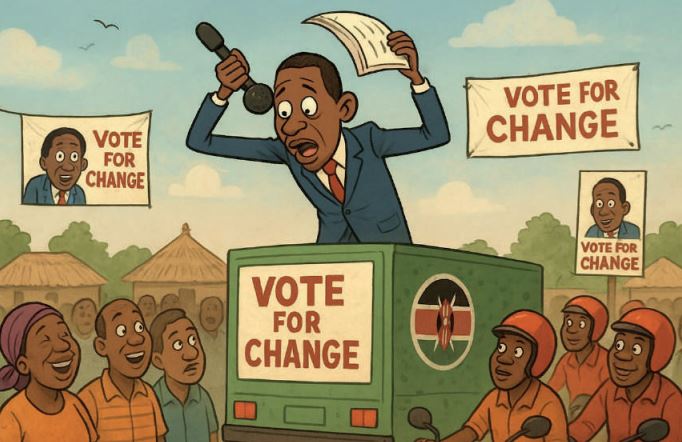
Kenya has never lacked clever politicians. Clever at rigging party primaries, clever at inventing new taxes, clever at turning funerals into campaign rallies.
What we lack, consistently, is wisdom. Our political class has perfected the art of appearing intelligent on TV while governing with staggering foolishness on the ground.
In truth, stupidity is not about how many meaningless degrees a leader has; it is about arrogance, shortsightedness and the inability to put citizens above self.
The first mark of a stupid politician is the belief that they are always right. In their eyes, criticism is not civic engagement but treason. Governors ignore assemblies, MPs heckle and drown out experts, and Cabinet Secretaries turn roadside declarations into law.
They forget the constitution was not cast in their image. Wisdom begins with humility, with the recognition that Kenyans, those pesky voters, might actually know what they are talking about when they cry about hunger, jobs and taxes.
Then comes the gift of endless words. Ours is a republic addicted to promises: free education, water for all, jobs for every youth. These lines are recycled every five years like campaign jingles.
The tragedy is that the only jobs created are for cronies and the only water that flows is bottled for press conferences. Talk has become the official currency of Kenyan politics, and stupid politicians mistake volume for vision. The wise ones, the rare species, understand that leadership is about delivery, not decibels.
But when delivery fails, as it often does, stupidity defaults to excuses. Nothing is ever politicians’ fault. If the economy tanks, blame the previous regime. If the shilling collapses, point fingers at “saboteurs”. If Kenyans protest, accuse the opposition of incitement.
Leaders who live permanently in the blame game never grow. Responsibility is a foreign language to them, yet it is the very foundation of leadership. Kenyans are remarkably forgiving of failure, but they do not forgive those who refuse to own up.
Equally dangerous is the refusal to learn. Kenya’s population is young, restless and tech-savvy, but our leaders remain trapped in the politics of 1963. Their tools of mobilisation are still tribal chiefs, funerals and sacks of unga.
They sneer at TikTok, even as it becomes the new Parliament for the under-35s. Stupidity is a refusal to evolve, to understand that the future is digital, green and global. A wise leader is not the loudest at a rally, but the one who reads, consults and prepares the country for what lies ahead.
If stupidity has a tone, it is anger. Our politicians are famously thin-skinned. Question their policies and suddenly you are “an enemy of development”. Criticise their performance and you become “a foreign-funded activist”.
Complain on social media and you are dismissed as an “idler”. Fury becomes their default register, as if shouting louder will make a bad policy better. Emotional intelligence – the ability to debate calmly, to take heat without losing your cool – is perhaps the rarest resource in our political class.
Then there is the company they keep. Stupid politicians thrive in echo chambers of sycophants who sing “Mheshimiwa” like a hymn. They recruit relatives, praise-singers and loyal mediocrities who never tell them the truth.
Competent advisers are sidelined because they “lack loyalty”. Mediocrity becomes government policy, and soon the only qualification for public service is how loudly you applaud at rallies. Wise leaders surround themselves with competence, even if competence occasionally bites.
But perhaps the most dangerous form of stupidity is a refusal to reflect on consequences. Our politicians recklessly pass taxes, borrow beyond reason and loot with abandon—then appear surprised when Kenyans pour into the streets.
They gamble with the people’s patience as if memories are short and elections are forgettable. Yet history is an unforgiving ledger. Stupidity, repeated long enough, guarantees political extinction.
The tragedy of Kenya is not that we lack leaders. It is that we keep electing foolish ones, and sometimes even celebrating their antics. We laugh at their tribal quips, clap at their empty slogans, and confuse theatrics for courage. But the bill for stupidity is always paid by ordinary Kenyans, whether in inflated taxes, jobless youth, or broken health systems.
Avoiding stupidity in politics requires unlearning bad habits: arrogance, excuses, sycophancy, impulsive policymaking. It means remembering that politics is not a funeral stage or a comedy skit; it is the serious business of improving lives. The difference between a stupid politician and a wise one is simple: the stupid think politics is about power, the wise know it is about service.
And yet, the final responsibility lies not only with the politicians but with us. Every time we vote, we decide whether wisdom will get a seat at the high table or whether stupidity will continue ruling us in designer suits. If the wise keep losing, it won’t be because Kenya lacks leaders. It will be because we keep mistaking fools for leaders.







