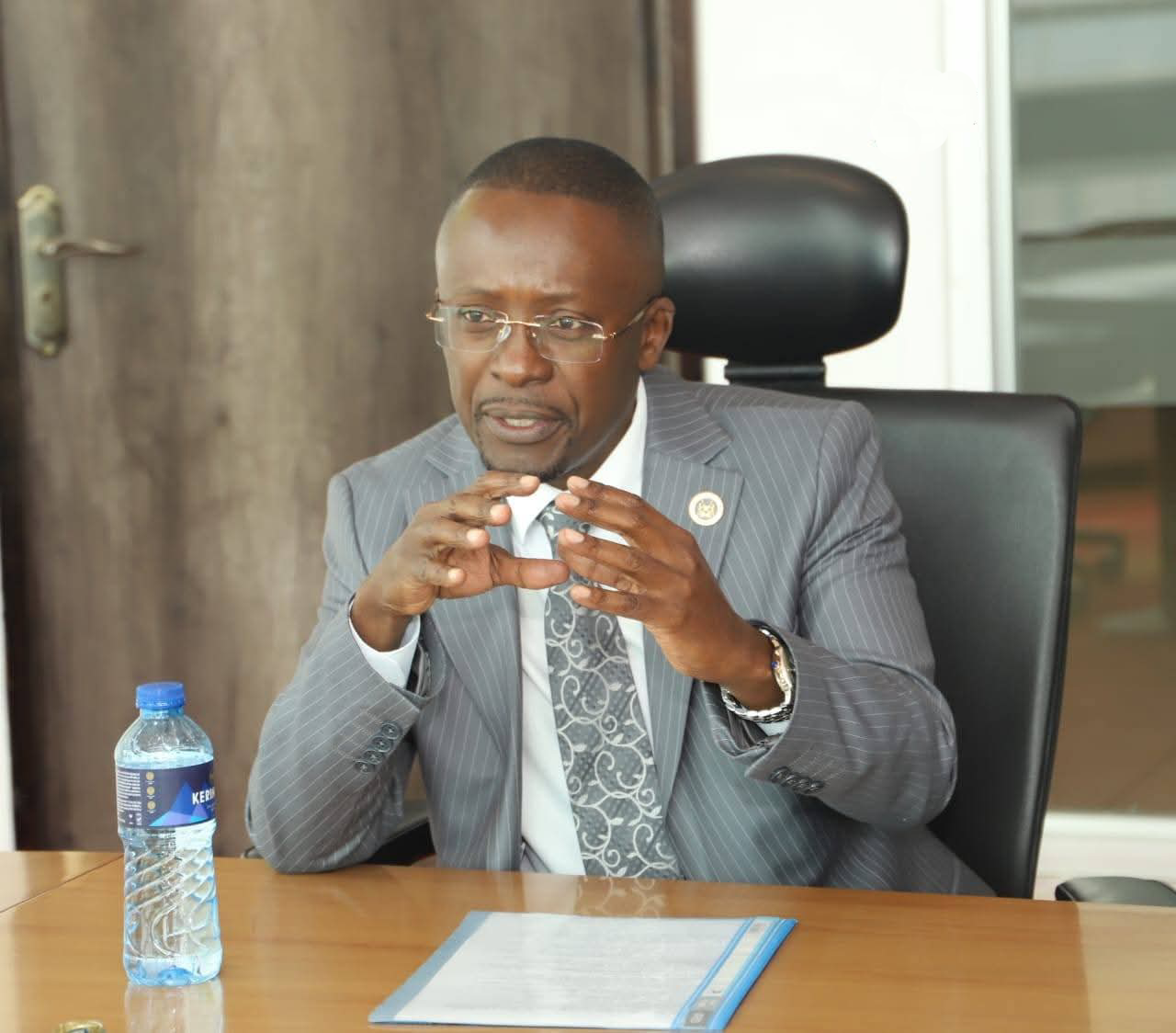
 Special Presidential Advisor on Economic Empowerment and Sustainable Livelihood, Jaoko Oburu/HANDOUT
President William Ruto, on April 22 this year, appointed Jaoko Oburu as the Special Presidential Advisor on Economic Empowerment and Sustainable Livelihoods.
He is tasked with providing the President with strategic advice on economic matters, with a particular focus on empowering the most vulnerable and marginalised populations. The Star sat down with him to understand more about his role and the plans he has for the country.
Maybe for starters, what does your job really entail?
Well, as the Special Presidential Advisor, my primary role is to provide the President with strategic advice on economic matters, with a particular focus on empowering the most vulnerable and marginalised populations.
This involves shaping and reviewing national policies related to job creation, entrepreneurship and developing sustainable livelihoods. I also oversee and coordinate key government initiatives aimed at youth and women's empowerment, improving access to financial services and boosting the informal sector.
A significant part of my work is to collaborate with various ministries, county governments and other stakeholders to ensure these projects are implemented effectively.
What were you doing before the appointment?
Before this role, I served in public service and politics in Siaya County. I worked as an advisor on partnerships and resource mobilisation for the governor and later served as the County Executive Committee Member for Trade, Enterprise, Roads, and Public Works during Governor Cornel Rasanga's administration.
Do you have previous experience working with youth and SMEs? What were some of your key achievements?
Indeed. My work as the CEC for trade and enterprise provided me with invaluable experience in this area. I was involved in drafting business-friendly policies, attracting investment and promoting trade and training for SMEs.
My team also developed a database of donors and identified resource mobilisation opportunities, which is crucial for supporting startups and small businesses. This experience gave me a deep understanding of the challenges and aspirations of our young people.
What challenges do you foresee in your new role?
I anticipate several challenges. First, there is the need to ensure effective coordination among different government departments to successfully implement our economic policies. The country also faces significant macroeconomic pressures, including high sovereign debt, which can strain government resources.
Public frustration over the rising cost of living and social inequality also poses a risk to political stability. Finally, there is a public misconception that my office is a source of funding for empowerment projects. My role is purely advisory and focused on coordination, not on direct funding.
What is your strategy for delivering on your mandate?
My strategy is built on three pillars: policy advisory, strategic partnerships and project oversight. I will continue to provide advice on economic empowerment strategies and contribute to national policies. I will also coordinate flagship initiatives and identify any gaps in their implementation to ensure they are effective. A key component of this strategy is public engagement to advocate for inclusive economic growth for all Kenyans.
How would you describe the current economic climate, and what is the future outlook?
The current economic times are challenging, marked by tight fiscal conditions and a high cost of living. The nation's economy is also vulnerable to both internal and external shocks. However, the government's "Bottom-Up Economic Transformation Agenda" (BETA) is designed to address these challenges head-on. The goal is ambitious but achievable: to lift five million people out of poverty and create 5.5 million jobs by 2027 by focusing on key sectors like agriculture and small and medium-sized enterprises.
What needs to be done to make things better, especially for the restless Gen Zs?
To address the concerns of Generation Z, we must create meaningful employment and opportunities. A key strategy is to provide them with technical skills training, link them to job opportunities, and give them access to funding and mentorship.
This includes offering low-interest loans, supporting youth enterprises and facilitating market connections with larger companies. We also need to create and support programmes for youth innovation, incubation and business acceleration.
What economic empowerment initiatives are in place, or do you plan to implement?
My office is tasked with overseeing a range of initiatives focused on empowering key demographics, including youth, persons living with disabilities and women. Our work is centred on improving their access to vital resources like microloans and government funds while also developing the informal sector and promoting green jobs.
A core part of our strategy is to partner with the private sector. We are actively collaborating on projects that support youth innovation, provide a framework for startup incubators and accelerators and offer capacity-building for groups such as boda-boda operators. These efforts are designed to create a comprehensive ecosystem that supports sustainable economic growth for all.
In your view, what sectors offer the most potential for economic empowerment?
Sectors with the most significant potential for economic empowerment are clearly outlined in the government's key strategic documents. The BETA identifies agriculture and SMEs in the agri-food sector as offering a direct path to prosperity for a majority of Kenyans.
Similarly, Kenya Vision 2030 highlights other crucial sectors poised for growth and job creation, including tourism, wholesale and retail trade, manufacturing, business process outsourcing (BPO), the commercialisation of sports, and other relevant industries. By focusing our efforts on these areas, we can unlock tremendous potential for economic empowerment and sustainable development.
How do you measure the impact of your economic empowerment programmes?
My role is to measure the impact of our programmes by identifying gaps in policy implementation and recommending effective solutions. The overall success of our efforts is aligned with the ambitious goals of the Bottom-Up Economic Transformation Agenda (BETA), which projects the creation of five million jobs and lifting 5.5 million people out of poverty by 2027. Beyond these broad targets, we also measure impact through more specific metrics.
These include the number of advisories I propose that are subsequently adopted by relevant Ministries and the direct impact on individuals and communities, which is captured through testimonials. A key focus for us is the successful commercialisation of the sports sector, including Paralympics, cricket, basketball and football, which we see as a significant pathway to creating sustainable livelihoods and opportunities.
Can you share a success story where you significantly contributed to economic inclusion or job creation?
While my current role is recent, my previous experience has a strong track record of supporting youth and community development. For example, I led groups that mobilised young people to participate in the political process, a key form of empowerment. My work also involved significant resource mobilisation for community development projects.
A notable achievement was initiating the first pilot for fish cage farming on Lake Victoria in collaboration with Albert Altena of African Blue Ltd. I also spearheaded a groundbreaking electrification project: a 16KW hybrid solar and wind energy system at Ndeda Island in Bondo, which was the first of its kind in Africa. These projects demonstrate my commitment to sustainable development and my ability to lead impactful initiatives.
How do you plan to ensure marginalised groups are included in your empowerment initiatives?
My core mandate is to advise on strategies for marginalised, vulnerable and underserved populations. This includes a specific focus on initiatives for youth, persons living with disability and women's empowerment, as well as developing the informal sector, where women are often over-represented. We are currently collaborating with several key government bodies to develop a strategy for alternative livelihoods in the Arid and Semi-Arid Lands (ASAL) areas. This work involves the Ministry of East African Community and ASALs, the Department of Minorities and Marginalised Affairs in the Executive Office of the President, and the National Cohesion and Integration Commission.
What do you plan to do to support SMEs and startups?
Our strategy for supporting SMEs and startups is multi-faceted, focusing on key areas critical for growth. We aim to provide improved access to finance through initiatives that offer low-interest loans and government funding. In addition to capital, my office will work to facilitate access to vital business development services, market support and strategic partnerships with larger, established enterprises.
We are also focused on supporting specific sectors and leveraging new technologies to enhance economic opportunities. For example, we are working with the boda-boda sector to formalise their operations and provide them with better access to resources and opportunities like courier services.
We are exploring the use of innovative platforms, such as KEJA AI, to benefit the TVET graduates through automated gig matching. Furthermore, we are actively supporting the Business of Sports (BOS) to commercialise the sports sector, which holds significant potential for job creation and economic growth for both youth and persons living with disabilities, particularly through paralympics.
How do you create sustainable jobs versus short-term interventions?
Our focus is on strategies that raise the productivity of the private sector, expand access to skills and increase access to capital.
This approach aims to foster sustainable growth rather than temporary fixes. We are committed to creating lasting jobs in key sectors, including agri-business, where we are promoting long-term careers in the agricultural sector; digital jobs, by creating opportunities through digital hubs that connect Kenyans to the global economy; and sports, by building a professional pipeline for sportsmen and sportswomen across all disciplines, from grassroots and primary school all the way to professional levels.
How does the government plan to collaborate with the private sector to drive economic empowerment?
Collaboration with the private sector is a key component of the Bottom-Up Economic Transformation Agenda plan. The government invites private sector companies to co-invest in projects such as the County Aggregation and Industrial Parks (CAIPs).
We are actively engaging with several organisations, including the Kenya Private Sector Alliance, Kenya National Chamber of Commerce and Industry, Ishmar Expo Limited, Maasai Market, Fireflies Sports & Entertainment, Kenya National Paralympic Committee, KEJA AI, Kevin Mubadi, Boda-boda Association of Kenya and Zehunger Solutions, among others.
These partnerships are vital for leveraging private sector expertise and resources to drive economic empowerment and sustainable growth.
What policy changes would you advocate for to better support economic empowerment?
I would advocate for policy changes that directly address the most pressing barriers to economic empowerment for youth, women, and persons living with disabilities.
A key area of focus is access to credit, as these groups often lack the productive assets, such as land titles, that are traditionally required as collateral by financial institutions.
I would push for innovative policies that promote alternative collateral models, data-driven credit assessments and group-lending schemes to mitigate risk and increase financial inclusion. Furthermore, I would champion a comprehensive strategy to improve the overall business environment.
This includes advocating for policies that lower the cost of power, simplify and reduce the burden of business licensing, and streamline regulations. These measures are essential to creating a more favourable ecosystem where small and medium-sized enterprises (SMEs) can thrive, generate jobs, and contribute to Kenya’s sustainable economic growth, in line with the goals of BETA and Kenya Vision 2030.
What are the biggest challenges facing economic empowerment efforts in Kenya today?
The biggest challenges facing our economic empowerment efforts include high public debt, which limits government spending and crowds out private investment. We also grapple with corruption and the limited access to financial services that often hinders vulnerable communities from starting or growing businesses.
A significant barrier we are addressing is the lack of access to information and opportunities. To tackle these issues, we are actively collaborating with various government ministries to improve the flow of information and ensure opportunities are accessible to all Kenyans.
How does your office plan to address barriers like access to finance and youth unemployment?
Our strategy to address barriers like limited access to finance and youth unemployment is centred on close collaboration with various ministries and partners.
We have held meetings with the Ministry of Co-operatives and Micro, Small and Medium Enterprises (MSMEs) Development, the Ministry of Labour and Social Protection, and Consolidated Bank, along with other private sector partners.
Through these partnerships, we aim to facilitate greater access to financing for young people, offer crucial training in digital skills and provide essential services such as low-interest loans and business development support. This collaborative approach ensures we can create comprehensive solutions that equip young Kenyans with the resources they need to thrive.
What drives your commitment to economic empowerment personally?
The deep-seated desire to see underprivileged Kenyans not just survive, but truly thrive. My goal is for every family to build a decent, sustainable livelihood. Poverty is a profound affront to human dignity and I firmly believe that our nation’s progress cannot be measured solely by impressive infrastructure or economic statistics.
True national prosperity is reflected in the well-being of our people. We cannot take pride in our physical development if our citizens are hungry, marginalised, and without hope. My work is therefore dedicated to ensuring that economic growth is inclusive, tangible, and empowers every Kenyan to live with dignity.
What advice would you give to young entrepreneurs?
Take full advantage of the robust support systems available. This includes leveraging mentorship programmes, skill-based training and access to crucial funding through initiatives such as the NYOTA Fund and Youth Fund.
These resources are designed to help them transform their innovative ideas into viable and sustainable businesses. Our office is open and ready to provide guidance, nurture talent and offer access to information on all available government opportunities and services. We are here to support the next generation of business leaders.
What is your vision for Kenya's economy in the next 5-10 years?
A future we can all be proud of. It is a future where the promises of the Bottom-Up Economic Transformation Agenda become a reality, lifting millions of our fellow Kenyans out of poverty and creating millions of new jobs by 2027. This is not just a plan on paper; it is a foundation for a better life for all of us.
This is the first crucial step towards achieving the ultimate dream of Kenya Vision 2030: to transform our beloved nation into a globally competitive, industrialised country where everyone has a high quality of life. My vision is simple: to ensure our economy works for every Kenyan, not just a few. It is about building a nation where dignity, opportunity and prosperity are within reach for all.
What is the best advice you feel you have given the presidency so far?
Fostering the economic empowerment of citizens and ensuring their sustainable livelihoods is not merely a policy goal; it is the cornerstone of national prosperity, stability and enduring progress.
My advice outlines a strategic framework and actionable recommendations to unlock the full potential of our people and build a resilient, inclusive economy for generations to come. At their core, economic empowerment provides individuals with the tools to shape their own financial futures, while sustainable livelihoods ensure these pathways to prosperity are built on a foundation that is environmentally sound, socially equitable and economically viable in the long term. The two are inextricably linked; one cannot be achieved without the other.