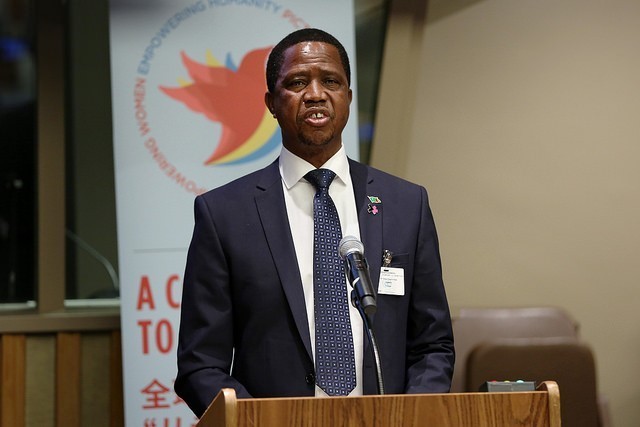
A two-month dispute over the burial of Zambia’s former President Edgar Lungu has escalated into a political and emotional storm, with his remains still lying in South Africa as the family and government battle over where – and how – he should be laid to rest.
Lungu, who passed away in June at the age of 68 while receiving medical treatment in Pretoria, has become the center of a heated row between his relatives and the Zambian state.
Last week, a South African court ruled that his body could be repatriated for a state funeral, siding with the government against the wishes of the family.
The ruling sparked jubilation among some of President Hakainde Hichilema’s supporters, who shared triumphant social media posts declaring, “It’s coming home.”
For others, however, the celebrations reflected the bitterness and partisanship that have overshadowed the grieving process.
Family Resistance and Emotional Outbursts
The decision triggered an emotional reaction from Lungu’s elder sister, Bertha, who lashed out in court at Zambia’s Attorney General, Mulilo Kabesha, insisting that her brother’s wishes be respected.
According to the family, Lungu’s dying request was that President Hichilema should not come near his body.
The family has since filed an appeal, postponing the repatriation of the remains as they insist on burial conditions that align with Lungu’s personal wishes.
Roots of the Feud
The standoff has its roots in the strained relationship between Lungu and Hichilema. In 2017, while leading the opposition, Hichilema spent more than 100 days in detention facing treason charges after his motorcade allegedly blocked Lungu’s.
Although the case collapsed, the episode deepened the hostility between the two leaders.
Since Hichilema took power in 2021, members of Lungu’s family – including his widow, Esther, and daughter Tasila – have faced corruption charges, which they claim amount to political persecution.
Government’s Position
The Zambian government has insisted that, as a former head of state, Lungu deserves a state funeral and burial at Embassy Park, the official resting place for past presidents.
Officials have even suggested they might proceed with the burial without the family’s involvement if the impasse drags on.
That stance has attracted criticism. Zambian academic Dr. Sishuwa Sishuwa argues that sidelining the family would be culturally insensitive and risks fueling speculation that political or even occult motives are behind the state’s determination to control the burial.
Political Undertones
The saga has consumed public debate in Zambia, eclipsing pressing economic issues. While some citizens express fatigue, others remain deeply engaged, with the dispute tapping into broader frustrations about politics, governance, and respect for tradition.
Hichilema’s allies, however, defend his persistence. Nevers Mumba, a political partner and cleric, described the president as driven not by obsession but by “a sense of duty” to ensure the burial honors the office Lungu once held.
What Lies Ahead
With the family’s appeal still pending in South Africa, it remains uncertain how soon Lungu’s remains will return to Zambia. What is clear is that the fight over his burial has gone far beyond funeral arrangements, laying bare political divisions that continue to haunt the nation.