

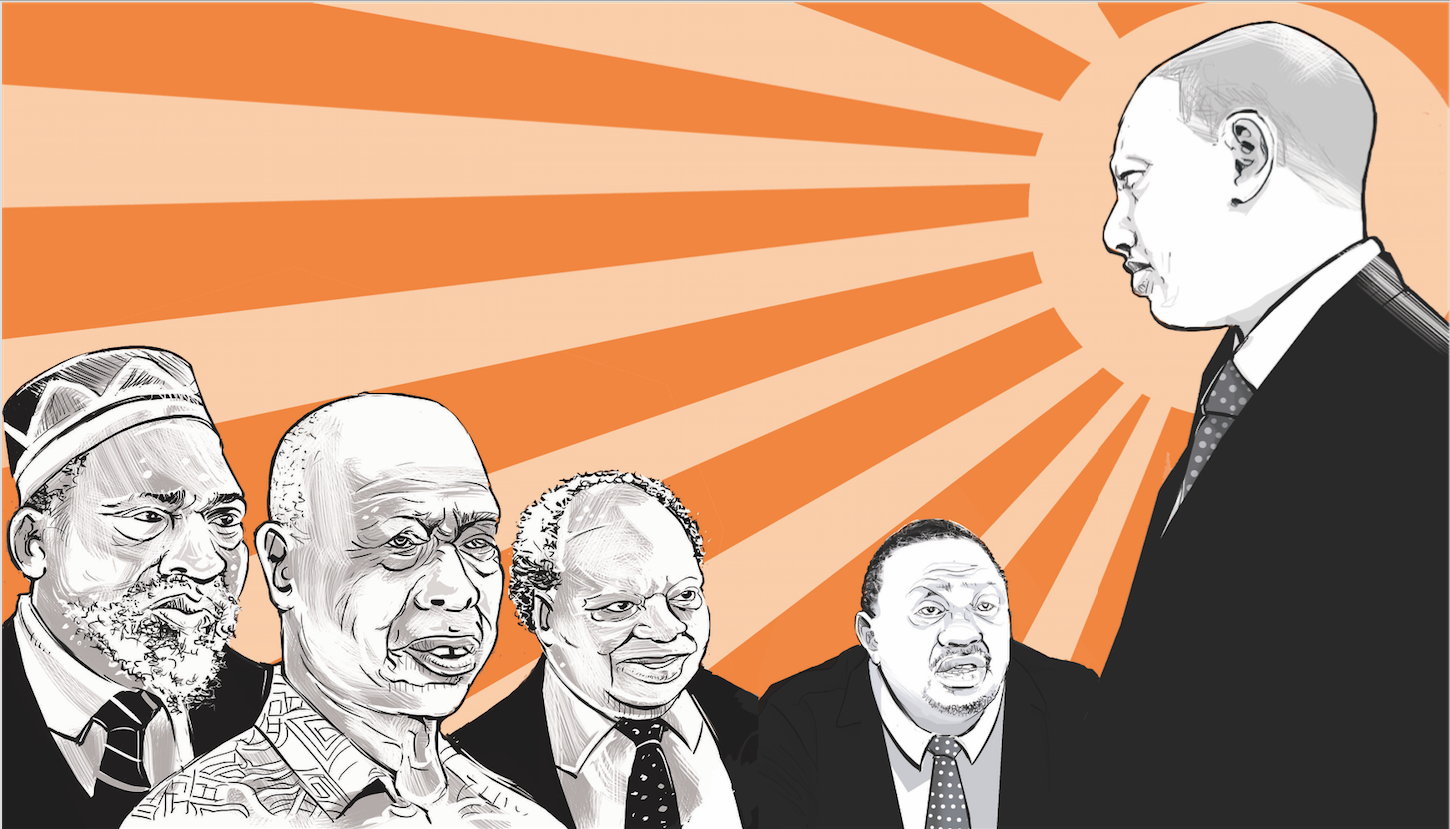
The golden era of post-independence Kenya, under Jomo Kenyatta, is often recalled with wistful nostalgia. Old guards say the founding father’s vision was rooted in a simple yet powerful structure: education, healthcare, and agriculture.
The administration’s policies reflected this philosophy. Tax structures, for instance, were designed to avoid touching staple foods, ensuring that basic necessities remained affordable.
Education and healthcare were not mere talking points—they were thriving sectors.
Public hospitals were well-stocked and staffed with qualified personnel, fostering a sense of communal well-being.
Parents enjoyed weekends at home, children had uninterrupted school holidays, and an air of contentment settled over the nation. This was a time when the government’s primary role was seen as enabling its citizens to prosper.
This era, however, gave way to a different kind of politics—one that redefined the relationship between the state and its people. Daniel Moi’s ascension marked a stark departure from Kenyatta’s principles. While Kenyatta was no saint, under Moi, the nation revolved around a single figure: himself.
Moi’s rule was defined by a relentless personality cult. Public institutions were renamed in his honour and state-run media served as a daily hagiography, with Nyayo praises sung from dawn to dusk.
His influence permeated every facet of life, from the ill-fated Nyayo Bus Service (NBS) – which hastened the decline of the Kenya Bus Service—to the creation of Nyayo Tea Zones (NTZ) and Nyayo Wards. The country became an extension of his personal brand and the focus shifted from empowering citizens to consolidating power.
Moi’s regime was notorious for projects that prioritised image over impact. The NBS, launched with much fanfare, collapsed due to mismanagement and corruption.
Similarly, NTZ failed to deliver economic uplift, instead becoming tools of political patronage. These were not just failed initiatives – they symbolised a government more invested in self-preservation than public welfare.
Today, striking parallels emerge in President William Ruto’s administration. The man who claims to have "Jomo’s courage, Moi’s wisdom, Kibaki’s education and Uhuru’s plan," appears to have drawn his political playbook from only one predecessor: Moi.
The uncanny similarity lies in the revival of a political strategy that prioritises personal glorification and symbolic gestures over tangible, sustainable development.
Like Moi’s regime, Ruto thrives on a culture of praise for projects that are either unfulfilled, "white elephants," or short-term handouts that fail to address systemic issues. This approach is characterised by grand announcements, which often mask underlying failures.
The Kenya Kwanza regime has excelled in unfulfilled pledges. The Hustler Fund, touted as a revolutionary solution for small businesses, has been criticised as a temporary fix that ignores issues of capital access and market linkages.
The affordable housing programme, a key campaign promise, has been mired in controversy over the housing levy and a lack of transparency, with few units materialising.
Meanwhile, the pledge to lower living costs – particularly maize flour prices – remains unmet, leaving many households struggling.
The education sector faces multiple challenges: teacher shortages, capitation delays and poor infrastructure continue to prevail. Underfunding and delays in disbursement leads to inadequate learning materials and disrupts learning.
Confusion over the payment of national exam fees – which the government took over from parents in 2013 – now risks shifting the burden back to families, potentially locking out learners from low-income households.
The situation has been exacerbated by conflicting signals from the Treasury and the Education ministry, leaving parents uncertain about who will foot the bill.
Additionally, unemployment among graduates raises questions about the system’s alignment with job market demands. These issues hinder the goal of equitable, quality education, which Kibaki tried to achieve.
The Kenya Kwanza administration has struggled to address critical healthcare challenges, including underfunding, drug shortages and frequent strikes by underpaid medical workers.
Mismanagement of SHA, which Ruto touted as graft-proof and “better than NHIF” is itself on the sickbed.
Corruption, bureaucratic inefficiency and poor infrastructure plague public hospitals, leading to declining access to care, rising out-of-pocket costs and eroded public trust in the healthcare system.
But this is no coincidence. It is a calculated tactic to keep the masses uneducated, unhealthy and poor – and thus easier to control. A well-educated, healthy populace demands accountability; a desperate one clings to handouts.
By neglecting education, healthcare and sustainable economic policies, the government fosters dependency, creating fertile ground for patronage politics. Leaders are judged not by results but by their ability to sustain an illusion of progress.
The ghosts of Nyayo’s past haunt the present, reminding us that the fight for genuine, citizen-centred governance is far from over.






