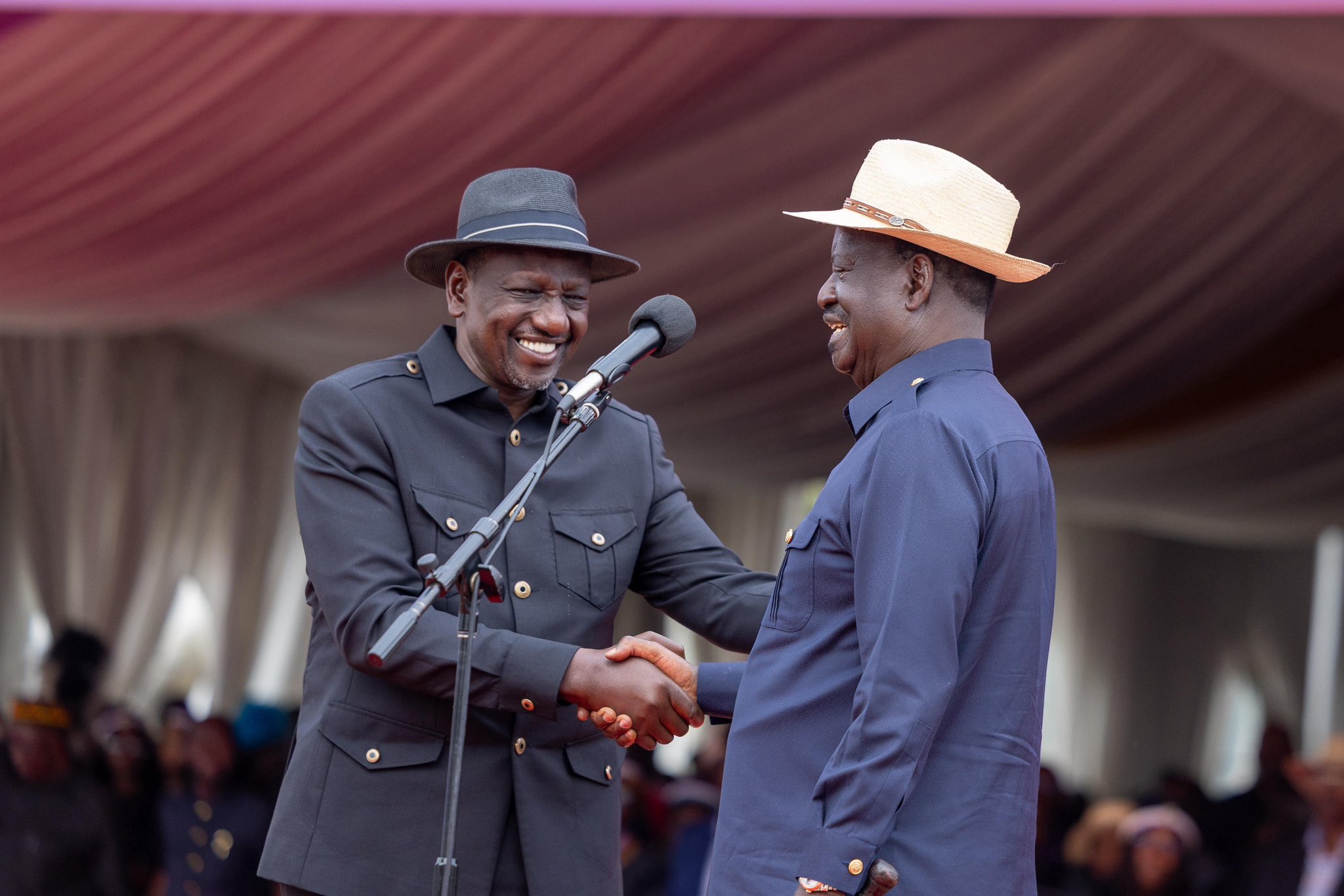
PRESIDENT William Ruto is sweetening the ground for ODM leader Raila Odinga in his recent moves to accommodate the wishes of the opposition, the latest being the creation of a team to oversee compensation of victims of police brutality.
The team to be headed by Ruto’s constitutional affairs adviser, Makau Mutua, is expected to establish a framework for compensation of victims of protests, and shall be under the Office of the President.
The reparations are to cover civilians and security personnel who lost their lives or suffered bodily harm during public protests and riots since 2017.
The Attorney General, Ministry of Interior and National Administration, as well as the National Treasury, have been assigned lead roles in the team, and are expected to work with other relevant agencies.
“The tenure of this special coordination framework shall be 120 days,” President Ruto said in the proclamation released on Friday.
Payment to victims of state excesses during protests and agitations for better governance has been the former Prime Minister’s campaign call. His supporters have borne the biggest brunt of police abuses.
Raila’s bases, therefore, stand to benefit the most as the compensation would cover not just families who lost loved ones but also those who sustained injuries.In 2017, at least 24 people died in the protests that ensued after the IEBC declared Uhuru Kenyatta reelected.
Raila's lawyer Paul Mwangi is in court to pursue compensation for 75 people who were allegedly killed in high cost of living demos between January and April 2023.
"It is the largest claim for compensation I filed on behalf of 75 Azimio protestors who were fighting the Finance Bill, 2023," he said.
"I have been fighting it in the Constitutional Court for over two years now, and Raila Odinga has been fighting it politically against the government," Mwangi said. The petition is before Justice Mugambi at the High Court.
The 2024 anti-tax protests left at least 39 dead and more than 360 seriously injured in countrywide protests spread across two weeks.
Last month’s confrontations between the police and protesters to mark Saba Saba day left 11 dead and scores nursing serious injuries. Human rights groups claimed 31 died in the face-off.
The compensation team was named a day after President Ruto appointed another to spearhead the implementation of the Nadco report.
As such, the President could be seeking to shut critics of his memorandum of understanding with Raila’s ODM party.
Former Taita Taveta Woman Rep Joyce Lay said, “This is the right direction, Mr President. Let's also have a healing and reconciliation process, for the hearts of those affected can heal.”
She said the move would “bring back the hearts of the young people to the fathers of the land, so that love, peace and unity will dwell in our nation. The religious group should step in and lead the nation on this. Forgiveness will bring permanent healing,” the ex-MP stated.
The Nadco implementation and the compensation framework teams are to be led by Raila allies, namely Agnes Zani and Mutua.
Other members of the Nadco implementation team are Fatuma Ibrahim, Kevin Kiarie, Gabriel Oguda, and Javas Bigambo.
Ruto appears to be righting the wrongs he is accused of, with the aim of starting on a clean slate, especially in Raila’s bases.
The moves have triggered mixed reactions, drawing support from various quarters, including among the Gen Zs who have suffered the most in the recent confrontations.
Activist Hanifa Adan said, “This won’t bring them back to life or restore their lives but it’s a very good step. Give the families their rights.”
She lamented always getting calls from the affected families, and has had little to offer other than fundraising for their survival.
“Now, we demand justice as well. Arrest killer cops! And, now, we better make sure that they don’t steal this money,” Adan said in a tweet.
Mutua, the proposed chair, welcomed his appointment, terming the move as bold, unprecedented, and historic.
“This is transformational for Kenya’s human rights culture.Visionary leaders seize historic opportunities, as President Ruto has done.”
He went on, “This action is unique in Africa and around the globe,” restating that it was a first for his 30 years of teaching, writing, fighting for, lecturing on, and practising the law of transitional justice.
“I never thought such a pioneering action would occur in Kenya in my lifetime. I would be remiss if I didn’t thank the Hon Raila Odinga for walking this journey with the President,” the don said.
Ruto’s critics, however, maintained that compensation would not change the story of some of the families, especially for those who lost their loved ones.
They view it not as a humanitarian gesture but a calculated political manoeuvre aimed at reshaping his administration’s image, while laying ground for teaming up with Raila.
Observers hold that the move is part of the Kenya Kwanza strategy to soften the opposition's stance.
Gatanga MP Edward Muriu alias Wakili termed the move a political gimmick and part of Ruto’s 2027 cards.
“Do you need to be killed to be compensated? How far will he go and how near will he come? Will they compensate those who died in the hands of the police like Albert Ojwang?” the MP asked.
He argued that President Ruto is yet to post a record of a successful project he or his government has spearheaded, dismissing the chances of the compensation plan succeeding.
“It is just politics to ensure things cool down. It is an easy way for ODM and UDA to prey on the next election. They shouldn’t take advantage of the plight of others to score political points.”
Skepticism remains over its sincerity and implementation, with some quarters pointing to budgetary headaches as potentially limiting the scope.
This is not the first time Kenyan leaders have used compensation and reconciliation as tools for political consolidation.
The Truth, Justice, and Reconciliation Commission, formed after the 2007-2008 post-election violence, was similarly intended to address historical injustices.
However, its recommendations were largely ignored, and victims never received meaningful relief.
Critics worry that Ruto’s latest initiative could suffer the same fate and risk ending up poorly executed despite the fanfare around its launch.
Makueni Senator Dan Maanzo, a Kalonzo Musyoka ally, said the government would have better worked on a prevention strategy “instead of channeling taxpayers’ money to correct its mistakes”.
“What he is proposing is tokenism. He should have prevented the events instead of spending money, which would have helped in funding development projects,” the senator said.
“It is a political gimmick. He has yet to visit the victims in hospitals or mourn with families of those who were killed in the protests,” Maanzo said, adding, “It is an act of dishonesty on the part of the government.”
The anti-government protests of 2023 and 2024 were largely driven by economic grievances and police brutality, with demonstrators demanding systemic reforms, not just monetary compensation.
If Raila chooses to fully embrace Ruto’s gestures, it could signal the beginning of a grand political realignment.
Speculation about a possible Ruto-Raila alliance in 2027 has been rife, especially given the country’s history of surprise political partnerships.
INSTANT ANALYSIS
The timing of the compensation framework raises questions. With the 2027 elections looming, some see this as an attempt to rehabilitate Kenya Kwanza’s image among opposition strongholds. The President’s previous hardline stance against protests alienated many, particularly in Raila’s strongholds. By appearing conciliatory, Ruto may be attempting to mend fences and expand his support base beyond his traditional Rift Valley stronghold.