 Flour/File
Kenyans should brace for a price increase in flour, eggs and cartoned goods after the 2025 Finance Act introduced a number of taxes and levies on the raw component used in manufacturing of packaging material.
The rising packaging costs are also directly inflating the price of household products, including key exports such as coffee, tea, avocados and other horticultural produce, which are now losing to competition in the markets.
Bleached sack kraft used in the manufacturing of packaging material for flour has total taxes of up to 40.5 per cent including import duty (10%), export promotion and investment levy (10%), VAT (16%) and Railway Development Levy and Import Declaration Fees (4.5%).
Unbleached sack kraft used in making the large packaging material, commonly referred to as bale, has taxes of up to 55.5 per cent.
Kraftliner used in avocado packaging attracts a total of 110.5 per cent in taxes which are import duty of 25 per cent, export promotion and investment levy (10%),V AT (16%), Railway Development Levy and IDF (4.5%) and excise duty equivalent of 55 per cent.
Exporters of non-excisable goods such as beverages, tea, juices cannot offset excise paid on raw materials for packaging, making local goods less competitive inmarkets, with manufacturers expected to pass extra costs to consumers.
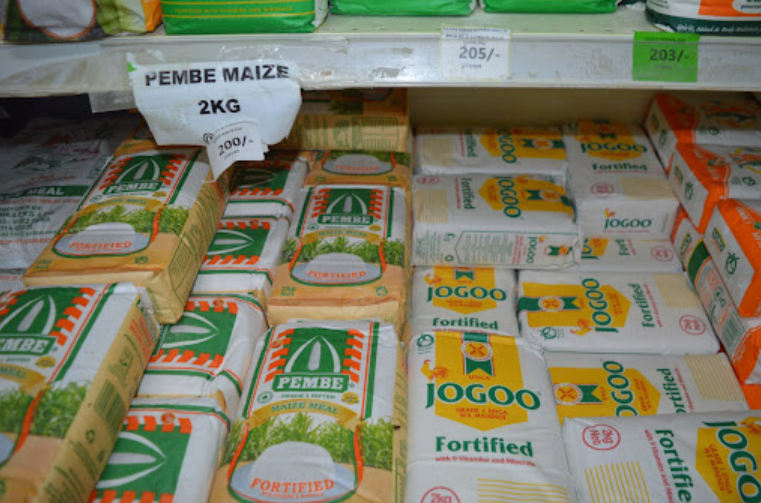
The 2kg unga bag is expected to go up by at leastSh7 on the increase in the cost of packaging material.
Eggs prices will also be affected by the increase in levies on the raw material used in making egg cartons or boxes, primarily made from molded pulp (paper pulp) , made from recycled paper.
All other cartoned goods will also be impacted by the new levies, Kenya Association of Manufacturers have cautioned, even as National Treasure maintains that the government was gone slow on taxes.
This is despite a continued public outcry which remains concerned over the cost of living, amid shrinking earnings on high statutory deductions and low earnings from businesses on reduced spending power.
Annual inflation rate, the measure of the cost of living as measured by the Consumer Price Index (CPI) was 4.1 per cent in July 2025, higher than it was in 2024,latest Kenya National Bureau of Statistics (KNBS) data shows.
This was mainly driven by rise in prices of commodities in the food and non-alcoholic beverages category (6.8%); transport (4.1%) and housing, water, electricity, gas and other fuels (1.3%) over the one year period.
“These three major categories together account for over 57 per cent of the total weight across the 13 major expenditure categories. Additionally, alcoholic beverages, tobacco and narcotics recorded an inflation of 5.1 per cent in July 2025,” KNBS director general Macdonald Obudho said.
A kilo of maize flour (loose) averaged Sh75.88 in July compared to Sh64.57 same period last year, with packed flour costing between Sh130 and Sh170, depending on the brand and retailer, prices expected to go up on the increased cost of packaging material.
According to the Kenya Association of Manufacturers (KAM), this trend poses a significant threat to the country's products both in the local and global market as they will remain uncompetitive with countries enjoying lower taxes and production costs having a field day.
This includes the local retail space where the country, which is a net importer, continues to experience a surge in cheap imports.
Cumulatively, taxes have increased from less than 50 per cent to 111 per cent on the cost of raw materials used in manufacturing of packaging material between 2022 and 2025–cost of importing kraftliner in Kenya, the key component in making packaging material.
This includes import duty of 35 per cent and Export Promotion and Investment Levy of 10 per cent. While import duty reduced to 25 per cent, there has been an excise duty introduced at an equivalent 55 per cent.
“Over 100 per cent taxation of kraftliner makes Kenyan-made paper packaging significantly more expensive than regional alternatives from Egypt, South Africa, India and China, where raw material inputs benefit from lower tax regimes or domestic production,” KAM chief executive Tobias Alando said.
In the East African Community, Kenya has the highest duty structure in kraft paper(111%) TZ (26.5%), Uganda(1.5%) while Burundi and Rwanda have none.
In the 2025-26 budget, the Kenyan government zero rated from value added tax (VAT) packaging materials for tea and coffee upon recommendation by the Cabinet Secretary for matters relating to agriculture.
Packaging remains a critical cost component for exports accounting for 30 to 40 per cent of the retail price.
KAM has noted that taxation and the cost of power are the key drivers of the high cost of locally manufactured products which consumers are forced to pay more, both in the local and international markets.
“Kenya's agricultural exports, especially fresh produce such as flowers, avocados, vegetables, and teaare globally recognised for their quality. However, our competitiveness in export markets is increasingly threatened by the rising cost of packaging, a critical component in ensuring produce reaches export markets in good condition and meets international standards,” said Alando.
This, he said, is also impacting commodities in the local shelves as manufacturers also continue to grapple with high industrial power cost of Sh22.58 per kilowatt hour which is 46–89 per cent higher than Uganda (Sh15.73), Tanzania (Sh12.12), Egypt (Sh4.64) and Ethiopia (Sh2.40)—further inflating local production costs.
Packaging materials are diverse including glass, metal, plastic and paper packaging. However, agricultural produces mostly rely on paper packaging, which is preferrable for environmental reasons.
Corrugated cartons and kraft paper sacks are essential for safe and standardised packaging of horticultural products.
Local manufacturers produce a variety of packaging solutions—including trays, outer balers, fruit boxes and labels, including those tailored to exporter needs.
KAM said Kenya has substantial installed capacity to produce paper-based packaging materials, yet manufacturers operate at well below optimal levels due to high import costs on raw material.
Meanwhile, imports of finished packaging materials continue to rise, further eroding the viability of local industry Paper packaging is made from kraft paper, which is a virgin paper material manufactured from wood pulp.
Currently there are no wood pulp manufacturers making local manufacturers rely on the importation of kraft paper. Local paper manufacturers rely on recycled waste paper.
Out of the 14 grades of paper, four are manufactured locally in sufficient quantities and are sourced by packaging manufacturers while 10 are not locally manufactured.
Packaging manufacturers are therefore compelled to import papers not manufactured in Kenya.
Manufacturers want Kraftliner (corrugated cartons) not locally manufactured to be exempted from excise duty and export levy and a reduction of import duty to 10 per cent.
They also want other Kraftliner tariff lines away from corrugated cartons either exempted from these levies or a reduction and an increase on import duty to 35 per cent for testliner and fluting which are locally manufactured.
“Amend the Excise Duty Act to allow manufacturers to claim refunds on packaging materials used in export products, mirroring best practice in competitor markets,” Alando said.
The move, he said, will also help bring down commodity prices in the local market.