PRESIDENT William Ruto’s administration has intensified efforts, led by Deputy President Kithure Kindiki, to consolidate Kenya Kwanza’s influence in Mt Kenya amid fierce political rivalry with former Deputy President Rigathi Gachagua.
Gachagua, who was impeached in October last year, has rebranded himself as an opposition leader, mobilising the region through his new Democracy for Citizens Party.
His aggressive grassroots campaigns targeting MCAs, elders, and youth leaders have positioned him as a formidable challenger to Ruto’s dominance in the vote-rich region.
In response, Kindiki has adopted a multi-pronged strategy through economic empowerment programmes and development projects.
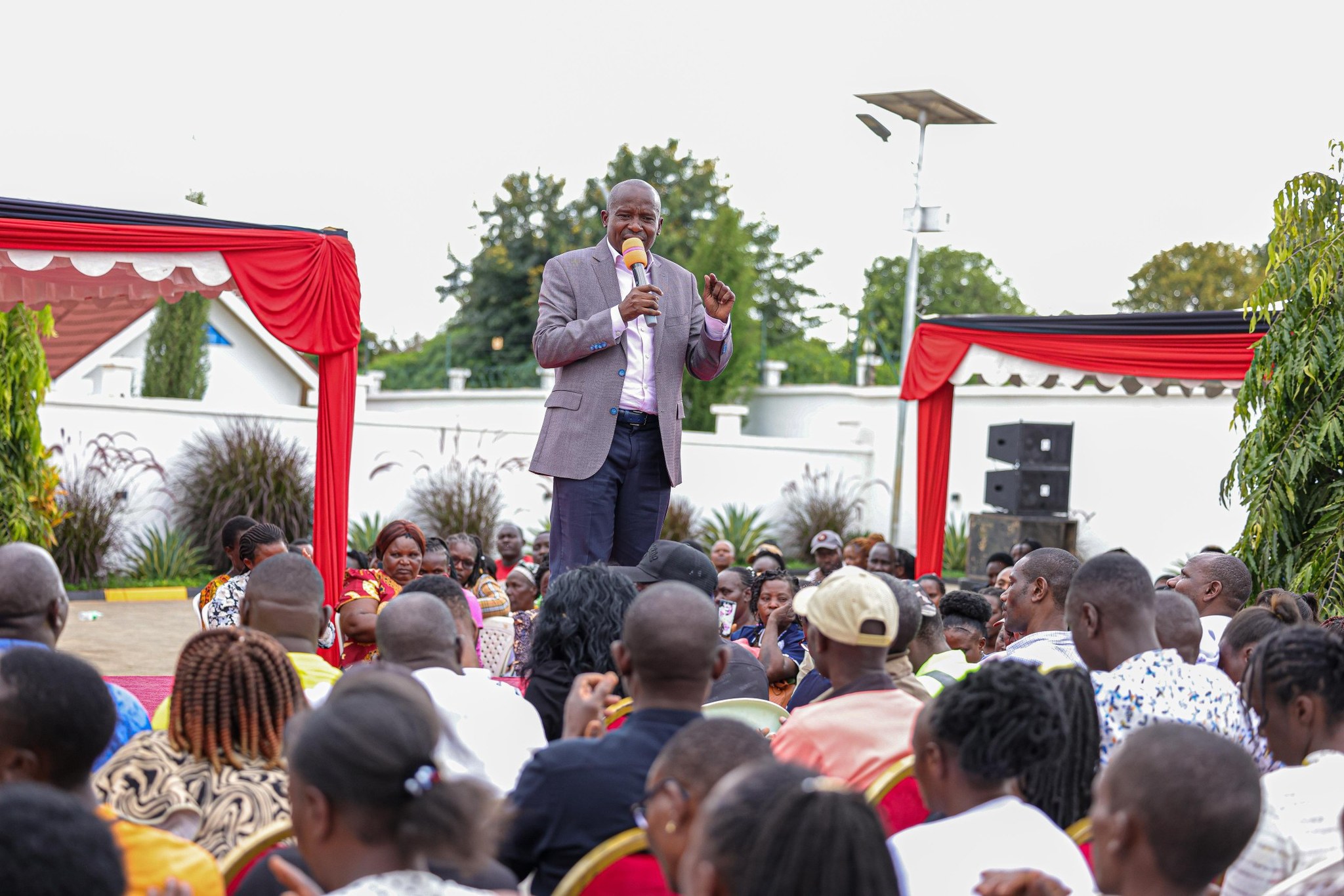
To counter the resurgence while appealing to the region’s political and economic interests, the DP has been having direct engagements with various stakeholders, including elders, women, youth, and the business community.
Recently, he adopted a strategy of meeting the groups at his rural home, with neither MPs nor MCAs involved in the mobilisation, hence direct engagement with the people.
A game of numbers has equally ensued, with the DP meeting thousands in every sitting compared to Gachagua’s engagements with a few people at his Wamunyoro residence.
Kindiki’s approach differs markedly from his predecessor’s combative style, favouring policy-driven engagement over divisive rhetoric.
Unlike the former DP, who often frames politics in adversarial terms, Ruto’s team has emphasised unity and development.
Kindiki has been warning against political violence while urging competition based on ideas rather than ethnic mobilisation.
BRAND OF POLITICS
The measured tone has resonated with segments of the population reeling from the shocks of political instability, particularly after protests and looting incidents linked to opposition rallies.
His recent meetings with MPs from Murang’a and Nairobi, where he discussed development projects and sought to align local leaders with the administration’s agenda, underscore this strategy.
“Those thinking that Ruto lost this region’s support are dreaming. Let them stop speaking on radio and come to the ground to see the work that is going on. We are changing the narrative and the voters here have said they are looking at work, nothing else,” Mathira MP Eric Wamumbi, a staunch Ruto defender, said.
He argued that noises without work have no benefit for residents, saying the President has lined up activities next month to unveil more projects.
Infrastructure development has also been made a political tool. The government has unlocked stalled projects, including roads and markets, while launching new initiatives.
Most recent ones include a Sh1.2 billion last-mile electricity connectivity programme in Murang’a and the construction of 21 modern markets in Meru.
The Gakoromone market, allocated Sh800 million, stands as a visible symbol of the administration’s commitment to the region’s economic growth.
Ruto’s team is further reinforcing the message by citing healthcare upgrades and the expansion of Social Health Authority coverage.
Pundits view the projects as not just developmental milestones but also part of a broader scorecard strategy aimed at justifying the administration’s reelection bid in 2027.
“Testimonials by Mt Kenya residents are about development projects undertaken by the government. Such are testament to our collective commitment to inclusive development,” Laikipia East MP Mwangi Kiunjuri said.
RALLYING MAMA MBOGA
Economic empowerment programmes are also being positioned as central to the government’s appeal in Mt Kenya.
Financial initiatives targeting women and youth, such as the Hustler Fund, are hailed as bolstering the government’s standing among ‘hustlers’, a critical voting bloc.
Prof Olang Sana, a political commentator from Maseno University, said that, “In Kenyan politics, money speaks louder than ideology, and Ruto understands that economic incentives can sway loyalties faster than promises.”
The focus on financial inclusion is said to have helped mitigate some of the backlash from controversial policies, which initially eroded Ruto’s support due to rising living costs.
Mt Kenya has also benefited significantly from Ruto’s appointments, including the recent hiring of Cabinet secretaries, reinforcing the perception that the administration values its support.
Gachagua’s impeachment, which was widely perceived in Mt Kenya as a betrayal, has fueled resentment toward Ruto’s government, with critics citing an attempt to sideline the region politically.
The ex-DP and his compatriots have capitalised on the sentiment, labelling pro-Ruto MPs as “traitors” and framing his opposition as a fight for regional dignity.
His alliance with opposition figures like Martha Karua and Kalonzo Musyoka has further strengthened his position, arguably presenting a united front against UDA.
Embakasi Central MP Benjamin Gathiru dismissed the overtures, saying the people “made their minds long ago about being done with Ruto and his antics”.
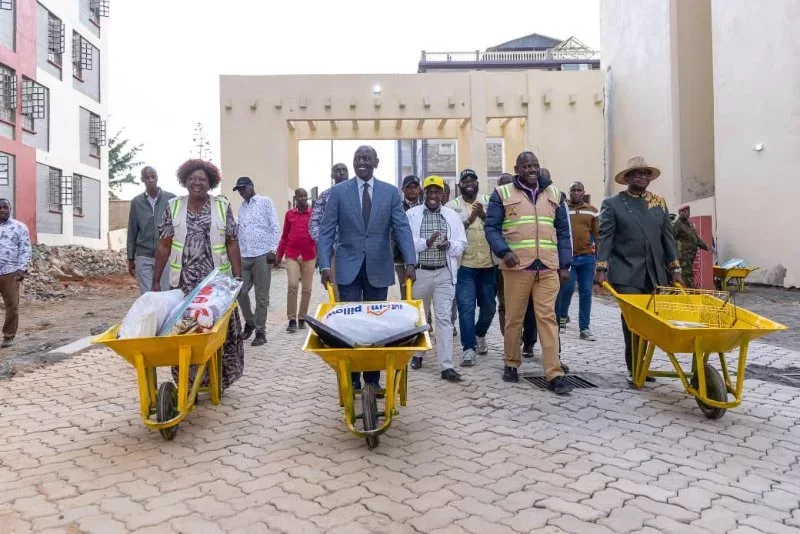
“They (Ruto team) are behaving as if they are in the opposition. They are doing the things we used to do when we were looking for power in 2020, 2021, like buying wheelbarrows and handcarts,” the MP said.
He argued that the empowerment programmes have no impact, holding that the money was better saved for other meaningful development projects, and that the government must create a conducive environment for businesses to thrive.
“The hundreds of millions they are splashing were better spent in sealing the gaps of capitation and completing ongoing markets projects to give women a conducive environment for business,” Gathiru aka Mejadonk said.
2027 HIGH STAKES
Mt Kenya’s political alignment will be pivotal in determining Ruto’s reelection prospects, with some strategists arguing that losing the region could force the President to rely more heavily on his Western Kenya and Rift Valley strongholds.
For Kindiki, who intends to remain Ruto’s running mate in 2027, the challenge is to secure at least 50 per cent of the Mt Kenya vote, a daunting task given Gachagua’s deepening grassroots influence.
The former DP’s ability to frame himself as the region’s authentic voice, coupled with his relentless mobilisation efforts, has made him a formidable adversary.
Former President Uhuru Kenyatta’s silence has further complicated the political calculus. With the region’s political kingmaker yet to declare his stance, many voters remain in a state of uncertainty, torn between the past and considerations of the advantages of Ruto’s incumbency.
“This vacuum has worked in Ruto’s favour for now, as the absence of a clear opposition rallying point has fragmented anti-government sentiment,” University of Nairobi don and political commentator Herman Manyora said.
“However, should Uhuru openly endorse Gachagua or another opposition figure, the dynamics could shift dramatically.”
But legal setbacks have also hampered Gachagua’s ambitions.
Recent court rulings dismissed his attempts to challenge Kindiki’s legitimacy and recusal of judges handling a case he hoped would revive his political career.
These judicial defeats stand to weaken his legal avenues for resurgence, forcing him to rely entirely on grassroots mobilisation.
Ultimately, the battle for Mt Kenya is more than a regional contest, but a piece of the broader political struggles in the country.
The region’s political trajectory will not only shape the 2027 election but also determine the balance of power in Kenya’s evolving democracy.
As political analyst Javas Bigambo observed, “Whoever controls Mt Kenya controls the heartbeat of Kenyan politics and, right now, both sides are fighting for its soul.”
INSTANT ANALYSIS
Whether Ruto’s team can retain a significant slice of the vote will depend on its ability to translate promises into palpable change, before Gachagua convinces the region that its future lies outside Kenya Kwanza. How this will pan out is a wait-and-see matter, considering the adage that a day is a long time in politics.