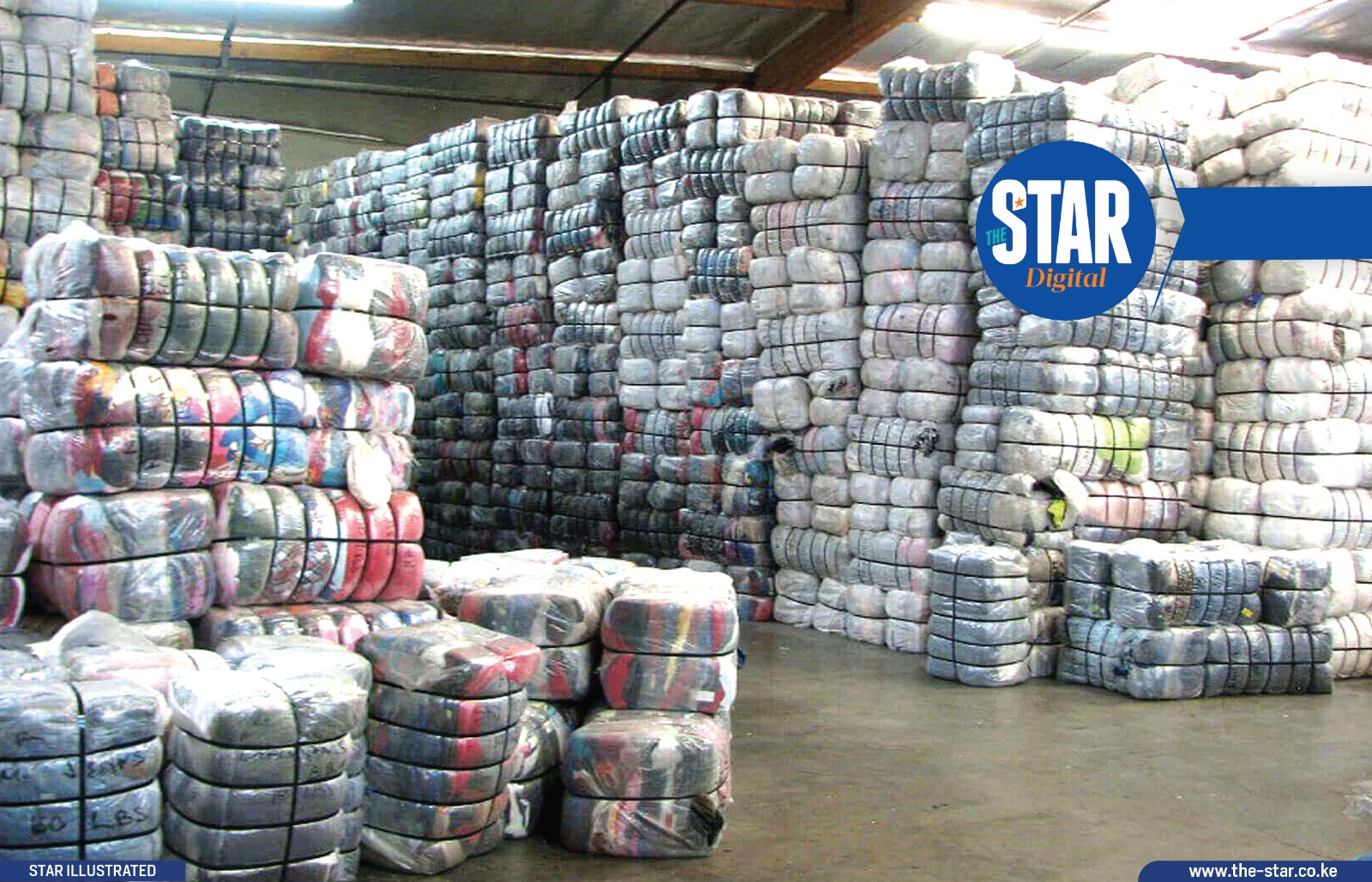
Kenyans who depend on second-hand clothes are at risk of exposure to toxic and harmful chemicals, a report has revealed.
Chemicals found in everyday clothing, particularly second-hand items, are posing a significant health risk to consumers, according to a report titled "Toxics in Our Clothing: Forever Chemicals in Jackets and Clothing from 13 Countries”
The chemicals, Per- and Polyfluoroalkyl Substances (PFAS), often called "Forever Chemicals" due to their persistence, are prevalent in garments marketed as water- or stain-resistant, highlighting a concerning pathway for toxic chemical exposure.
The study, conducted by IPEN and Arnika in collaboration with various international organisations, analysed 72 clothing samples, including 56 jackets, many of which were for children.
The items were sourced from 13 countries across Asia, Africa, Europe, and North America, with some second-hand clothing from Kenya showing the highest levels of certain PFAS.
A staggering 63.8 per cent of all tested clothing samples contained PFAS or had levels indicating their presence.
Specifically, 35 out of 56 jackets (62.5 per cent) and 11 out of 16 other clothing items (68.8 per cent), including swimsuits and aprons, showed PFAS contamination.
The report indicated that some items exceeded proposed EU safety limits.
Perfluoro-n-octanoic acid (PFOA), a globally banned and highly toxic PFAS, was detected in 17 outdoor jackets, despite its prohibition in countries that ratified the Stockholm Convention amendment on PFOA.
Another concerning PFAS, PFDA, also found in 17 samples, is restricted under EU rules and is recommended for a global ban.
The presence of perfluorobutyl ethanol ( FTOHs) indicated the use of polymeric PFAS, which degrade into other harmful PFAS, including PFOA.
PFAS are used to make products water, grease, and stain-resistant and are widely found in outdoor wear.
However, "most of the PFAS uses are not essential for the functioning of society and/or have safer alternatives that could be used instead".
The report said the chemicals are linked to serious health issues, including impacts on fertility, fetal development, and thyroid hormone function.
Children are particularly vulnerable due to their lower body weight and developing organ systems.
According to the report, current regulations are insufficient and only a universal, class-based approach, including polymeric PFAS, resulting in a global ban of PFAS as a group, can stop environmental releases of and human exposure to PFAS.
The study found 21 water or stain-proof jackets that were PFAS-free, demonstrating that "safer alternatives to PFAS exist and are used by responsible companies".
There are no explicit laws or regulations in Kenya for the management of PFAS.
However, Kenya has developed a ‘draft toxic and hazardous chemicals and materials management regulations, 2019’.
In this regulation, PFAS is listed under the first schedule as a hazardous chemical and will be subject to restrictions.