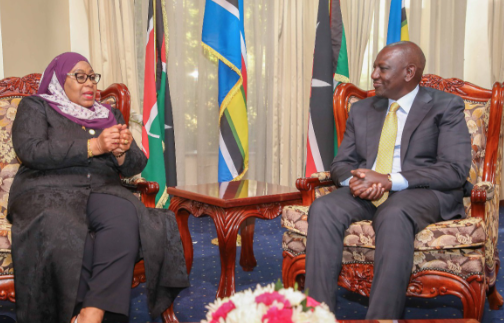
In a move that has sparked tension within the East African Community, Tanzania has imposed a sweeping ban on foreigners, including Kenyans, from operating 15 categories of small- and medium-sized enterprises (SMEs) in the country.
The decision, announced by Tanzania’s Minister for Industry and Trade, Selemani Saidi Jafo, could significantly affect bilateral relations and violate the spirit of the EAC Common Market Protocol of 2010, which guarantees the free movement of goods, services, labour, and capital across member states.
The businesses now off-limits to foreigners span multiple sectors, including mining, tourism, agriculture, technology, and communication.
Some of the specific activities barred include mobile money transfers, phone and electronics repair, salon services, postal and delivery services, tour guiding, brokerage, real estate operations, and small-scale manufacturing.
Foreigners have also been banned from farming, crop purchasing, and operating gambling machines, unless within licensed casinos.
According to the new directive, non-citizens currently licensed to operate these businesses may continue only until their licenses expire.
Any foreigner caught violating the ban faces a fine of up to Tsh10 million (Sh502,927) or a six-month prison sentence, while Tanzanian citizens found aiding foreigners risk a three-month jail term and fines up to Tsh5 million (Sh251,463).
Tanzania’s official justification for the ban centers on protecting local businesses and job opportunities for its citizens.
The government argues that these sectors are critical to grassroots economic growth and must be reserved for nationals.
However, critics, especially from Kenya, view the move as protectionist and discriminatory, raising questions about its compatibility with the EAC's goals of regional integration and economic cooperation.
The ban comes on the heels of another controversial Tanzanian policy announced earlier this month, a mandatory travel insurance fee of Sh5,700 for foreigners visiting the country, ostensibly to relieve pressure on public health systems.
While this directive excludes citizens of the EAC and the Southern African Development Community (SADC), it contributes to growing concerns about barriers to cross-border movement within the region.
The announcement has sparked sharp criticism from Kenyan MPs, who have called on the Ministry of Foreign Affairs to urgently engage Tanzanian authorities over what they term as "economic hostility."
Several lawmakers warned that Kenya could be forced to retaliate with similar measures unless the issue is resolved diplomatically.
“Tanzania’s actions undermine regional integration and target Kenyan entrepreneurs unfairly,” said a senior Kenyan MP.
“We must protect the rights of our citizens to do business freely across the region, as guaranteed under the EAC Common Market Protocol.”
Trade, Industry and Cooperatives Committee of the National Assembly chair Bernard Shinali wants Kenya to impose a similar ban on Tanzanian goods and businesses.
“Many Tanzanians are working in our mining sites too,” he stated.
Some MPs have also questioned why the Kenyan government has remained muted in its response, urging President William Ruto’s administration to take a firm but diplomatic stance to defend Kenya’s economic interests in the region.
The EAC Common Market Protocol of 2010, to which both Kenya and Tanzania are signatories, was designed to promote free movement of people, labour, goods, and services, and to enhance economic competitiveness in the region.
Under the protocol, member states are expected to eliminate non-tariff barriers (NTBs) and avoid discriminatory practices against nationals of other member countries.
Tanzania’s blanket ban on foreigners operating in certain sectors appears to contradict both the letter and spirit of the protocol, sparking fears of a widening rift within the EAC.
Trade experts warn that unless the issue is addressed at the highest levels, it could erode trust and set a dangerous precedent of economic nationalism within the bloc.
While Kenya and Tanzania share strong historical, cultural, and economic ties, their trade relationship has often been marred by disputes and protectionist policies.
Over the years, the two countries have clashed over non-tariff barriers, including restrictions on goods such as milk, eggs, sausages, and confectionery products like biscuits, many of which have been targeted by Tanzania for higher tariffs or import bans.
Despite these hurdles, trade between the two countries has grown steadily.
According to the Observatory of Economic Complexity, Kenya exported goods worth US$451 million to Tanzania in 2023, including soap, packaged medicaments, and coated flat-rolled iron.
In contrast, Tanzania exported goods worth US$334 million to Kenya, mainly corn, sawn wood, and coal briquettes, resulting in a trade surplus of US$117 million in Kenya’s favour.
While the growing trade volume is a positive indicator, the imbalance and recurring disputes have continued to fuel tensions.
Analysts warn that the latest restrictions could trigger a trade backlash if Kenya decides to reciprocate with its own set of barriers.
Experts argue that Kenya should engage Tanzania through EAC dispute resolution mechanisms, while simultaneously working to diversify trade partnerships and strengthen local capacity to reduce overdependence on volatile bilateral trade.