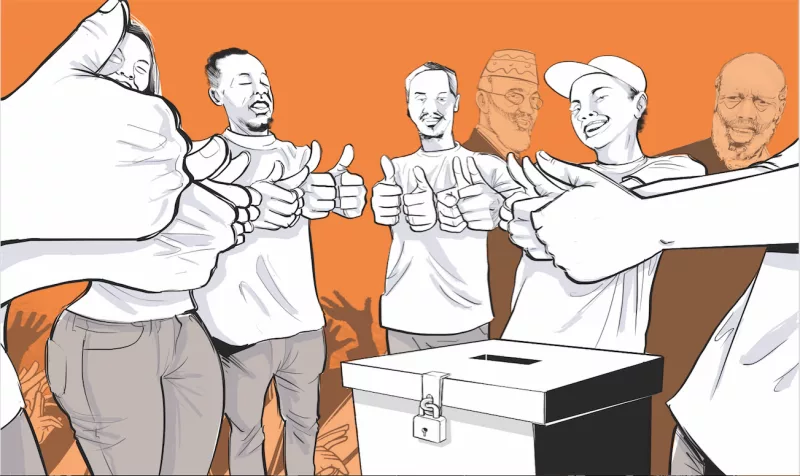
KENYA is hurtling towards a critical juncture as 23 pending by-elections are likely to reshape the balance of power and define the trajectory of the 2027 general elections.
What would otherwise be routine electoral exercises has now snowballed into a full-blown political showdown, with the country's top political figures eyeing them as a litmus test for their influence, popularity, and strategic alignments.
The Independent Electoral and Boundaries Commission has already confirmed it will conduct the by-elections once it receives the requisite writs from the speakers of the National Assembly and Senate.
The commission, in a statement last week, said: “We will discuss this matter with the speakers of the respective Houses of Parliament. Once we receive the respective writs, IEBC will expeditiously hold the by-elections.”
Among the 23 contested seats are seven in Parliament—six in the National Assembly and one in the Senate—and 16 in the county assemblies.
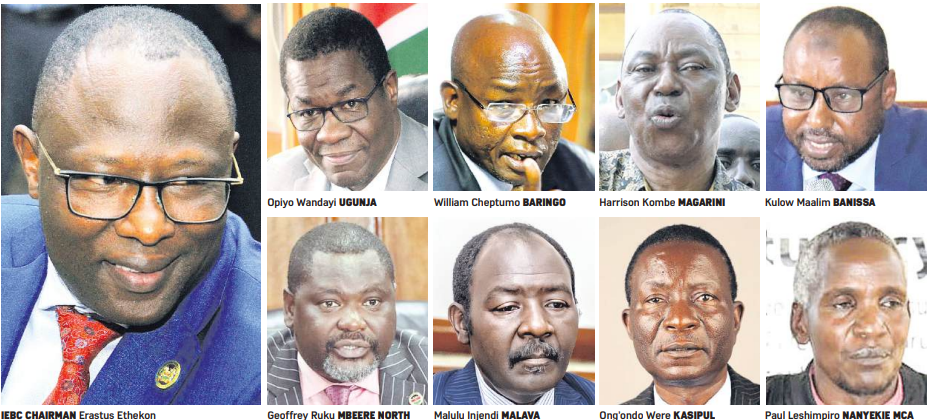
The vacant parliamentary seats include Baringo county (Senate), Magarini (Kilifi), Banissa (Mandera), Ugunja (Siaya), Malava (Kakamega), Mbeere North (Embu), and Kasipul (Homa Bay).
At ward level, the contests will be held in Angata Nanyokie (Kajiado), Chewani (Tana River), Fafi (Garissa), Kisa East (Kakamega), Lake Zone (Turkana), Mumbuni (Machakos), Narok Town (Narok), and Nyamaiya and Nyansiongo (Nyamira), among others.
While the by-elections span the geographical breadth of Kenya, their political implications transcend regional borders.
They have become a battleground for President William Ruto’s UDA, a united opposition coalescing around Kalonzo Musyoka (Wiper) and former Deputy President Rigathi Gachagua, and Raila Odinga’s ODM.
“The by-elections will tell us whether the ground is shifting for real or it’s just political noise. They are a preview of 2027 and every major player is keenly watching,” said Machakos Deputy Governor Francis Mwangangi in an interview.
Kakamega Deputy Governor Ayub Savula shares this view. “These are not just routine contests—they’re political barometers. The outcome will have 100 per cent bearing on 2027,” he told the Star.
“If UDA loses in the by-elections, it signals they might perform dismally in the general elections. And the same goes for the opposition.”
With the political temperature rising, all sides are sharpening their ground game. President Ruto’s UDA, under growing internal pressure and grappling with a public fallout with Gachagua, sees the mini polls as an opportunity to reaffirm its dominance.
Ruto’s estranged former deputy, Gachagua, has joined forces with Kalonzo, Martha Karua, Eugene Wamalwa, and former National Assembly Speaker Justin Muturi under a nascent anti-Ruto coalition.
The group has coalesced around a singular mission: to render Ruto a one-term President. For Gachagua, these by-elections are a chance to demonstrate that his influence goes beyond Mount Kenya.
But some within the opposition warn that his abrasive and ethnically-tinged style may be a liability rather than an asset.
Savula was blunt: “If Gachagua campaigns in Western’s Malava, the opposition will lose because of that tribal tag. His brand of politics can only make sense in the mountain.”
Raila Odinga faces a critical test. While seen to have aligned himself with Ruto in recent months—an alliance that has drawn criticism from some ODM supporters—Raila must now prove that he still commands significant sway in his traditional bastions of Nyanza, Coast and Western Kenya.
“The by-elections will show whether Raila’s influence is intact or eroding,” Mwangangi said. “If ODM wins across its strongholds, then he can say his base remains loyal despite the handshake with Ruto.”
Indeed, the contests in places like Magarini (Kilifi), Kasipul (Homa Bay), Ugunja (Siaya), and Nyamaiya (Nyamira) will offer insights into whether ODM still reigns supreme in Coast, Luo and Kisii regions or whether internal rumblings are translating into voter backlash.
Meanwhile, the Mbeere North seat in Embu, vacant after Godfrey Ruku’s elevation to the Cabinet, is shaping up to be a microcosm of the larger Gachagua-Ruto battle for Mount Kenya’s political soul.
Both camps are likely to pump in significant resources, hoping to send a symbolic message to the region’s electorate ahead of 2027.
Ruto and Raila, reportedly working closely behind the scenes, appear to have tactically zoned regions to prevent cannibalism of their support base.
ODM is expected to field candidates in Nyanza, Coast, and parts of Western, while UDA will concentrate on Rift Valley, North Eastern, and the restive Mt Kenya region.
In Malava, the President has deployed Prime Cabinet Secretary Musalia Mudavadi to lead the charge in reclaiming the seat formerly held by ANC’s Malulu Injendi, who passed away recently.
Mudavadi, once the face of ANC, now operates under the UDA umbrella and is working hard to consolidate his backyard.
On Thursday, Mudavadi he over 100 elders and clan chairpersons from the 29 Kabras clans to solidify support.
“Until you elect a new Member of Parliament, I stand as your patron in Malava. We must move forward together, build on the strong foundation left by our late brother Hon Malulu Injendi, and ensure that the development agenda remains on course,” he said.
Beyond party politics, the by-elections could also alter the internal power dynamics within Kenya Kwanza and the opposition.
A surprise win by an opposition-affiliated candidate in a UDA zone—or vice versa—would embolden internal dissenters and force reevaluations of current strategies.
“There’s a growing list of leaders charting their own paths. These by-elections might give them the confidence to defy party lines,” Mwangangi said.
Even if one side sweeps the board, Mwangangi warned against complacency. “Victory in the by-elections doesn’t guarantee a win in 2027. It’s just an early indicator. Whoever loses must use it to regroup and adjust their game plan.”
As campaigns intensify, political watchers will be keen to see which alliances hold, which ones crack, and which new formations emerge.
For now, Kenya’s political chessboard is being reset—not in 2027—but right here in these decisive, localised battles. The stakes couldn’t be higher.