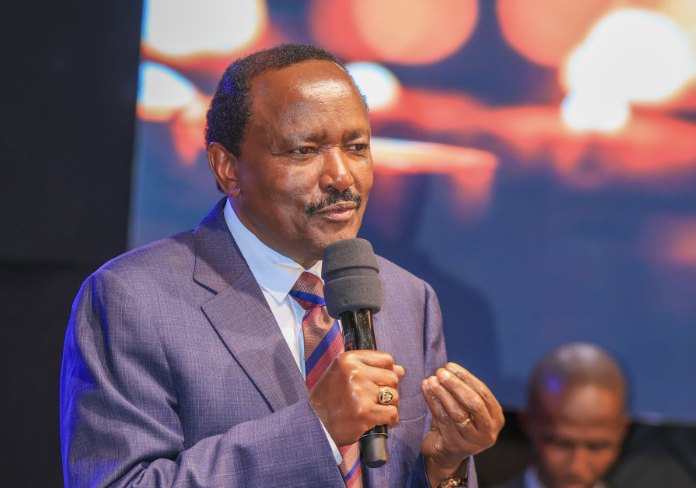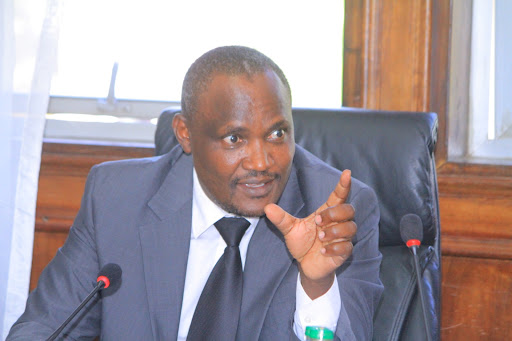
PRESIDENT William Ruto’s Kenya Kwanza administration has delivered a major blow to parents after Treasury confirmed it is disbursing only Sh16,900 per learner, far below the promised Sh22,244 annual capitation.
At the same time, the government has proposed radical measures for struggling public universities - including staff layoffs, closure of satellite campuses, and asset disposal—to keep them afloat.
Treasury Cabinet Secretary John Mbadi, appearing before the National Assembly’s Education Committee, said the reduced capitation is due to budget constraints and rising student numbers.
“Let us not lie to ourselves. The budget cannot support the Sh22,000 capitation. We don’t have the capacity to offer free primary and secondary schools,” Mbadi said.
The CS confirmed schools will receive Sh16,900 per student annually— Sh 5,344 less than what had been communicated by the Ministry of Education.
“We have been underfunding the students. The numbers are far much higher,” he said.
The cut triggered uproar from MPs, who accused the government of misleading the public and undermining its pledge to provide free education.
Many public secondary schools are already struggling with cash flow problems. Some have sent students home, slashed activities or launched fundraising appeals to stay afloat.
Heads had budgeted based on the Sh22,244 figure, which was formally communicated by the Education ministry.
Mbadi appeared alongside Education CS Julius Ogamba to furnish committee on the implementation of the 2024-2025 budget.
MPs raised the alarm, saying the funding gap has resulted in mounting debts, delayed payments to non-teaching staff and, in some cases, threats of supplier boycotts.
Some schools, they said, have already resorted to asking parents to keep the learners in school.
“Why then can’t you allow the schools to charge parents to bridge the gap?” Kibra MP Peter Orero said.
Igembe North MP Julius Taitum said it will be difficult to stop school administrators from charging extra fees to ensure smooth running of the schools.
MPs Rebecca Tonkei (Narok MP) and Omboko Milemba (Emuhaya) wondered why the Ministry of Education kept on communicating Sh22,244 to school heads when they knew the disbursed amount was less.
Omboko accused the ministry of backtracking on the capitation promise, saying the House passed the budget with full knowledge of Sh22, 244 annual capitation.
“Did we approve Sh22,244 or Sh16,900 being disbursed?” the Emuhaya MP asked.
The lawmaker, who is the chairman of Kenya Union of Post Primary Education Teachers (Kuppet), warned that many schools may grind to a halt if the government fails to provide additional funds.
“Why are we passing a higher figure of Sh22,000 and only Sh16,000 is disbursed to the schools?” Narok Woman Representative Rebecca Tonkei said.
But, according to Mbadi, the Treasury has disbursed the entire amount allocated in the budget but the underfunding is occasioned by the growing number of learners in public schools.
“The entire budget has been disbursed but the number of students is higher,” Mbadi told the session chaired by the committee vice chairperson Eve Obara (Kabondo Kasipul).
Mbadi said it was time Parliament and the government worked on a framework to enhance funding of learners in public schools, suggesting to lawmakers to let go of 40 per cent of the NG-CDF to support capitation. He drew instant backlash from MPs in the committee.
The Treasury boss argued that redirecting a portion of the kitty would ease current capitation crisis in public schools and ensure government meets the entire Sh22,244 per learner capitation promise.
But the remarks sparked uproar, with MPs shouting the money will be misappropriated by cartels at the Education ministry.
Mbadi also told public universities to prepare for radical restructuring of the institutions so as to stay afloat.
The CS said public universities must undergo restructuring, staff right-sizing and outsourcing of non-core services.
He further suggested closing satellite campuses and disposing of assets to offset pending financial obligations.
Education CS Ogamba further informed the committee that his ministry has negotiated with Kenya Revenue Authority to suspend debts owed by public universities before 2023.
“We have negotiated with KRA a debt waiver to alleviate the burden. KRA has agreed to suspend historical debts up to August 2023,” he said.
INSTANT ANALYSIS
The government began the Free Day Secondary Education programme in 2008, granting capitation per learner. At the time, each learner received Sh10,625. This was increased to Sh12,870 in 2015 and then to Sh22,244 in 2018.