ODM leader Raila Odinga’s renewed call for a national referendum and a people-led dialogue is drawing intense political scrutiny, with party insiders and critics viewing it as a calculated move to re-enter the political limelight ahead of the 2027 elections.
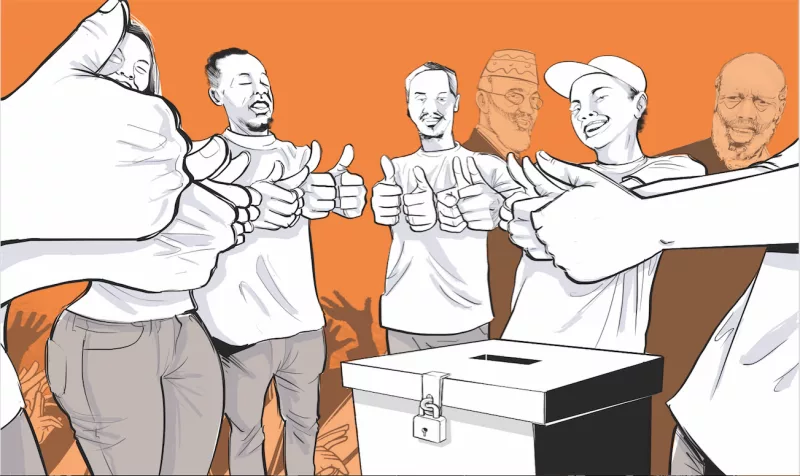
During his Saba Saba Day address, the former Prime Minister proposed that the outcome of the planned national “conclave” be subjected to a plebiscite.
While the move is framed as a citizen-driven reform agenda, insiders within ODM say it is part of a broader strategy to rebrand Raila’s image, rebuild grassroots support, and strategically reposition him for a possible sixth run for the presidency.
Others say the referendum duel could also help ODM figure out how to work with President William Ruto, if they decide to stick with him.
Unlike the contentious Building Bridges Initiative, Raila is branding the latest effort as constitutionally grounded and entirely citizen-led.
He previously used a referendum in 2005 as a political springboard, defeating then President Mwai Kibaki’s camp before coming close to unseating him in the 2007 presidential race.
The proposed national conclave is envisioned to bring together political parties, civil society, faith-based leaders, and the youth.
Raila’s political truce with Ruto is thought to have left parts of his support base disillusioned.
His critics dismiss the reforms push as a political comeback strategy disguised as a national healing mission.
Gatanga MP Edward Muriu and his Mukurweini counterpart John Kaguchia dismissed the call, accusing Raila of exploiting national frustrations for his own political survival.
“There is no doubt the old warhorse is once again preparing to thunder into the 2027 ring,” Muriu said. “He is looking for relevance. He should eat with the oppressor and let Kenyans be. He lost a golden opportunity to be president when he went to bed with Ruto.”
Kaguchia echoed the sentiment, calling the dialogue proposal a tired political tactic aimed at reviving Raila’s fading clout.
“This dialogue thing is an old, tired strategy of the political class entrenching their interests on the people,” Kaguchia told the Star by phone. “Raila should be ignored. He has a very tired strategy and way of doing things.”
But Homa Bay Governor Gladys Wanga has dismissed the claims, saying Raila’s call for a national conclave is aimed at addressing the mounting frustration and discontent among Kenya’s youth.
Wanga emphasised that the proposal is rooted in a genuine desire for dialogue and de-escalation, not political maneuvering.
“The anger is palpable. That’s why the party leader is saying, ‘Come, let’s talk.’ That was his position even last year,” Wanga said. “Our position is: let people talk. Nothing cannot be resolved if people are given a chance to express themselves.”
But former Deputy President Rigathi Gachagua has also dismissed the push as “a recycled political trick to remain relevant.”
Last week, the Star exclusively reported that Raila’s 2027 comeback bid is already taking shape, sending ripples across the political landscape.
While Raila has yet to officially declare his candidacy, multiple sources confirm the ODM leader is under growing pressure—reportedly from former President Uhuru Kenyatta and his Jubilee Party allies—to mount a final challenge against President Ruto.
In a move widely interpreted as laying the groundwork for 2027, Raila has activated ODM’s political machinery.
The party’s top decision-making organ—the Central Committee—on Tuesday resolved to hold a major jamboree in October to mark its 20th anniversary.
In the same month, the party will convene a national delegates’ conference in Nairobi, expected to shape its 2027 direction.
ODM executive director Oduor Ong’wen confirmed that the party will field a candidate in the upcoming election, although no decision has been made on who it will be.
“As a party, we will have a candidate, but we have not reached there yet,” Ong’wen told the Star in an interview.
The party would then in October convene a national delegates convention to begin preparations for the 2027 elections.
In the lead-up to October, Raila has also announced a nationwide consultation process beginning in August, with all 47 counties expected to send delegates.
Speaking last week during a funeral in Bomet, Raila called for inclusive—not just intergenerational—representation.
He proposed that each county nominates 40 delegates: 20 youth and 20 others representing elders, women, persons with disability, farmers, businesspeople, and civil society.
“I have proposed that each county should send 40 people—20 youth and 20 others drawn from elders, women, persons with disabilities, farmers, businesspeople, and civil society,” Raila said on Saturday.
However, critics remain unconvinced, arguing that the latest reform push adds to a long list of national dialogues that have yielded little.
Jubilee secretary general Jeremiah Kioni said Kenyans are already clear about the country’s problems and do not need yet another forum to restate the obvious.
“Kenyans know the problem they are facing. There is no need to sit down to discuss. Why sit down and spend taxpayers’ money again for things already said in many other reports?” Kioni posed.
He cited past efforts such as BBI, the National Dialogue Committee, the Kriegler and Waki reports, the Truth, Justice and Reconciliation Commission, and the Ndung’u report as examples of thorough but under-implemented frameworks.
Kaguchia echoed Kioni’s sentiments, insisting that Raila’s push was simply a distraction from growing public frustration with both the current administration and the political class at large.
“It is a distraction from what the people are saying. Kenyans have had a lot of dialogue. What people want is action, not endless talk,” Kaguchia said.
“Kenyans are saying stop corruption, return to the old university funding model, remove the housing tax. The things Kenyans are asking for are as clear as day and night.”
Gatanga’s Edward Muriu argued that Raila must recognise the shift in Kenya’s political landscape and stop applying outdated strategies to a younger, more politically assertive generation.
“He came up with NADCO. What have Kenyans benefited from it? The more things change, the more they stay the same,” Muriu said. “This is a generational shift. It’s not that he is a bad man—it’s just that Gen Zs are his grandchildren. He cannot understand their language.”
INSTANT ANALYSIS
Raila has called for national dialogue and the outcome be subjected to a referendum. However, critics are now seeing the push as a strategy to sneak back to the 2027 presidential ring - a move many believe may face many hurdles.