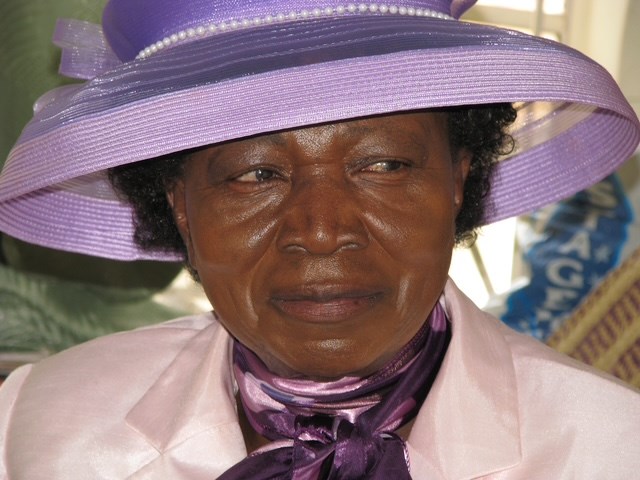
 Mama Phoebe Muga Asiyo. /FAMILY
Phoebe Muga Asiyo, who passed away on July 16 in the US at the age of 93, was a towering figure in Kenya’s struggle for gender equality.
Her remarkable career spanned several decades, encompassing prison reforms, legislative advocacy, grassroots mobilisation and international representation.
From the dusty rural beginnings of Kendu Bay to the high-profile chambers of Parliament, Asiyo carved out a legacy defined by resilience, reform, and an unrelenting pursuit of justice for women.
Her journey into public service began in 1963 when she was appointed Senior Superintendent of Women’s Prisons, becoming the first African woman to occupy such a rank.
At the time, Kenya’s penal system was a relic of colonial oppression, rife with brutality and neglect.
Asiyo initiated critical reforms, separating female prisoners from male inmates, improving access to healthcare and sanitary supplies, and introducing skills-training workshops.
At the Lang’ata Women’s Prison, she established knitting and skills-training workshops to empower inmates.
Her efforts laid the groundwork for the humanisation of Kenya’s correctional system, promoting rehabilitation over punishment and ensuring female inmates were treated with dignity.
Before her tenure, Kenyan prisons brutally enforced harsh punishments like caning, hard labour, and public floggings.
In 1979, Asiyo entered Kenya’s political landscape after winning the Karachuonyo parliamentary seat, carrying with her the reform agenda.
Her legislative career was marked by her fearless commitment to women’s empowerment.
In a Parliament dominated by men, she pushed back against entrenched patriarchy by tabling motions that sought to guarantee women’s rights.
Notably, in 1997, she introduced a landmark Affirmative Action motion that called for systemic reforms to address discrimination against women.
Although the motion was defeated, it catalysed national discourse and laid the foundation for the two-thirds gender rule later enshrined in the 2010 constitution.
Through her efforts, the Affirmative Action Fund was established, disbursing Sh1,000,000 to women contesting political seats.
Her belief in affirmative action was born out of personal experience and decades of activism.
She argued passionately in Parliament that policy-making could no longer ignore half the population.
“Policy initiatives for improvement must include women at all levels,” Asiyo declared.
Her conviction that no society could achieve equitable progress while sidelining women influenced both legislative debates and national policy reforms.
Her unwavering stance helped shape Kenya’s gender discourse, influencing legal frameworks and political representation.
Her 1997 campaign laid the groundwork for future amendments.
By the 2010 constitutional review, Asiyo served as a Commissioner at the Constitution Review Commission, pushing for enforceable gender quotas and women's political participation.
She also chaired the Caucus for Women Leadership and was a member of Parliamentarians for Global Action.
Before her parliamentary career, Asiyo was already making waves in the women’s movement.
In 1958, she became the first African president of the Maendeleo ya Wanawake Organisation (MYWO), one of Kenya’s largest women’s groups.
But her election was not without opposition. Four executive members opposed her election.
"The leadership was being left in the hands of a young, inexperienced African woman who could not manage or even comprehend the magnitude of the responsibilities of the office," they argued.
But Asiyo proved them wrong. Under her leadership, the organisation transformed from a colonial instrument of domestic training into a force for social and economic empowerment.
She mobilised women to embrace modern farming techniques, championed small-scale enterprises, and promoted access to healthcare and education.
Her leadership at MYWO culminated in a historic moment in 1960 when she led a delegation to Lodwar to petition Jomo Kenyatta to guarantee women political representation.
She famously demanded 50 per cent of parliamentary seats for women, a radical proposition in that era, but one that signalled the start of a long battle for gender parity.
Asiyo’s influence extended beyond Kenya’s borders.
Between 1988 and 1992, she served as a United Nations Development Fund for Women (UNIFEM) Goodwill Ambassador, using international platforms to amplify the voices of African women.
She played a significant role in integrating gender perspectives into peace processes, including negotiations around the Northern Uganda conflict.
Later, she was appointed as a Commissioner in Kenya’s Constitution Review Commission, where her experience and advocacy helped embed women’s rights in the country’s supreme law.
Throughout her life, Asiyo understood that legal reforms needed cultural acceptance to be truly effective.
In 2009, she became the first Luo woman elder, inducted with full traditional honours—a significant cultural breakthrough in a society where such recognition was previously reserved for men.
Her acceptance into the council of elders symbolised a shift in societal attitudes towards women’s leadership.
Asiyo’s influence was not only political but also deeply personal.
In her 2018 memoir, “It Is Possible: An African Woman Speaks”, she reflected candidly on her life’s journey.
The memoir combined personal anecdotes with political commentary, offering insight into Kenya’s post-independence history through a feminist lens.
One of her most quoted lines from the memoir reads, “Women united can reshape the narrative and change the direction of a country into a more inclusive society.”
She also reminded readers, "It is a story of the hope and determination of a woman whose firm steps helped usher in freedoms for everyone," capturing the essence of her lifelong activism.
The memoir was launched at State House Nairobi, a testament to her national stature, and continues to inspire a new generation of women leaders.
Her advocacy was never limited to high offices.
Asiyo championed rural women, grassroots movements, and policies that addressed the needs of the marginalised.
Her work with the Women’s Political Caucus, which she founded after retiring from active politics in 1997, sought to prepare young women for political leadership and civic engagement.
Asiyo was fond of quoting Eleanor Roosevelt.
A line she used often to encourage women to remain resilient in the face of adversity says: "A woman is like a tea bag; you can’t tell how strong she is until you put her in hot water."
Her legacy is also embedded in Kenya’s enduring struggle to implement the two-thirds gender principle, a reflection of her early battles in Parliament.
Phoebe Asiyo’s life was a mix of courage, compassion, and trailblazing achievements, earning her scholarly recognition on the local and international stage.
She received numerous accolades, including the Chief of the Burning Spear and the Order of the Grand Warrior.
She was awarded honorary doctorates from Lehigh University and the University of York, acknowledging her contributions to democracy and gender equality.
Phoebe Asiyo’s passing leaves a vacuum in Kenya’s leadership but her legacy will continue to shape conversations around gender equity and justice.
Her memory endures in the constitutional gains women now enjoy in Kenya, in the progressive prison reforms she championed, and in the grassroots movements she nurtured.
She leaves behind a simple but profound message to all women: It is possible.
As a devoted wife to the late Richard Asiyo for over 65 years, beloved mother to her children, and cherished sister and daughter, Asiyo built her legacy hand-in-hand with her family.
"She understood, with both humility and conviction, that service to country means service to humanity," her family eulogised her.
"As we mourn her passing, we also celebrate a life lived without boundaries—a life rooted in kindness,guided by justice, and dedicated to making the impossible possible."
Her funeral service is scheduled for Tuesday, July 22, at 3pm at 550 W Williams Street, Apex, North Carolina, 27502, USA.