MPs have raised serious concerns over the misuse of Kenya’s Equalisation Fund, questioning if it still serves its original purpose of addressing historical marginalisation.
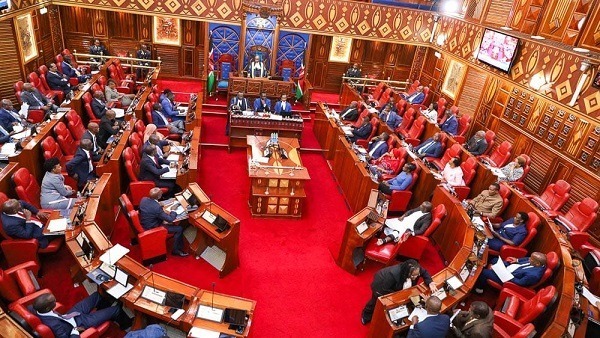
In a meeting with the board, the National Assembly Finance Committee, led by Molo MP Kuria Kimani, criticised the fund for financing projects far outside its constitutional mandate.
The Kimani-led team said it is time the projects were reassessed.
"Looking at projects done, does the fund really help?" Kimani asked.
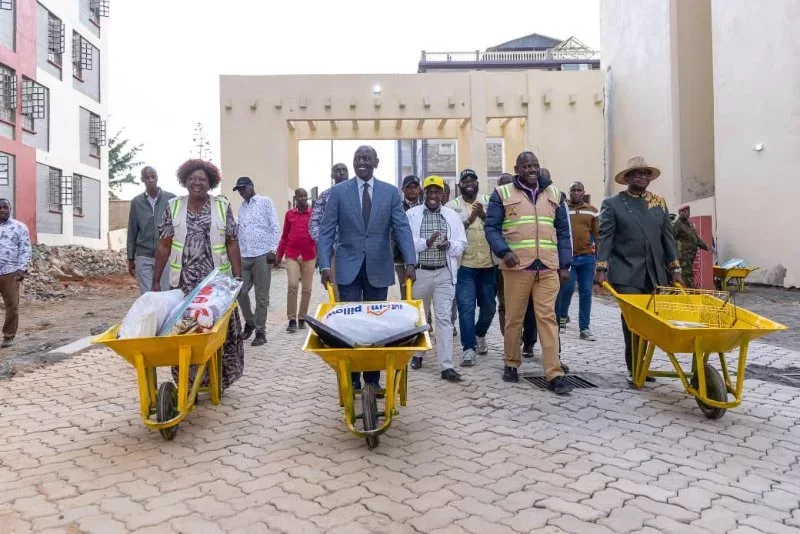
It emerged that instead of targeting long-standing regional inequalities, the Equalisation Fund has been used for cabro paving, street lighting, staff housing and even kitchen renovations—tasks typically handled by the Constituency Development Fund or county governments.
"If you continue to do all manner of projects, will it serve the purpose for which it was formed?" the Molo MP asked.
Kimani highlighted glaring inconsistencies in project costs, pointing to an irrigation scheme where five acres cost Sh2.6 million while 10 acres were budgeted at Sh3.6 million. “If projects are this arbitrary, how can we ensure value for money?” he asked.
"The projects are so diverse that even if you allocate the fund for 10 years, it will never make sense," he said.
Kitui Rural MP David Mboni asked why the fund was implementing projects that can be managed by CDF and some outside its mandate.
Turkana Central MP Ariko Namoit accused the Fund’s board of presenting misleading reports, casting doubt on the accuracy of its project data."
The information presented to the committee is wrong in the first place," Namoit said, adding that the board ignored the law and is implementing projects that were not envisioned.
He said this was perhaps the reason Treasury was reluctant to disburse funds to the kitty.
Projects should be approved by the Commission for Revenue Allocation.
"The board and CRA have diluted the objective of this fund. It was to address inequalities in Sessional Paper No10 of 1965, not address emerging marginalisation issues," Namoit said.
Board chairman Mahboub Mohamed says CRA's role in the fund should be reevaluated.
The board shifted blame to county governments, claiming they were responsible for implementation delays and reporting gaps.
"Though appreciated, we have an issue with CRA. The Equalisation Fund has no role in identifying beneficiaries and needs of a region."
He wants the law changed to define CRA roles better.
Mohamed cited challenges with implementation and has pushed for the fund to be given cash directly.
The board chair argued that counties as constituted lack the capacity to manage the allocation and that their mode of implementation is wanting.
He asked MPs to consider changing the law to allow direct implementation by relevant government agencies.
Mohamed decried delays in remittances from the exchequer.
The allocation in books does not translate to cash or timely cash disbursement, he said.
"The unpredictable movement of funds has resulted in many audit queries. We have people queuing for pending bills," Mohamed said.
But the lawmakers questioned the reliability of the data.
The board said the reports were from counties which are implementing the projects. "Zero per cent shows that we have approved a project and yet it has not kicked off."
"We need to get the proper project implementation status report to continue with this discussion. They are lying to us," Namoit said.
The disputes come amid long-standing frustrations over the Fund’s effectiveness.
A 2022 study on Garissa county found minimal impact on infrastructure due to poor planning and execution.
Meanwhile, Treasury delays have left Sh48.8 billion in arrears since the Fund’s inception, worsening marginalisation instead of alleviating it.