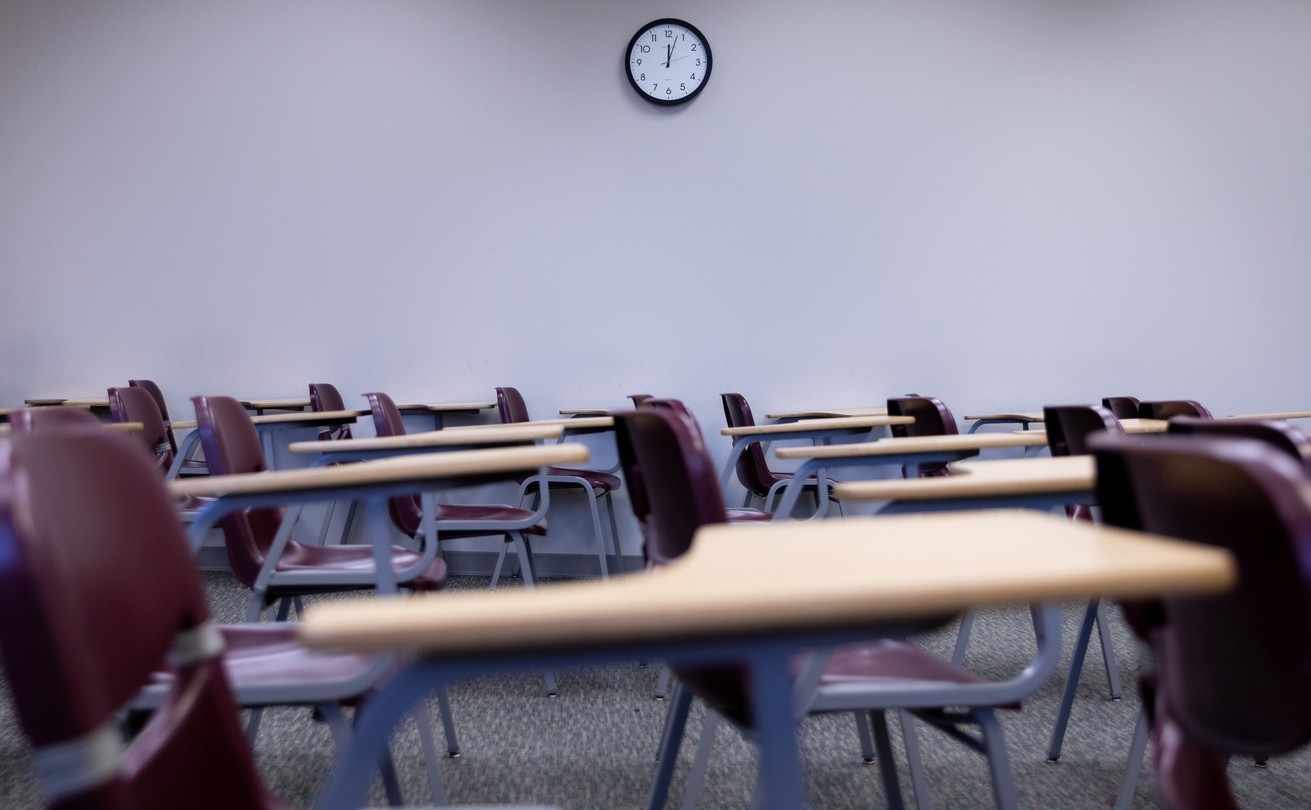
 Empty classroom
A critical teacher shortage is now threatening the implementation of ongoing curriculum reforms despite an unprecedented push by the government to hire more educators.
This is the main finding of the just-released 'State of Education in Kenya Research Report: Rapid Assessment of Gaps in the Education Sector 2025' report by Zizi Afrique Foundation and Usawa Agenda.
The report warns that the education reform agenda risks stalling unless urgent action is taken to address a worsening teacher shortage, as the gap remains large enough to threaten the very foundation of the new Competency-Based Education (CBE).
President William Ruto recently announced that 72,000 new teachers have been recruited since he took office in September 2022.
He said an additional batch of 24,000 educators will join classrooms in January next year, a marked increase in government priority and investment in education.
However, the new report shows that the country is still a long way off from closing the teacher gap.
The report finds the greatest shortfall in junior secondary schools, where 83,899 teacher demand is met by only 18,378 supply as the pioneer CBE cohort awaits to transition to Grade 10 in January, marking the start of senior school.
This equates to a shortage of more than 65,000 teachers.
The shortage in secondary schools is similarly acute, where nearly 64,000 posts remain unfilled.
According to the assessment, whereas primary schools have more teachers than is required, the surplus does not solve the pressing lack of qualified teachers at the junior and secondary levels, as most of the educators are not trained for the demands of the new CBE.
This gap manifests starkly at the classroom level.
In many junior schools, teachers are overburdened and expected to cover multiple subjects, including areas they are unqualified to teach.
The report describes how the median number of teachers for Junior school is just three per school, leaving some institutions with only one teacher for all junior classes.
Teachers and learners are stretched to the detriment of quality.
“Inadequacy of teachers beyond what hiring can remedy – innovative, bold thinking required to find solutions,” observed report authors, Zizi Afrique Foundation CEO, Dr John Mugo, and Usawa Agenda executive director Dr Emmanuel Manyasa.
The situation is especially dire in STEM (science, technology, engineering, and mathematics) fields.
Only 21 percent of all junior school teachers serve in STEM subjects, and 35 per cent of schools do not have a single STEM teacher.
Lack of workforce goes hand in hand with lack of infrastructure.
Less than half of Junior secondary learners have access to a laboratory, making practical skills difficult to teach and acquire.
These gaps are translating into poor learning outcomes, the report authors warned. “Learning outcomes are low and inequitable.”
Nationally, only four out of every 10 Grade 4 pupils are able to read and comprehend a Grade 3 English story.
The picture is worse in hardship areas like Northeastern Kenya, where just two in 10 children meet the benchmark.
The report singles out special schools and marginalized regions for “persistent underperformance…inadequate facilitation that doesn’t meet the needs of SNE learners”.
What’s at stake is not only the success of a much-hyped new curriculum but the prospects of an entire generation.
Analysts say the teacher gap threatens to entrench existing inequalities between regions and undermine the core aim of education reform - to better prepare young Kenyans for work, citizenship and innovation.
If unchecked, the crisis could have wide-ranging impacts on Kenya’s future workforce, particularly in science and technology.
President Ruto’s record pace of teacher recruitment is commendable, but even with projected new hires, the country will not bridge the gap without much broader innovation and partnership.
The report calls on the government to take bold action - declare teacher shortage a national crisis and quickly retrain surplus primary teachers for new roles.
It also recommends investment in remote learning solutions, community-based support, and improved transparency in teacher deployment especially in marginalised areas.
“Innovative, bold thinking required,” the report urges. “Without decisive action, an entire generation could be left behind,” it warns.